Germany's Unmasking of REvil's UNKN: A Strategic Strike at the Heart of Russia's Ransomware Empire
Germany's identification of Daniil Shchukin as REvil and GandCrab leader UNKN reveals sophisticated rebranding tactics, professionalized criminal operations, and signals a shift toward public leader exposure as a key disruption method against Russian ransomware networks protected by safe havens.
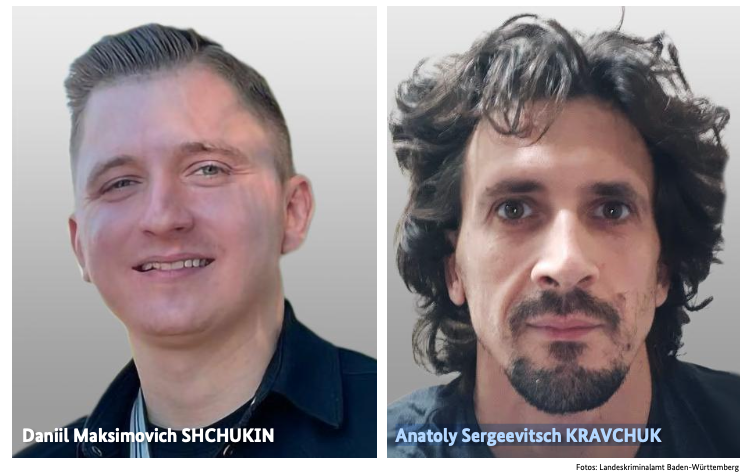
The German Federal Criminal Police (BKA) advisory publicly identifying 31-year-old Daniil Maksimovich Shchukin as 'UNKN' or 'UNKNOWN'—the driving force behind both GandCrab and REvil ransomware empires—marks far more than a routine attribution. It represents a calculated escalation in Western law-enforcement tactics against Russian cybercrime ecosystems that have generated billions in illicit revenue while paralyzing hospitals, municipalities, and critical infrastructure worldwide. While Brian Krebs' reporting accurately details the scale of harm in Germany—130 sabotage acts, two dozen confirmed extortions netting nearly €2 million while causing over €35 million in total damage—it underplays the deeper geopolitical and operational significance: this is a visible demonstration that top-tier Russian ransomware architects are no longer untouchable.
Shchukin's trajectory, pieced together from his own 2020 interview with Recorded Future's Dmitry Smilyanets and the 2023 U.S. Department of Justice cryptocurrency seizure filing, reveals a classic Russian cybercrime archetype. The self-described survivor of poverty who 'scrounged through trash heaps' rapidly professionalized criminal operations. GandCrab, launched in 2018, pioneered the double-extortion model—encrypting data while exfiltrating it for additional leverage—that became the global standard. Its abrupt 2019 shutdown message boasting 'you can do evil and get off scot-free' was followed within weeks by REvil's emergence under the same UNKNOWN handle, complete with a $1 million escrow deposit on a Russian forum. This was not organic succession but deliberate rebranding to shed investigative heat, a pattern missed or downplayed in much early coverage.
Synthesizing the Krebs reporting with the DOJ's asset forfeiture documents and the forensic narrative in Renee Dudley and Daniel Golden's 'The Ransomware Hunting Team,' a clearer picture emerges. REvil didn't just inherit GandCrab's codebase and affiliates; it institutionalized business practices—outsourcing penetration testing, negotiations, and leak site management while reinvesting millions into R&D. This 'corporatization' of ransomware drove higher success rates and payouts, creating a self-sustaining criminal economy protected by Russia's longstanding policy of ignoring cybercrime directed outward. What original coverage largely omitted is the timing: this BKA disclosure arrives amid heightened NATO-Russia tensions, where ransomware serves as deniable hybrid warfare. Groups like REvil, Conti, and LockBit have repeatedly targeted Ukrainian and Western logistics, energy, and healthcare sectors. Publicly exposing leadership degrades the aura of impunity these figures rely upon.
This action signals evolving disruption doctrine. Previous efforts focused on infrastructure takedowns (the 2021 REvil server seizures) or low-level affiliate arrests. Naming Shchukin alongside Anatoly Kravchuk, combined with detailed damage metrics and crypto wallet tracking, employs 'naming and shaming' as a force multiplier. It erodes trust between ransomware operators and their criminal service providers, complicates travel and money movement, and invites further insider tips. Chainalysis and Elliptic tracking have made cryptocurrency attribution far more precise since GandCrab's heyday, stripping away the anonymity these groups once assumed.
Critically, this case connects to a broader pattern of incremental wins against the Russian ransomware nexus: the 2022 Conti leaks, LockBit's repeated rebrands under pressure, and Europol's growing roster of identified Eastern European facilitators. Yet challenges remain. Russia's refusal to extradite and occasional intelligence service co-option of these actors (documented in multiple Mandiant and Microsoft reports) means arrests inside Russia are improbable. The real test is whether this exposure produces a measurable chilling effect on new affiliate recruitment and whether it encourages more victims to report rather than pay quietly.
Germany's move is thus both tactical victory and strategic signal. By lifting the veil on UNKN, Berlin has diminished one of the most damaging criminal brands in recent history and demonstrated that persistent, intelligence-driven public attribution can complement traditional law enforcement. The ransomware threat evolves, but so too has the persistence and sophistication of those hunting its architects.
SENTINEL: Germany's public identification of UNKN signals Western agencies shifting from infrastructure takedowns to sustained leader exposure and financial intelligence, likely fracturing trust and recruitment inside Russian ransomware-as-a-service networks even without immediate arrests.
Sources (3)
- [1]Germany Doxes “UNKN,” Head of RU Ransomware Gangs REvil, GandCrab(https://krebsonsecurity.com/2026/04/germany-doxes-unkn-head-of-ru-ransomware-gangs-revil-gandcrab/)
- [2]U.S. DOJ Seizure Warrant for REvil Cryptocurrency Assets(https://www.justice.gov/opa/pr/justice-department-announces-seizure-cryptocurrency-tied-revil-ransomware)
- [3]The Ransomware Hunting Team - Renee Dudley & Daniel Golden(https://us.macmillan.com/books/9780374603304/theransomwarehuntingteam)