WTI Surges Past $101 Amid SPR at Multi-Decade Lows and Saudi Output Slump
Corroborated reporting shows WTI exceeding $101 on supply tightness from low SPR inventories (~285M barrels, 43-year lows), record U.S. production, Saudi output at 36-year lows amid regional conflicts, and EIA-confirmed inventory draws. Implications include sustained high prices and economic ripple effects.
Oil markets tightened sharply in early September 2026 as West Texas Intermediate crude futures climbed above $101 per barrel for the first time since May, driven by geopolitical strains in the Middle East and critically low U.S. Strategic Petroleum Reserve levels. Multiple data sources confirm WTI reached intraday highs near $102 on September 10, closing the prior session around $96 before the surge.[1][2]
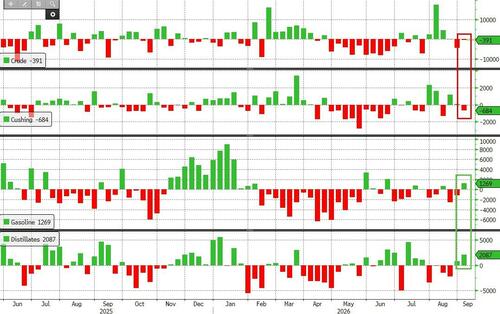
The U.S. SPR stood at approximately 285.4 million barrels following a 1.2 million barrel release in the week ended September 4, marking levels not seen since 1983 and representing roughly 40% of its 714 million barrel capacity.[3][4] This drawdown forms part of broader releases tied to prior IEA-coordinated actions amid regional conflicts, leaving the reserve vulnerable to further supply shocks. EIA data showed U.S. commercial crude inventories (excluding SPR) declining modestly by 391,000 barrels to 424.1 million, with Cushing stocks also falling, while refinery utilization remained near 98%. U.S. crude production hit a record 13.9 million barrels per day.[3]
Saudi Arabia reported to OPEC a sharp drop in August output to 6.238 million barrels per day—the lowest since 1990—attributed to disruptions near the Strait of Hormuz and Houthi pressure on Red Sea shipping routes. Exports fell to multi-year lows around 3.2 million bpd.[5][6] These constraints coincide with elevated gasoline crack spreads near $40 per barrel and seasonal demand softening, raising stagflation concerns as higher energy costs feed into broader inflation.
The SPR's diminished buffer amplifies risks to global energy stability, potentially sustaining $100+ floors for Brent and WTI if Middle East tensions persist, while pressuring consumption patterns and monetary policy responses.
Energy Analyst: Prolonged SPR depletion combined with OPEC+ output restraint and chokepoint risks could embed $95–110 WTI ranges through year-end, accelerating substitution in transport and pressuring central banks on inflation targets.
Sources (5)
- [1]Oil Price: 101.99 (Sep 2026) — Historical Chart & Data | GuruFocus(https://www.gurufocus.com/economic_indicators/4510/oil-price)
- [2]Oil stocks in US Strategic Petroleum Reserve fall by 5.5 million to lowest level since 1983 | Reuters(https://www.reuters.com/business/energy/oil-stocks-us-strategic-petroleum-reserve-fall-by-55-million-lowest-level-since-2026-06-29/)
- [3]Saudis Tell OPEC That Output Slumped Again to Lowest Since 1990 - Bloomberg(https://www.bloomberg.com/news/articles/2026-09-10/saudis-tell-opec-that-output-slumped-again-to-lowest-since-1990)
- [4]U.S. Crude Oil Stockpiles Fall, Production Hits Record | MarketScreener(https://www.marketscreener.com/news/u-s-crude-oil-stockpiles-fall-production-hits-record-ce785bded18dff25)
- [5]Saudi Arabia’s oil production slumps to lowest in 36 years as war bites - AL-MONITOR(https://www.al-monitor.com/originals/2026/09/saudi-arabias-oil-production-slumps-lowest-36-years-war-bites)