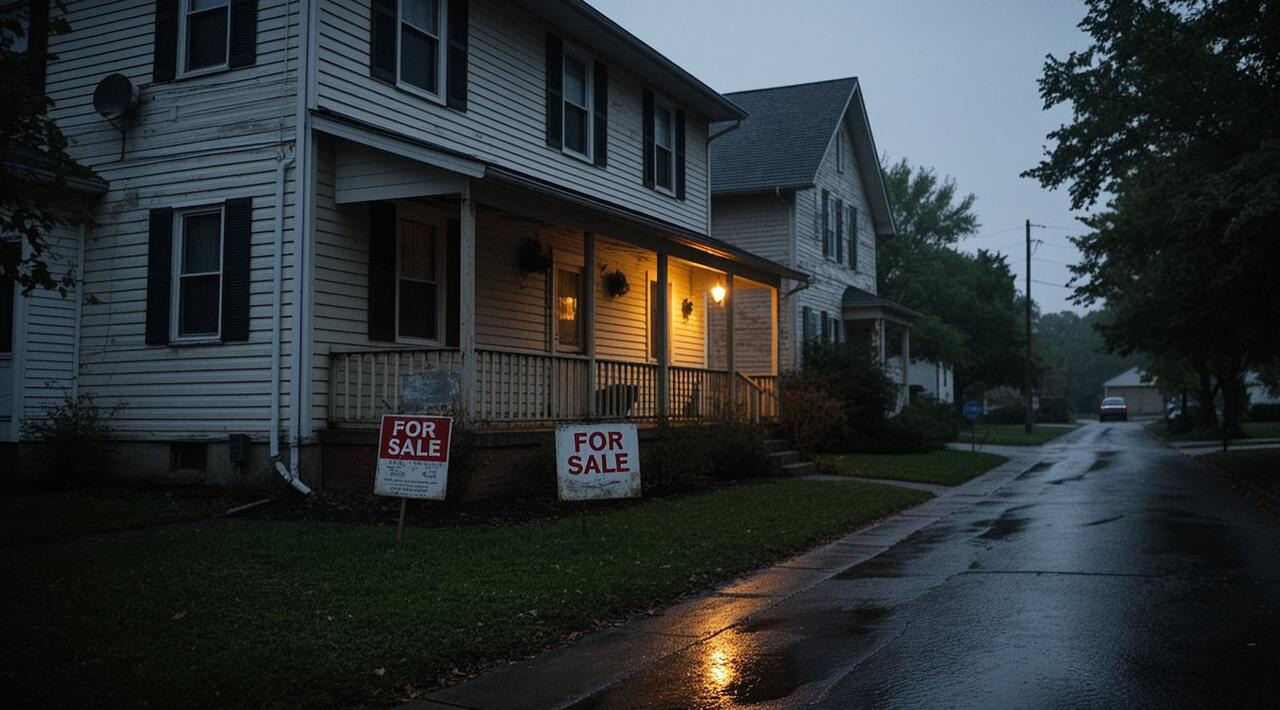
US Housing Market Remains Locked: Low Sales, Record Prices, and the Mortgage Rate Trap Persist into Late 2026
Corroborated data confirms a stalled US housing market with persistently low existing-home sales volumes, elevated median prices, and strong mortgage lock-in from sub-5% rates on two-thirds of loans, creating a buyer-seller standoff with significant financial planning implications for mobility, affordability, and wealth distribution.
Existing-home sales have hovered near or below 4 million annualized units for much of 2025-2026, roughly one-third below pre-pandemic peaks of 6+ million, according to National Association of Realtors (NAR) data. September 2026 sales came in at 3.99 million (SAAR), down 2.2% year-over-year, with August and September marking two of the weakest months of the year. Annual volume in 2024 hit a multi-decade low of about 4.06 million, the lowest since 1995 when the US population was far smaller. Median existing-home prices, however, continue setting records or near-records, reaching $417,500 in September 2026 (up 1.3% YoY) and marking the 39th consecutive month of annual gains. This mismatch—stagnant volume alongside resilient or rising prices—defies typical market clearing dynamics. A primary driver is the mortgage lock-in effect: Realtor.com analysis of Federal Housing Finance Agency data shows 65.6% of outstanding first-lien mortgages carried rates below 5% in Q2 2026, with 49.1% below 4% and 19.2% below 3%. Loans originated or refinanced during the low-rate pandemic window (roughly 2019-2022) comprise about 42.8% of the pool. Homeowners with these rates face steep payment increases if they sell and buy at current 30-year fixed rates near or above 7% (Freddie Mac weekly averages around 7.3% in mid-to-late October 2026). This creates a standoff: sellers lack incentive to move, thinning inventory and transactions. Unsold inventory has edged up to 1.60 million units (4.8 months' supply, highest since 2019), but remains insufficient to normalize the market. Broader factors compound the freeze, including chronic underbuilding, rising insurance premiums and climate-related costs that vary sharply by location, and property taxes/maintenance that now rival mortgage payments in many ZIP codes. The result is a distributional divide by purchase timing—pre-2022 buyers are insulated with fixed low costs and equity gains, while newer entrants or renters face higher barriers. Unlike a crash, which can attract buyers via lower prices, this stall breeds patience and reduced mobility, with ripple effects on labor markets and household formation. NAR and economists note that even modest inventory gains have not unlocked broad sales recovery, and recent rate volatility above 7% suggests further near-term weakness in closings. Reforms to boost supply face multi-year lags, aligning poorly with political cycles.
[Realtor.com Chief Economist or NAR's Lawrence Yun]: Elevated rates and lock-in will keep existing-home sales range-bound near 4 million or below through 2027, delaying mobility for millions and shifting wealth dynamics toward long-term owners while pressuring affordability for buyers and renters.
Sources (8)
- [1]U.S. Existing Home Sales Rebound in September(https://haverproducts.com/u-s-existing-home-sales-rebound-in-september/)
- [2]65.6% of Mortgages Remain Below 5%, Lock-In Persists(https://wrenews.com/realtor-mortgage-lock-in-q2-2026-below-five-percent-loans/)
- [3]Existing Home Sales - Charts and Data(https://www.mortgagenewsdaily.com/data/existing-home-sales)
- [4]Realtor.com finds 65.6% of mortgages have sub-5% rates(https://www.housingwire.com/articles/mortgage-lock-in-pandemic-loans/)
- [5]U.S. Existing Home Sales 1968–2024 — Annual History(https://housingalmanac.com/existing-home-sales.html)
- [6]Existing-Home Sales September 2026: Pace Stays Under 4M, Rates Rise(https://www.inman.com/2026/10/13/existing-home-sales-september-2026/)
- [7]Mortgage Rates Remain Above 7%, Pushing Home Prices Lower in Some Areas(https://www.nytimes.com/2026/10/22/business/mortgage-rates-housing-costs.html)
- [8]US Existing Home Sales (September 2026)(https://economics.td.com/us-existing-home-sales)