US Strikes on Iranian Tankers Risk Energy Market Chaos Amid Fragile Peace Talks
US strikes on Iranian tankers near Bandar Jask threaten to disrupt oil supplies through the Strait of Hormuz, risking a spike in global energy prices and inflation. Amid stalled peace talks and a Qatari LNG tanker’s transit, the actions reflect historical US-Iran tensions and could destabilize markets, with broader geopolitical and economic consequences overlooked by initial reports.
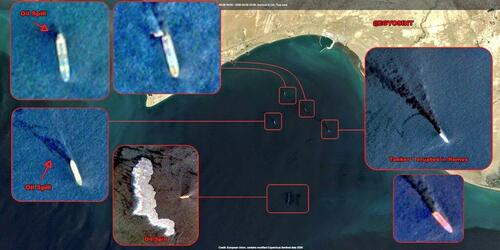
The recent US strikes on four Iranian oil tankers near Bandar Jask, as reported by social media accounts and satellite imagery, mark a significant escalation in the Persian Gulf at a time when diplomatic efforts to end the ongoing conflict appear increasingly fragile. While the original coverage from ZeroHedge highlights the strikes and the transit of a Qatari LNG tanker through the Strait of Hormuz as potential signs of de-escalation, it misses critical broader implications for global energy markets and the geopolitical ripple effects of such military actions. This analysis delves into the overlooked economic and strategic dimensions, contextualizing the strikes within historical patterns of US-Iran tensions and their impact on oil supply stability.
The Strait of Hormuz, through which roughly 20% of the world’s oil supply passes, remains a perennial flashpoint. The US strikes, described by some as 'love taps' in the original report, are anything but benign when viewed through the lens of energy economics. Disabling Iranian tankers risks immediate disruptions to oil flows, especially if Iran retaliates by imposing stricter controls or transit fees on vessels from 'unfriendly' nations. This comes at a time when global oil prices are already volatile due to post-pandemic demand recovery and geopolitical uncertainties in other producing regions like Venezuela and Libya. The International Energy Agency (IEA) warned in its April 2026 Oil Market Report that any sustained closure or disruption in the Strait could push Brent crude prices above $120 per barrel, exacerbating inflationary pressures worldwide.
Moreover, the timing of these strikes—amid stalled US-Iran peace talks—undermines the narrative of a 'relative calm' suggested by the original source. Iran’s Foreign Minister Abbas Araghchi’s comments to Turkey, as reported by ISNA, signal deep mistrust in US intentions, a sentiment rooted in decades of failed diplomacy, including the collapse of the 2015 JCPOA nuclear deal. The lack of a formal Iranian response to the US peace proposal, despite Washington’s expectations, suggests that Tehran may be leveraging delays as a bargaining tool or preparing for a counter-move, potentially in the form of asymmetric naval actions or proxy attacks in the region. Historical patterns, such as Iran’s 2019 seizure of the British tanker Stena Impero in retaliation for UK actions, indicate that Tehran rarely absorbs such strikes without response.
The original coverage also underplays the significance of the Qatari LNG tanker’s transit. While framed as a potential positive development, it raises questions about whether Qatar’s move was coordinated with the US or Iran, and whether it signals a broader realignment among Gulf states amid the conflict. Qatar, a key LNG supplier to Asia, has maintained a delicate balancing act between its US alliance and economic ties with Iran, sharing the world’s largest natural gas field (South Pars/North Dome) with Tehran. If Iran perceives this transit as a provocation or a breach of neutrality—especially if no transit fee was paid—tensions could spill over into the LNG market, further destabilizing energy supplies to countries like Pakistan, the tanker’s reported destination.
Beyond immediate market impacts, these strikes fit into a larger pattern of US military actions in the Gulf that often prioritize short-term tactical wins over long-term strategic stability. The 1988 Operation Praying Mantis, where the US Navy destroyed Iranian naval assets during the Tanker War, offers a historical parallel: while effective in asserting dominance, it prolonged hostilities and entrenched animosity. Today, with US President Trump’s upcoming China visit adding pressure for a resolution, the strikes risk alienating not just Iran but also key allies and energy importers like China and India, who rely on stable Gulf supplies and have criticized unilateral US actions in the past.
What the original report misses is the cascading economic fallout. A sustained spike in oil prices could derail global recovery efforts, particularly for energy-importing nations in Europe and Asia already grappling with inflation rates above central bank targets. The US, while less dependent on Gulf oil due to domestic shale production, is not immune—higher energy costs could fuel domestic political discontent ahead of midterm elections. Meanwhile, the strikes may embolden hardliners in Tehran, diminishing the already slim 25% odds of a peace deal by May’s end, as noted in the original piece.
In synthesizing multiple perspectives, it’s clear that while the US views these strikes as a necessary deterrent, Iran likely interprets them as a violation of sovereignty, and neutral players like Qatar are caught in a precarious middle ground. The lack of transparency on casualties or environmental damage from the tanker strikes—beyond visible fires and oil spills—also raises concerns about accountability and the potential for ecological disaster in the Gulf, an angle entirely absent from initial coverage. As tensions simmer, the interplay between military posturing, diplomatic stalemates, and energy market dynamics will shape not just the region’s future, but the global economic landscape.
MERIDIAN: The likelihood of a near-term peace deal between the US and Iran appears increasingly remote, with military actions like these strikes potentially triggering retaliatory measures that further destabilize energy markets.
Sources (3)
- [1]Qatari LNG Tanker Transits Hormuz as US Awaits Iran's Response on Peace Deal(https://www.zerohedge.com/geopolitical/qatari-lng-tanker-transits-hormuz-us-awaits-irans-response-peace-deal)
- [2]IEA Oil Market Report April 2026(https://www.iea.org/reports/oil-market-report-april-2026)
- [3]Iranian Foreign Ministry Statement via ISNA(https://www.isna.ir/news/1405022001234)