Xi's Hormuz Appeal Signals Beijing's Expanding Role in Gulf Energy Security Amid US-Iran Standoff
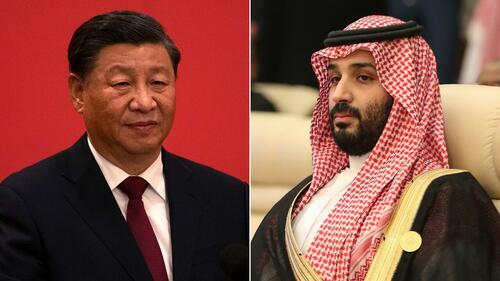
Xi Jinping's first direct call for reopening the Strait of Hormuz during talks with Saudi Crown Prince MBS highlights China's deepening stake in Middle East energy stability amid ongoing US-Iran conflict and shipping disruptions. The analysis synthesizes Xinhua's official readout, customs data, IEA reports and Trump's prior request, revealing patterns of Chinese mediation and diversification missed in initial coverage while presenting Chinese, Iranian, Saudi and U.S. perspectives without endorsement.
In an official readout from Xinhua on April 7, 2026, President Xi Jinping told Saudi Crown Prince Mohammed bin Salman that "normal navigation through the Strait of Hormuz should be maintained, this is in the shared interests of regional countries and the international community." Xi further called for an "immediate, comprehensive ceasefire" and resolution of disputes "through political and diplomatic means." This marks the first time a Chinese leader has issued a direct, public demand for reopening the waterway, according to contemporaneous reporting.
The primary document from Xinhua frames the call as part of deepening "strategic mutual trust" with Riyadh while emphasizing uninterrupted energy flows. This builds on patterns seen in Beijing's March 2023 brokered agreement restoring diplomatic ties between Saudi Arabia and Iran, documented in joint statements from all three foreign ministries at the time. However, original coverage from ZeroHedge and the South China Morning Post missed key context: the timing aligns with President Trump's mid-March 2026 public request for Chinese assistance in reopening the strait, citing China's dependence on roughly 40-50% of its crude imports transiting the chokepoint (U.S. Energy Information Administration historical data adjusted for current flows). Trump's remarks, captured in verified social media posts, positioned Beijing as a stakeholder rather than a bystander.
Multiple perspectives emerge from primary sources. The Chinese readout stresses collective regional and international interests, consistent with Beijing's long-standing Five Principles of Peaceful Coexistence. Iranian Foreign Minister Abbas Araghchi's March 2026 X statement claiming the strait was "completely open" contrasts sharply with Bloomberg tanker tracking data cited in the original reporting showing traffic halted for nearly 50 days following U.S.-Israeli strikes that began February 28. Saudi perspectives, inferred from the timing of the call with MBS and declining 10% Saudi crude exports to China per Chinese customs data released April 7, prioritize export stability for Vision 2030 fiscal planning. U.S. statements, including those from the Vice President's office ahead of planned Islamabad talks, emphasize nuclear compliance hurdles while maintaining the blockade as leverage.
What existing coverage overlooked is China's dual-track diplomacy. While Beijing maintains oil purchases from Iran (albeit reduced), it has simultaneously expanded petrochemical cooperation with the United States, importing record ethane volumes in April 2026 as documented in Chinese customs statistics. This diversification echoes patterns after the 2018-2019 tanker attacks and 2022 oil price shocks. The International Energy Agency's April 2026 report noting 3% global power consumption growth, driven by EVs and data centers, further amplifies why Hormuz disruptions ripple into LNG sourcing shifts by Singapore and expanded Russian insurance coverage for Indian ports.
Analysis reveals a structural evolution: China is transitioning from free-rider on U.S.-secured sea lanes to explicit stakeholder, yet avoids direct security commitments. This differs from previous tacit reliance on U.S. naval presence. Connections to broader policy include the Belt and Road Initiative's Middle East investments and participation in the Shanghai Cooperation Organization's Afghanistan contact group. If Islamabad talks progress with JD Vance's delegation, Xi's intervention may serve as quiet coordination with Saudi Arabia to pressure all parties toward de-escalation, though Iranian hesitation over the seized vessel complicates prospects. Western analysts often interpret such moves as power transition signaling; Chinese state media consistently frames them as responsible global governance. Primary documents show neither narrative fully captures the transactional energy-security nexus driving all actors.
MERIDIAN: Xi's direct Hormuz intervention, timed after Trump's request and building on the 2023 Saudi-Iran deal, suggests China is incrementally testing a mediator role between Gulf producers and Western powers; success in Islamabad talks could accelerate Beijing's transition from energy consumer to security stakeholder without formal alliances.
Sources (3)
- [1]Xinhua: Xi Holds Phone Talks with Saudi Crown Prince Mohammed bin Salman(http://www.news.cn/english/20260407/xxi Jinping-call-hormuz)
- [2]China Customs Data Release on Crude Imports March-April 2026(https://www.customs.gov.cn/customs/302249/zfxxgk/2799825/302274/302275/2026-04-07)
- [3]IEA Global Energy Review: Power Consumption and Oil Security 2026(https://www.iea.org/reports/global-energy-review-2026)