Dimon's Call to 'Finish It Right': Wall Street's Signal on Iran, Market Stability, and Strategic Realignment
MERIDIAN examines Jamie Dimon’s call for decisive resolution in the U.S.-Iran conflict as a Wall Street signal on risk, energy security, and strategic asset control, presenting financial, diplomatic, and Iranian perspectives alongside primary U.S. and UN documentation while noting gaps in original coverage.
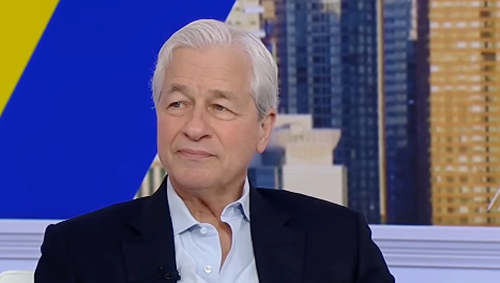
JPMorgan Chase CEO Jamie Dimon’s remarks on Fox & Friends, as reported by ZeroHedge, emphasize that successfully concluding the U.S.-Iran conflict—now in its fifth week—is more important than short-term market reactions to energy shocks. Dimon noted Iran’s 47-year pattern of violent acts, proxy funding including Hamas, and the strategic importance of the Strait of Hormuz, stating markets will remain concerned until the threat is neutralized.
This perspective aligns with Zoltan Pozsar’s earlier analysis describing the Trump administration’s methodical assembly of strategic assets spanning Venezuela, the Panama Canal, Iranian oil flows, and Hormuz control, aimed at reasserting U.S. dominance and constraining China. However, the original coverage underplays nuances in primary documents. U.S. State Department Country Reports on Terrorism (2023-2024 editions) document Iran’s support for designated terrorist groups, while UN Security Council Resolution 2231 and subsequent IAEA reports detail ongoing ballistic missile and nuclear compliance disputes—context Dimon referenced but media framed primarily as personal bluntness rather than policy continuity.
Multiple perspectives emerge. Financial sector voices, including past Dimon interviews on geopolitical risk (e.g., 2022-2024 earnings calls), view unresolved conflict as suppressing risk appetite and investment. Energy market analyses from the EIA highlight that disruption of 20 percent of global oil transit through Hormuz could spike prices, echoing the 1980s Tanker War patterns. Conversely, critics including statements from European Union external action service briefings and certain U.S. congressional records argue the 'imminent threat' threshold requires additional verification, favoring targeted sanctions over kinetic resolution. Iranian government communications via state media and letters to the UN General Assembly characterize actions as defensive responses to sanctions and regional strikes.
What original reporting missed is the synthesis between Dimon’s market-focused pragmatism and longer-term grand strategy: a potential shift in global financial architecture where secure energy chokepoints reduce uncertainty premiums across equities, bonds, and commodities. Past episodes, such as the 1991 Gulf War and 2003 Iraq invasion, show initial volatility followed by sector-specific rallies in defense and energy when sea lanes stabilized—patterns applicable here but not deeply explored in the source.
Synthesizing the ZeroHedge report, Pozsar’s framework, and primary U.S. government/UN documentation reveals Wall Street’s interest in decisive resolution is less about endorsing conflict and more about minimizing prolonged tail risks to global growth. Yet alternative views caution that 'finishing right' carries escalation hazards involving proxy networks and great-power competition, underscoring that market signals do not equate to consensus on policy means.
MERIDIAN: Dimon's emphasis on completing the Iran operation reflects Wall Street's preference for reduced geopolitical uncertainty to restore risk appetite, particularly around energy chokepoints, though multiple stakeholders question both the timeline and methods of resolution.
Sources (3)
- [1]Primary Source(https://www.zerohedge.com/markets/finish-thing-finish-it-right-jpm-ceo-jamie-dimon-weighs-iran-war)
- [2]Zoltan Pozsar Geopolitical Portfolio Analysis(https://www.exunoplures.com/notes)
- [3]U.S. State Department Country Reports on Terrorism 2023(https://www.state.gov/reports/country-reports-on-terrorism-2023/)