The $35B 'Big Sky' Shadow Finance: How Apollo, Blackstone, Google, and Broadcom Are Wiring Anthropic Into an Exclusive AI Power Nexus
Apollo and Blackstone closed a record $35B SPV debt deal to fund Anthropic’s Google TPU leases, with Broadcom backstops on senior tranches. This off-balance-sheet structure, echoing Meta’s Beignet, reveals how private credit is enabling explosive AI capex while concentrating control among a few tech-finance insiders ahead of Anthropic’s IPO path.
In one of the largest private credit transactions ever recorded, Apollo Global Management and Blackstone have closed a $35 billion debt facility structured through a special purpose vehicle (SPV) to finance Anthropic’s acquisition and leasing of Google’s custom tensor processing units (TPUs). Dubbed Project Big Sky, the deal mirrors Meta’s earlier $27.3 billion 'Beignet' SPV with Blue Owl, using a mix of debt tranches and equity where lease payments from Anthropic back the financing. Senior notes totaling roughly $30 billion benefit from Broadcom’s credit backstop—effectively linking the credit quality to Broadcom’s investment-grade rating rather than the startup’s—allowing cheaper borrowing amid banker caution over AI-related debt and rapid chip obsolescence.[1][2]
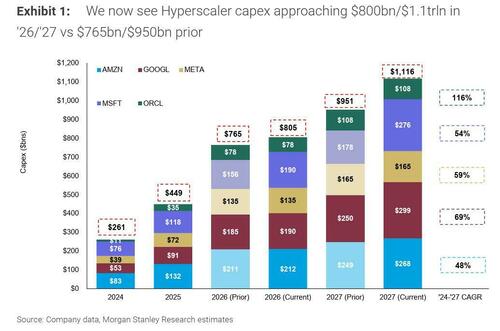
This arrangement highlights a deeper structural shift: frontier AI infrastructure is increasingly funded outside traditional public markets and corporate balance sheets. With Morgan Stanley projecting AI could drive $400 billion in debt this year alone, scaling toward $1 trillion by 2028 to support nearly $2 trillion in cumulative capex, private credit giants are stepping into the void left by risk-averse banks. The SPV buys the TPUs, leases them to Anthropic (keeping the liability off-balance-sheet), and securitizes the revenue stream much like aircraft or data-center real estate financing. Connections often missed include the tight ecosystem lock-in: Google supplies the silicon, Broadcom provides implicit guarantees and co-development ties, while Apollo and Blackstone control the capital stack. This concentrates compute access, pricing power, and strategic leverage among a handful of interconnected players—Anthropic (fresh off a $65 billion private round and confidential IPO filing), its big-tech backers, and alternative-asset titans—bypassing broader market scrutiny.[3][4]
Anthropic’s near-simultaneous confidential S-1 filing with the SEC underscores the strategy: scale aggressively in private with structured finance, then tap public equity once the infrastructure moat is dug. Yet risks abound. Chip depreciation timelines remain uncertain as models evolve; should the AI investment cycle cool, these massive SPVs could transmit stress through private-credit funds already facing redemption pressures. What ZeroHedge flagged as a burgeoning wave is materializing faster than expected, signaling not just capital deployment but a reconfiguration of tech sovereignty where financing partners become de-facto co-owners of the AI stack.
LIMINAL: This SPV model turns AI compute into a privately controlled asset class, letting a closed circle of asset managers and hyperscalers dictate infrastructure access and sidestep public oversight—setting up systemic leverage that could amplify the next tech bust.
Sources (4)
- [1]Apollo Wraps Up $35 Billion Debt to Buy AI Chips for Anthropic(https://www.bloomberg.com/news/articles/2026-06-05/apollo-wraps-up-35-billion-debt-to-buy-ai-chips-for-anthropic)
- [2]Apollo and Blackstone raise $35bn in chip financing deal for Anthropic(https://www.ft.com/content/c49e0eff-0776-4103-8eaf-1b049fbf9d3f)
- [3]Apollo, Blackstone work on $36 billion debt deal for Anthropic, Bloomberg News reports(https://www.reuters.com/business/apollo-blackstone-work-36-billion-debt-deal-anthropic-bloomberg-news-reports-2026-05-28/)
- [4]Anthropic Files to Go Public, Setting Stage for Huge I.P.O.(https://www.nytimes.com/2026/06/01/technology/anthropic-ipo.html)