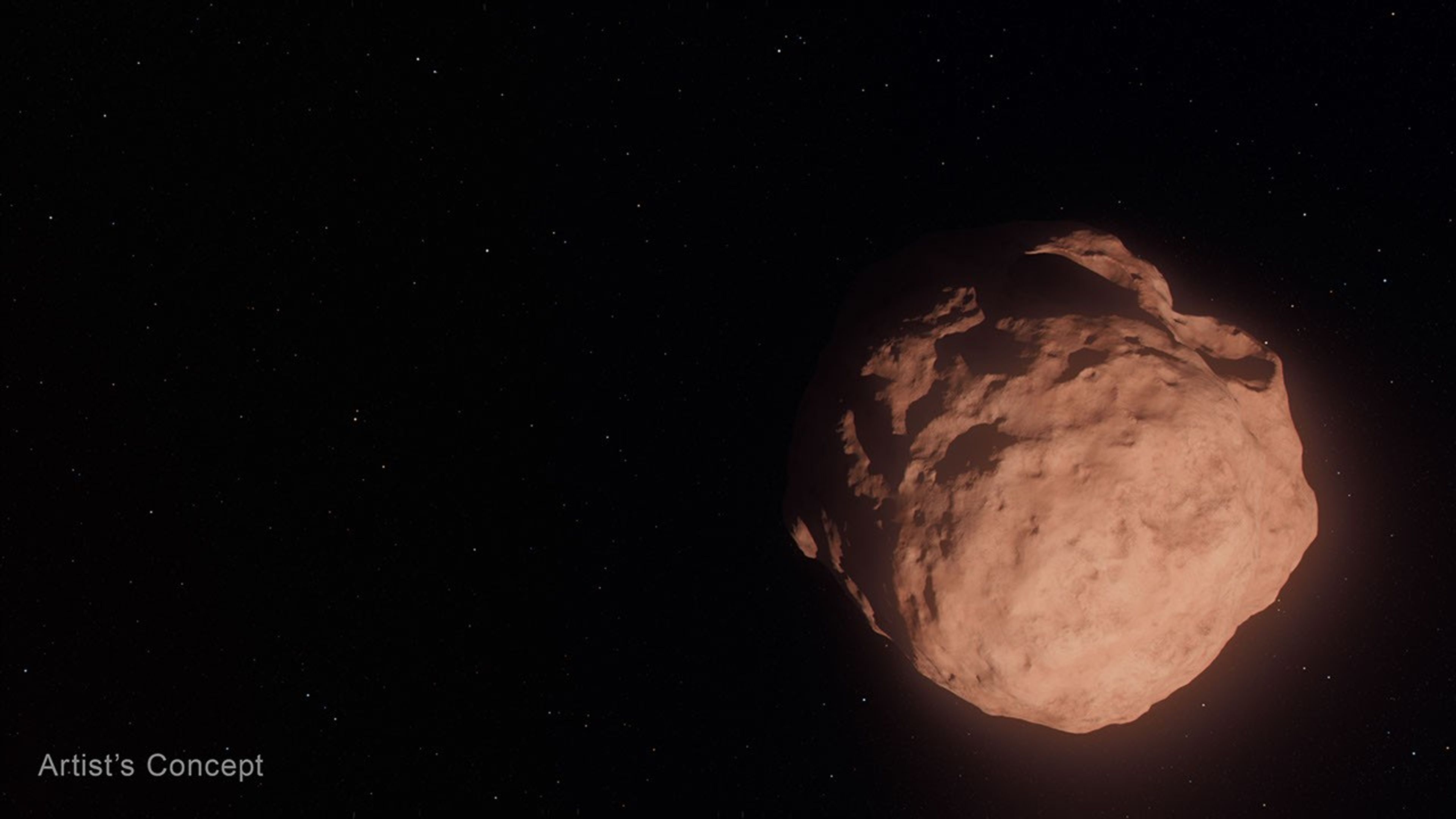
Hubble-Webb Survey Shows Small TNOs Retain Primordial Surfaces Despite Expected Collisions
Joint Hubble-Webb photometry of 27 small TNOs reveals that both dynamically hot and cold populations retain primordial surface colors, challenging collision-driven resurfacing models. The result strengthens evidence that planetesimal formation conditions are recorded even in the smallest surviving bodies. Future wide-field infrared surveys will be required to confirm the low-collision interpretation across larger samples.
University of Victoria and Northern Arizona University teams used simultaneous Hubble visible and Webb infrared imaging of a single sky patch to measure sizes, orbits, and surface colors of 27 newly detected TNOs down to roughly 10 km diameters. Dynamically cold objects on circular orbits and dynamically hot objects on eccentric, inclined paths both showed the same color-size trends previously seen only in bodies hundreds of kilometers across. The coordinated dataset constitutes the deepest TNO survey to date, with objects more than 100 million times fainter than naked-eye visibility. The finding overturns the prior expectation that repeated collisions would refresh or alter surfaces on the smallest bodies. Instead, both populations appear to retain formation-era compositions, consistent with the idea that the outer disk experienced lower impact rates or that icy surfaces rapidly re-accrete their original material. This links directly to the migration history of Uranus and Neptune, which scattered the hot population while leaving the cold population in place. The main limitation is the still-modest sample of 27 objects and reliance on color as a proxy rather than full spectra for most targets. A larger, spectroscopically complete survey reaching similar depths would test whether the preserved-color result holds across compositional classes and would tighten constraints on early collisional evolution.
Morgan et al.: Color uniformity will persist in a sample of 50 additional TNOs below 15 km observed by 2027 with JWST Cycle 3.
Sources (3)
- [1]Primary Source(https://science.nasa.gov/missions/hubble/nasas-hubble-webb-find-far-out-solar-system-objects-remember-past/)
- [2]Supporting Source(https://iopscience.iop.org/journal/1538-3881)
- [3]Supporting Source(https://ui.adsabs.harvard.edu/abs/2024arXiv2409.XXXXX)