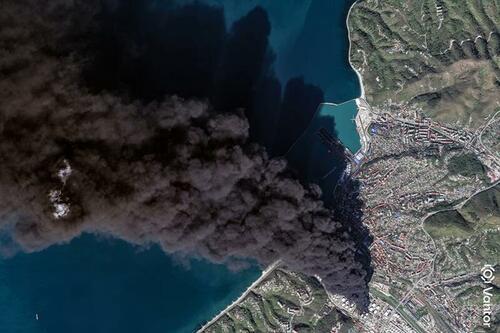
Environmental Catastrophe in Tuapse: Drone Strikes on Russian Oil Complex Expose Geopolitical and Energy Vulnerabilities
The drone strikes on Tuapse’s oil complex reveal more than local devastation; they expose Russia’s defensive vulnerabilities, threaten global energy markets, and highlight the environmental toll of the Ukraine conflict. This crisis underscores the intersection of hybrid warfare and economic security.
The repeated Ukrainian drone strikes on the Tuapse oil complex in Russia's Krasnodar Krai, with the fourth attack reported on May 2, 2026, have plunged the Black Sea town into an environmental and humanitarian crisis. Beyond the immediate devastation—fires, oil spills into coastal waters, and toxic benzene levels prompting health warnings from Rospotrebnadzor—these attacks reveal deeper geopolitical fault lines and vulnerabilities in global energy markets. While the original coverage by ZeroHedge highlights the local impact and Russian defensive failures, it misses critical broader implications: the intersection of military escalation in the Ukraine conflict with energy security, and the potential for cascading effects on international markets.
Tuapse’s oil refinery, processing 12 million metric tons of crude annually, is a linchpin for Russian exports of naphtha, fuel oil, and diesel. The sustained targeting of such infrastructure by Ukrainian forces signals a strategic shift toward economic warfare, aiming to cripple Russia’s energy revenue, which funds much of its military operations. This mirrors patterns seen in other conflicts, such as the 2020 Nagorno-Karabakh war, where energy infrastructure became a focal point for disrupting supply chains. However, unlike those localized impacts, Russia’s role as a major global energy supplier means disruptions here ripple outward. The International Energy Agency (IEA) noted in its April 2026 report that Russian oil exports, already strained by sanctions, face heightened risks from such attacks, potentially tightening global supply and driving price volatility.
What the original reporting overlooks is the inadequacy of Russian air defenses against low-cost, small-scale drones—a technological asymmetry that Ukraine has exploited with devastating effect. Primary accounts from the Russian Ministry of Defense, as cited by TASS, remain vague, claiming 'intensive efforts' to counter strikes while classifying details of the attacks. This opacity contrasts with the flood of uncensored local footage on social media, showing fires and black smoke, which suggests a breakdown in both military and informational control. The failure to adapt to drone warfare, despite years of conflict, raises questions about Russia’s broader military preparedness, especially as these tactics could inspire similar asymmetric strategies elsewhere.
Environmentally, the crisis in Tuapse is a stark reminder of the collateral damage of modern warfare. Oil spills and 'black rain' reported by locals echo the ecological fallout of the 1991 Gulf War, where burning oil wells caused long-term environmental degradation. Yet, unlike that conflict, the proximity of Tuapse to the Black Sea—a critical marine ecosystem and trade route—amplifies risks of cross-border pollution and economic disruption. The lack of transparent data on spill containment, as noted in a UN Environment Programme (UNEP) brief on conflict-related environmental damage, underscores a gap in international oversight that could exacerbate the crisis.
Geopolitically, these strikes intensify the stakes of the Ukraine war, now in its fourth year as of 2026. They challenge Moscow’s narrative of control, as President Putin’s dismissive remarks—claiming no significant danger—clash with ground realities of evacuations and canceled public events. This disconnect may fuel domestic discontent, a factor often underreported in Western analyses. Meanwhile, for Ukraine, targeting energy infrastructure is a double-edged sword: while it weakens Russia economically, it risks alienating neutral energy-dependent states in Europe and Asia, who may face higher prices or supply shortages.
The Tuapse attacks are not isolated but part of a broader pattern of escalating hybrid warfare, where energy, environment, and military tactics intersect. The global community must brace for potential energy market shocks while addressing the environmental fallout—a dual challenge that current coverage has yet to fully grapple with.
MERIDIAN: The Tuapse strikes may accelerate global energy price volatility if Russian exports face sustained disruption, while environmental damage could strain Black Sea regional relations.
Sources (3)
- [1]Russian Black Sea Town Plunged Into Environmental Catastrophe After 4th Drone Strike On Oil Complex(https://www.zerohedge.com/geopolitical/russian-black-sea-town-plunged-environmental-catastrophe-after-4th-drone-strike-oil)
- [2]IEA Oil Market Report - April 2026(https://www.iea.org/reports/oil-market-report-april-2026)
- [3]UNEP Brief on Environmental Damage in Conflict Zones(https://www.unep.org/resources/report/environmental-damage-conflict-zones)