Kenyan Sovereignty Pushback Against US Ebola Quarantine Signals Fracturing Global Health Order
Kenyan court blocks US Ebola quarantine center for Americans amid DRC/Uganda outbreak, highlighting African sovereignty resistance, critiques of US isolationist health policies, and risks to coordinated global pandemic preparedness in an era of declining multilateral trust.
A Kenyan High Court has temporarily blocked the establishment of a US-operated 50-bed Ebola quarantine and isolation facility at Laikipia Air Base, citing constitutional concerns over public health, national biosecurity, and accountability. The ruling, issued late on May 29, 2026, halts any agreement allowing the facility's operation or the entry of Ebola-exposed or infected individuals into Kenya until a full hearing on June 2. The case was brought by the Katiba Institute, which argued that the plan placed expediency above Kenyan lives.
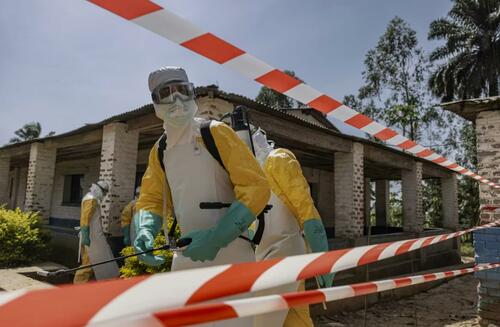
This development occurs against the backdrop of a rapidly escalating Ebola outbreak caused by the Bundibugyo virus in the Democratic Republic of Congo (DRC) and Uganda. As of late May 2026, the WHO reports 125 confirmed cases and 18 deaths across both countries, alongside 906 suspected cases and 223 suspected deaths in the DRC alone. The outbreak has been designated a Public Health Emergency of International Concern (PHEIC), with cross-border transmission, insecurity, displacement, and mining-related mobility complicating containment. One US medical worker exposed in the DRC tested positive and was evacuated to Germany rather than the United States.
The Trump administration had secured initial Kenyan approval for the Laikipia facility, to be staffed by US Public Health Service personnel, framing it as a 'state-of-the-art' solution to quarantine Americans exposed in the outbreak zone without repatriating them. US officials, including Secretary of State Marco Rubio, explicitly stated that no Ebola cases would be allowed to enter the United States. This approach drew sharp criticism from US public health experts, who viewed it as an abdication of responsibility toward American citizens and a departure from past practices during the 2014 West Africa Ebola crisis.
Local opposition in Kenya was fierce. Laikipia County leaders questioned why the US would not accept its own citizens, while the Kenya Medical Practitioners, Pharmacists and Dentists Union threatened strikes, decrying the plan as turning Kenya into a 'containment colony' and an 'apartheid healthcare model.' They highlighted a $13.5 million US pledge for Ebola preparedness in Kenya—part of a $125 million regional commitment—as insufficient justification for the biosecurity risks. The union and civil society groups explicitly linked their resistance to broader US policy shifts, including withdrawal from the World Health Organization, dismantling of USAID, and cuts to CDC global health funding, which they argue have weakened coordinated pandemic preparedness compared to responses in 2014 and 2019.
This episode reveals patterns often missed in domestic US coverage: a growing sovereignty backlash against foreign-led health infrastructure in Africa. Rather than passive recipients of international aid, African nations are increasingly asserting control over their territory and public health decisions, viewing externally imposed facilities—especially those excluding Western citizens—as neo-colonial risk exportation. This mirrors historical tensions during prior Ebola outbreaks, where foreign military involvement in health responses sometimes fueled local distrust. It also ties into larger post-COVID patterns of fragmented global health governance, where vaccine nationalism, funding cuts, and declining trust in multilateral bodies like the WHO accelerate regional assertions of autonomy.
The rejection underscores emerging global health flashpoints. With no approved vaccine or specific treatment for this Bundibugyo strain, reliance on supportive care and contact tracing becomes critical, yet politicized quarantines risk delaying detection and response. As outbreaks increasingly straddle borders in unstable regions, such sovereignty pushback may complicate rapid international deployment but could force more equitable, locally led preparedness models. Long-term, this signals a multipolar health order where nations like Kenya prioritize constitutional sovereignty over expedited foreign agreements, potentially reshaping how future pandemics are managed—or mismanaged—across the Global South.
LIMINAL: This sovereignty flashpoint foreshadows deepening fragmentation in global health responses, where African pushback against risk-offshoring could slow containment in future outbreaks while accelerating demands for locally controlled preparedness infrastructure.
Sources (6)
- [1]Kenyan court blocks U.S. plan to open Ebola quarantine center(https://www.pbs.org/newshour/show/kenyan-court-blocks-u-s-plan-to-open-ebola-quarantine-center-to-treat-americansebola-outbreak)
- [2]Kenya court halts opening of US Ebola quarantine facility(https://www.bbc.com/news/articles/cpdp74lgzplo)
- [3]Kenya court suspends US plan for Ebola quarantine facility(https://apnews.com/article/kenya-us-ebola-quarantine-facility-f0c7ed6dc3fe339b9b974fd12782ca8d)
- [4]Ebola disease caused by Bundibugyo virus, Democratic Republic of the Congo and Uganda(https://www.who.int/emergencies/disease-outbreak-news/item/2026-DON605)
- [5]Kenyan Court Suspends Plans for Ebola Quarantine Unit for Americans(https://www.nytimes.com/2026/05/29/world/africa/us-kenya-quarantine-unit-ebola.html)
- [6]Kenyan court orders suspension of US plan for Ebola quarantine facility(https://www.reuters.com/business/healthcare-pharmaceuticals/kenyan-high-court-suspends-plan-us-ebola-quarantine-facility-kenya-2026-05-29/)