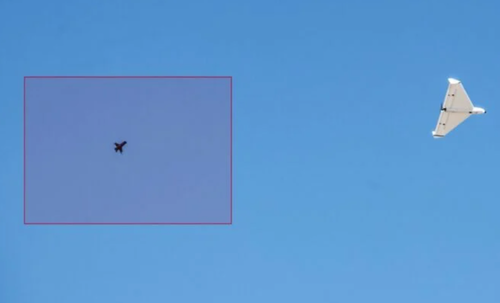
USAF's Autonomous Interceptor Tests Herald AI-Driven Drone Warfare Era, Raising Escalation and Ethical Concerns
USAF testing of Powerus Guardian-1 interceptor drones against Shahed-style threats confirms rapid progress in low-cost autonomous counter-drone tech, but the development carries overlooked risks of conflict escalation, ethical dilemmas in lethal AI autonomy, and privacy issues from integrated surveillance capabilities.
The U.S. Air Force's recent testing of the Powerus Guardian-1 kinetic interceptor drone in Arizona marks a significant step in the development of low-cost, autonomous counter-drone systems designed to neutralize Iranian Shahed-style one-way attack drones. According to detailed reporting, Special Warfare Airmen from multiple squadrons conducted a proof-of-concept exercise at Florence Military Reservation in early April 2026, successfully intercepting a simulated target using the 6.6-pound Guardian-1, which reaches speeds over 200 mph, altitudes up to 16,400 feet, and ranges of approximately 9.3 miles. This commercial off-the-shelf solution addresses critical gaps for forward-deployed small teams lacking access to traditional fixed air defense systems. The tests come amid ongoing U.S.-Iran tensions and reflect lessons from the heavy use of Shahed drones by Russia in Ukraine, where cheap loitering munitions have overwhelmed expensive missile-based defenses. Powerus, the startup behind the Guardian-1, has already secured a limited procurement order from the U.S. Air Force following the demonstration, highlighting the Pentagon's urgent push for affordable counter-UAS capabilities to solve the "missile math" problem—where interceptors must cost far less than the threats they eliminate. While mainstream coverage has focused on the technical and tactical advantages, deeper analysis reveals underreported dimensions: the acceleration of fully or semi-autonomous lethal systems that could lower the threshold for aerial conflict escalation worldwide. As nations race to deploy swarms of cheap autonomous drones and counters, the risk of inadvertent escalation grows, particularly in volatile regions like the Middle East. Ethical implications remain largely undiscussed in defense reporting, including accountability for AI-driven targeting decisions, potential for collateral errors in contested airspace, and dual-use privacy concerns as these platforms integrate advanced sensors that could enable persistent surveillance of civilian areas. Connections to broader trends—such as Ukraine's push for mass interceptor production and the proliferation of similar technologies to non-state actors—suggest this is not isolated innovation but part of a global shift toward democratized, AI-augmented warfare that could destabilize international security norms without robust oversight or arms control frameworks. The involvement of a firm with reported ties to prominent political figures further underscores how commercial and policy incentives are rapidly aligning to fast-track these technologies.
Liminal: Cheap autonomous interceptors will proliferate rapidly, lowering barriers to sustained drone conflicts and amplifying calls for regulation on lethal AI autonomy before escalation becomes normalized.
Sources (4)
- [1]U.S. Air Force tests commercial drone killer in Arizona(https://defence-blog.com/u-s-air-force-tests-commercial-drone-killer-in-arizona/)
- [2]Powerus Confronts the 'Missile Math' Problem With Guardian-1 Interceptor(https://thedefensepost.com/2026/03/20/powerus-guardian-missile-interceptor/)
- [3]Air Force awards drone deal to Trump sons' firm amid war(https://www.msn.com/en-us/news/insight/air-force-awards-drone-deal-to-trump-sons-firm-amid-war/gm-GM3109278B)
- [4]Air Force Snaps Up Powerus Interceptor Drones(https://www.tectonicdefense.com/air-force-snaps-up-powerus-interceptor-drones/)