Orange County Chemical Tank Near Failure: Emergency Declaration Exposes Aerospace Industry Risks and Sparks Debate Over Prevention
A failing tank of methyl methacrylate at a Garden Grove aerospace plant prompted Newsom's emergency declaration, the evacuation of up to 50,000 residents, and coordinated federal-state response. While immediate explosion risk dominates headlines, deeper reporting reveals an exothermic polymerization reaction, ongoing investigations into corporate maintenance, resident outrage over lack of prior safeguards, and questions about long-term public health oversight in populated industrial areas.
In a densely populated corner of Southern California, a malfunctioning storage tank containing thousands of gallons of methyl methacrylate at a GKN Aerospace facility in Garden Grove has triggered one of the largest evacuations in recent memory, with approximately 40,000 to 50,000 residents displaced across multiple cities. California Governor Gavin Newsom declared a state of emergency on May 23, 2026, mobilizing state agencies and making shelters available while emphasizing that resident safety remains the top priority. The declaration unlocks resources from the California Governor’s Office of Emergency Services to support local responders in what officials describe as a dynamic hazardous materials situation.
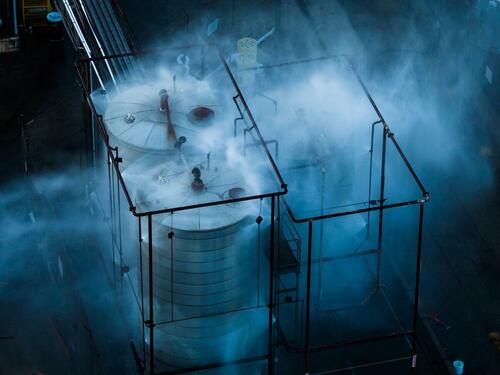
The tank, holding an estimated 7,000 gallons of the flammable and volatile chemical used in manufacturing plastics and resins for aviation components such as cockpit windshields and canopies, began showing signs of instability on May 21. According to detailed reporting, an exothermic polymerization reaction inside the tank has caused the liquid to solidify, generating heat and pressure as relief valves failed to function properly. Orange County Fire Authority officials, including Incident Commander Craig Covey and interim Chief TJ McGovern, have deployed continuous water deluge operations, drone monitoring, and nationwide experts in attempts to stabilize the temperature below critical thresholds. While EPA Administrator Lee Zeldin stated on CNN that the most likely outcome is a contained low-volume release that can be neutralized, he warned of a catastrophic scenario involving thermal runaway and potential chain-reaction explosions among nearby tanks. Air monitors deployed by federal and local teams have so far reported normal air quality, with no active plume detected.
This incident fits a deceptively simple one-sentence narrative—'overheating chemical tank forces mass evacuation amid explosion fears'—yet reveals deeper systemic issues often overlooked in initial coverage. The facility has operated in Garden Grove for over three decades as a key supplier to the aerospace sector, raising questions about aging infrastructure, maintenance protocols, and regulatory oversight in industries reliant on hazardous precursors. The Orange County District Attorney and Cal/OSHA have launched investigations into the root cause, with U.S. Rep. Derek Tran calling for the company to assume full ownership of costs and engineering reviews. Local residents have voiced frustration in shelters and media interviews, questioning why precautions were not in place to prevent escalation to the point of displacing tens of thousands, canceling community events, and converting schools into evacuation centers. Health officials highlight methyl methacrylate’s risks: short-term respiratory irritation, eye and skin damage, and potential for severe distress in high exposures, though long-term community impacts remain under study.
The event also highlights unusual cross-aisle coordination between Governor Newsom’s administration and the federal EPA under the current Trump-appointed leadership, with joint modeling of scenarios and deployment of air monitors. Proximity to Disneyland and suburban neighborhoods amplifies public anxiety, turning a technical industrial failure into a broader debate on balancing economic activity in aerospace manufacturing with public health safeguards in urban-adjacent zones. As crews continue cooling efforts and explore whether controlled solidification could avert disaster, the episode underscores vulnerabilities in chemical storage that extend beyond this single tank to national patterns of similar near-misses. Officials stress that sitting back and allowing failure is unacceptable, signaling a shift toward more proactive federal-local intervention in future incidents.
[Systemic Risk Sentinel]: This incident will likely drive stricter Cal/OSHA audits on aging aerospace chemical infrastructure, but without addressing root corporate accountability gaps, similar suburban evacuations could become normalized features of U.S. industrial operations.
Sources (5)
- [1]Newsom declares state of emergency as chemical tank in Garden Grove under threat of exploding(https://www.ocregister.com/2026/05/23/40000-still-evacuated-as-crews-try-to-head-off-possible-chemical-tank-explosion-in-garden-grove/)
- [2]California Gov. Newsom declares state of emergency for Orange County chemical leak as DA launches probe into its cause(https://www.cbsnews.com/losangeles/news/garden-grove-chemical-leak-plans-orange-county-california-evacuations/)
- [3]California declares state of emergency over toxic chemical tank(https://www.bbc.com/news/articles/c3w2l249j8go)
- [4]Overheated chemical tank in southern California 'will fail'(https://www.theguardian.com/us-news/2026/may/24/chemical-tank-california-epa-lee-zeldin)
- [5]Governor Newsom proclaims state of emergency in Orange County in response to ongoing chemical incident in Garden Grove(https://www.gov.ca.gov/2026/05/23/governor-newsom-proclaims-state-of-emergency-in-orange-county-in-response-to-ongoing-chemical-incident-in-garden-grove-makes-additional-shelter-sites-available/)