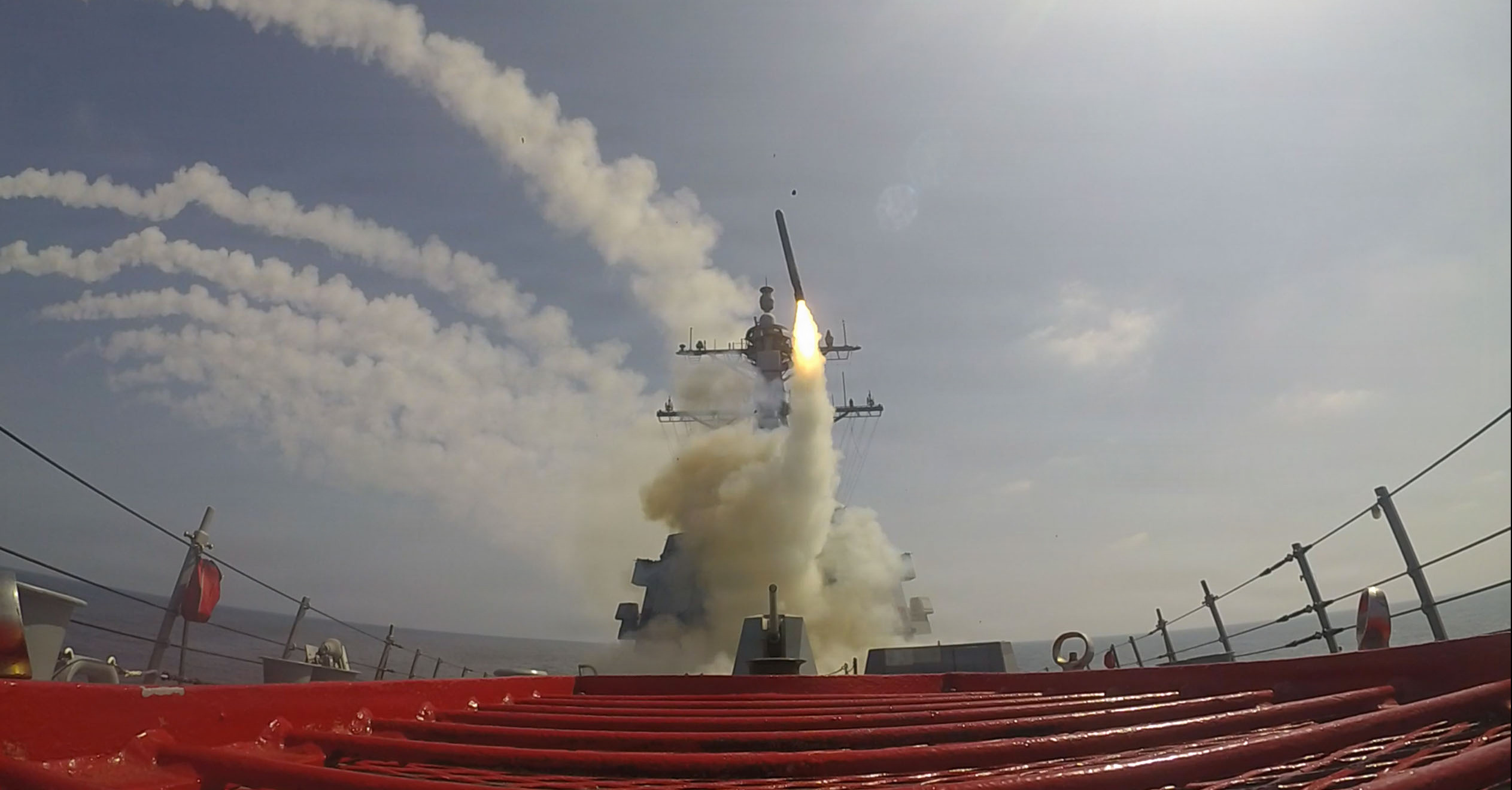
Tomahawk Tsunami: Navy's 1,200% Procurement Surge Signals Shift to High-Intensity Peer Conflict
The Navy's 1,200% Tomahawk increase is not simple replenishment after Iran but a strategic reorientation toward high-intensity peer conflict, exposing munitions shortages, industrial base weakness, and the need for magazine depth against China.
The U.S. Navy's fiscal 2027 budget request for 785 Tomahawk missiles at over $3 billion represents a 1,200% increase from the prior year's appropriation. While Defense News correctly captures the raw figures and ties the request to the depletion of roughly 850 missiles during Operation Epic Fury against Iran, the coverage treats this primarily as an accounting exercise to refill magazines. This framing misses the larger story: a deliberate strategic pivot toward sustained high-intensity combat against peer competitors, most likely China in a Taiwan or South China Sea scenario.
The CSIS report cited in multiple outlets confirms these 850 launches constitute the heaviest Tomahawk expenditure in any single campaign, eclipsing the 802 fired during the 2003 invasion of Iraq. Yet what the initial coverage underplays is the doctrinal context. Tomahawk has evolved from a first-strike weapon against rogue states into a critical tool for suppressing enemy air defenses and maritime strike in contested littorals. The $1.5 billion allocated for modifications almost certainly funds Block V upgrades that add multi-mode seekers and enhanced anti-ship capability, directly relevant to penetrating People's Liberation Army A2/AD networks.
This request cannot be viewed in isolation. It aligns with a dramatic jump in AMRAAM procurement and an overall weapons budget that has more than doubled to $22 billion. These numbers reflect hard lessons from both the Iran campaign and parallel observations of Russian munitions consumption in Ukraine. As detailed in the Pentagon's 2025 Annual Report to Congress on the Military Power of the People's Republic of China, Beijing maintains significantly higher cruise and ballistic missile production rates than the United States. RAND Corporation wargames have repeatedly shown that U.S. forces would exhaust standoff munitions within the first two to three weeks of a high-intensity Western Pacific fight, a vulnerability now being quietly acknowledged through these budget lines.
Original reporting also glosses over industrial base fragility. RTX's February 2026 agreement to scale production to 1,000 missiles per year is ambitious, yet Bloomberg's reporting on delays to Japan's order of 400 Tomahawks illustrates the gap between rhetoric and reality. The post-Cold War atrophy of the defense industrial base, combined with just-in-time supply chains, means even this surge will take years to materialize. Mark Cancian's assessment that replenishing the 850 expended missiles will require two to three years is optimistic if simultaneous demand for other precision-guided munitions continues.
The deeper pattern missed by pure defense-spending journalism is the shift from episodic counter-terrorism campaigns to protracted great-power deterrence. For two decades, Tomahawk launches were measured in dozens per operation. The Iran war burned through them at rates that would be unsustainable against a peer foe with thousands of hardened targets. By requesting enough missiles to not only replace losses but expand the overall inventory, the Navy is signaling preparation for multi-theater operations where munitions depth becomes a strategic resource as critical as carrier battle groups.
This move also carries diplomatic weight. Allies like Japan and Australia, themselves acquiring Tomahawks, are watching U.S. production capacity closely. Any perception that American stockpiles are chronically depleted undermines extended deterrence. The budget request therefore serves both material and signaling functions: rebuilding physical inventory while communicating to adversaries that the United States recognizes the character of future warfare has changed.
In synthesis, the Navy's request is not merely recovery from one conflict but insurance against the next. It reveals a Pentagon increasingly concerned that budget narratives focused on platforms have neglected the equally vital 'magazine depth' required to win the prolonged salvo exchanges that both CSIS and RAND predict will define combat with China. Whether Congress approves the full amount and whether RTX can actually deliver at scale will determine if this strategic shift remains aspirational or becomes operational reality before the next crisis erupts.
SENTINEL: The Navy's massive Tomahawk order is early preparation for a Pacific high-intensity fight against China where current stockpiles would be exhausted in weeks; this signals recognition that industrial base mobilization must accelerate now or deterrence will fail.
Sources (3)
- [1]US Navy seeks 1,200% increase in Tomahawk missile procurement for 2027(https://www.defensenews.com/news/your-navy/2026/04/07/us-navy-seeks-1200-increase-in-tomahawk-missile-procurement-for-2027/)
- [2]Pentagon burning through Tomahawks at alarming rate(https://www.washingtonpost.com/national-security/2026/03/27/pentagon-tomahawk-missiles-iran/)
- [3]2025 Annual Report to Congress: Military Power of the People's Republic of China(https://www.defense.gov/News/Releases/Release/Article/4123456/dod-releases-2025-report-on-military-and-security-developments-involving-the-pe/)