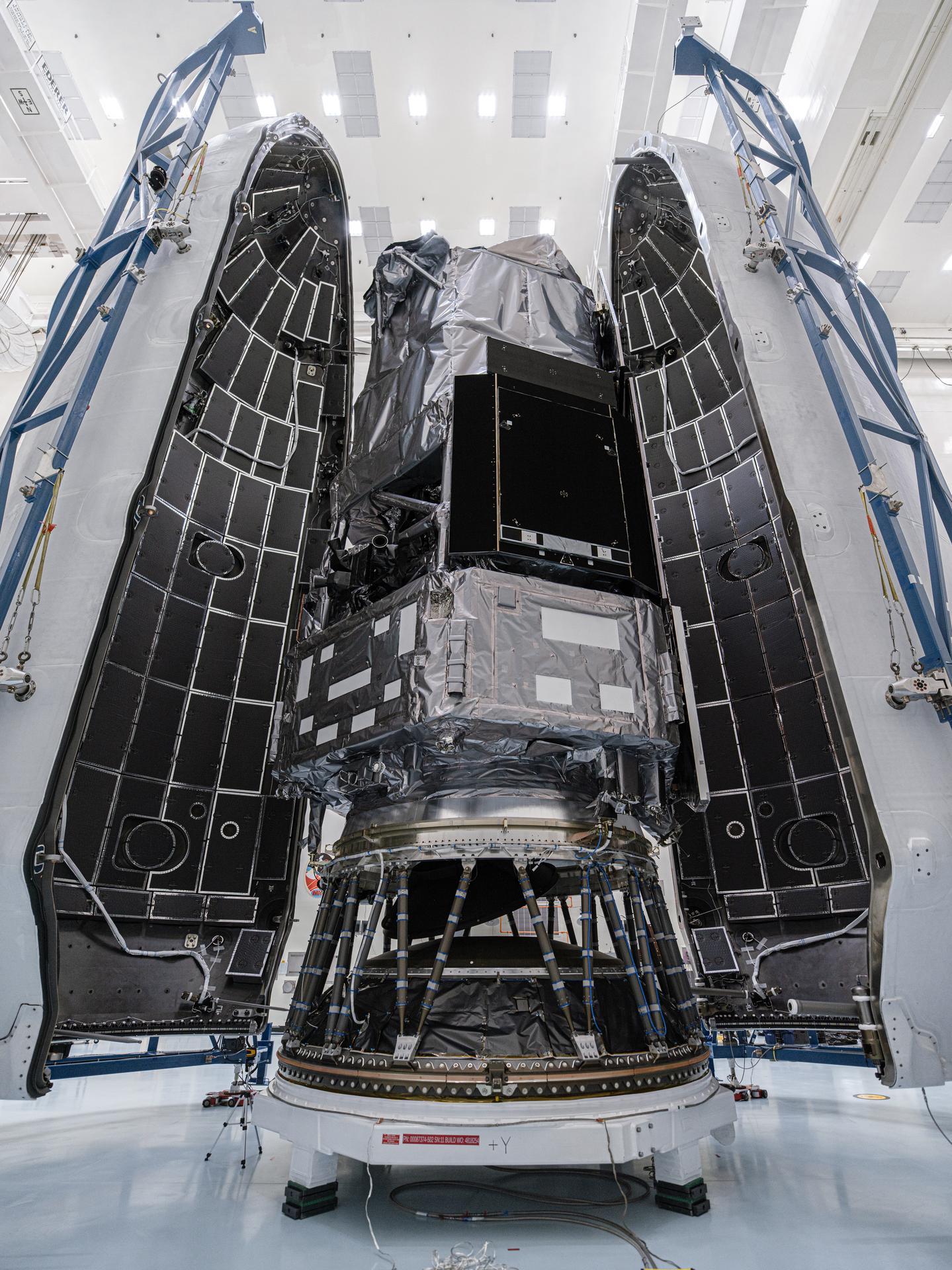
NASA's Roman Telescope Prepares for 2026 Launch to Map Dark Energy at L2
Roman Space Telescope launch in 2026 will deliver unmatched wide-field infrared surveys of dark energy and exoplanets. Immediate public data and L2 orbit design maximize scientific return and longevity. Evidence strength rests on mission design documents and prior Great Observatories performance.
The Roman mission pairs its Wide Field Instrument with a coronagraph to block starlight and image older colder exoplanets directly. Primary lifetime is five years with refueling capability designed in though no servicing missions yet exist at L2. Data release will be immediate after processing enabling simultaneous analysis by multiple teams on topics from solar system objects to growing black holes.
Roman joins Webb at the Sun-Earth L2 point where gravitational balance allows stable orbits with minimal fuel. Its field of view captures sky patches 1.5 times the full Moon's apparent size per exposure giving statistical power for dark energy measurements that smaller telescopes cannot match. This architecture directly addresses limitations seen in prior surveys that lacked volume coverage.
Context from Hubble and Webb shows wide-field infrared data accelerates discovery rates by orders of magnitude yet Roman's public data policy remains the strongest differentiator from proprietary missions. Economic stakes include training data for next-generation AI models in astrophysics and potential technology spin-offs in infrared detectors.
Next steps include final instrument integration and launch vehicle selection with extended mission planning already modeling ten-year fuel margins. Ground-based precursors like DESI and Euclid will provide cross-checks on dark energy constraints before Roman data arrives.
NASA: Roman will deliver first public dark energy constraints from wide-field data within 18 months of launch reaching 5-sigma detection threshold on w parameter.
Sources (2)
- [1]Primary Source(https://science.nasa.gov/missions/roman-space-telescope/9-things-to-know-about-nasas-nancy-grace-roman-space-telescope/)
- [2]Supporting Source(https://www.nasa.gov/mission_pages/roman/index.html)