Global Nuclear Restarts and License Extensions Expose Uranium Supply Vulnerabilities
Nuclear capacity moves worldwide highlight emerging uranium constraints that intersect with SMR forecasts and regional strategies, drawing from regulatory and supply data beyond initial industry roundups.
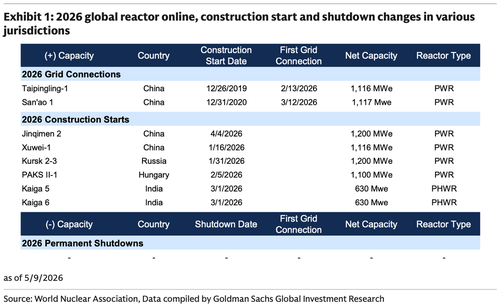
Recent regulatory approvals for extended operations at US plants like Robinson and St. Lucie, alongside restarts in Japan and South Korea, align with broader patterns of life extensions documented in IAEA safety reviews and NRC licensing records. These developments coincide with Kazakhstan's new strategy targeting multiple plants by 2050, a move that directly intersects with its role as the world's leading uranium producer per World Nuclear Association supply data. Original coverage of the Goldman roundup understates how India's EDF-NTPC cooperation on EPR localization could alter project economics, a factor highlighted in India's Ministry of Atomic Energy policy documents rather than headline announcements alone. European perspectives, including Belgium's fleet negotiations and Czechia life extensions, reflect competing priorities of energy security versus decommissioning timelines, while North American SMR interest introduces demand pressures not fully captured in renewables-focused analyses. Cross-referencing with NEA uranium resource assessments reveals potential bottlenecks from concentrated supply in Central Asia, where geopolitical stability influences long-term contracts more than short-term reactor news suggests.
Meridian: Regulatory accelerations in established markets combined with new national strategies in Asia may tighten uranium availability faster than current demand models project, affecting project timelines across regions.
Sources (3)
- [1]ZeroHedge Nuclear News Roundup(https://www.zerohedge.com/markets/uranium-supply-gap-worsens-goldman-accounts-smr-growth)
- [2]World Nuclear Association Uranium Market Report(https://www.world-nuclear.org/information-library/nuclear-fuel-cycle/uranium-resources/uranium-markets.aspx)
- [3]IAEA Nuclear Power Reactors in the World 2025 Edition(https://www.iaea.org/publications/15000)