Germany's Nuclear Reassessment Signals Europe's Enduring Energy Fragility
Germany's call to reassess nuclear power highlights structural flaws in its energy strategy, exposing EU-wide vulnerabilities in balancing renewables, gas dependence, and economic stability amid geopolitical shocks.
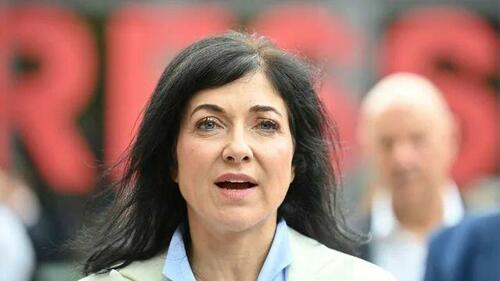
Germany’s Economy Minister Katherina Reiche has urged a fundamental rethink of the country’s nuclear phase-out, citing the absence of reliable baseload power beyond gas amid surging energy prices and downgraded growth forecasts. This intervention, delivered at the launch of the ‘Invest in Germany’ conference, goes beyond immediate crisis management and exposes structural weaknesses in the Energiewende policy framework established under earlier administrations.
The original ZeroHedge coverage accurately reports Reiche’s statements and the latest economic institute projections cutting 2026 GDP growth from 1.3% to 0.6%. However, it underplays the deeper pattern of policy inconsistency across multiple German governments and misses the EU-level governance implications. Primary documents, including the German Joint Economic Forecast issued by leading institutes in late 2025, attribute over half the downward revision directly to energy cost shocks rather than solely external factors. The forecast also notes persistent gaps in renewable dispatchability despite record installations.
Synthesizing this with the International Energy Agency’s World Energy Outlook 2025 and the European Commission’s 2024 REPowerEU progress report reveals broader context. The IEA document highlights that nations maintaining or expanding nuclear capacity, such as France and Sweden, have experienced electricity prices roughly one-quarter of Germany’s on peak contracts, corroborating the EEX futures data cited. The Commission report documents how Germany’s increased LNG dependence—now including 10% U.S. supplies—has tied domestic prices to global spot markets, amplifying transmission of Middle East conflicts into European inflation.
Multiple perspectives emerge. Industry associations and parts of the CDU argue that nuclear, particularly through participation in small modular reactor research, offers low-carbon firm power essential for energy-intensive manufacturing, preventing further deindustrialization. Environmental groups and Green Party representatives counter that accelerating storage technologies, grid modernization, and demand-side flexibility avoids the proliferation and waste risks associated with nuclear fuel cycles, pointing to falling costs of batteries and hydrogen as primary alternatives. Economists remain divided: some emphasize path dependency and sunk costs of the 2011-2023 phase-out, while others warn that reopening the nuclear debate could delay necessary renewable scaling.
What existing coverage often misses is the connection to EU internal market dynamics. Germany’s previous opposition to nuclear-friendly language in EU taxonomy and industrial policy forums has limited its influence, as Reiche acknowledges. The Commission’s REPowerEU documentation shows member states pursuing divergent strategies—Poland’s new reactor builds, France’s lifetime extensions—creating risks of fragmented energy prices and investment signals across the single market. Patterns from the 2022 Russian supply cutoff demonstrate that heavy gas reliance functions as a transmission mechanism for geopolitical shocks into inflation, with official Destatis data showing household gas prices still 79% above 2021 levels in late 2025.
Official statements from Chancellor Merz describing the phase-out as a ‘severe strategic mistake’ and the government’s support for nuclear fusion and SMR research indicate potential policy reversal without immediate reactor restarts. Yet primary legal and technical assessments from the Federal Ministry for Economic Affairs and Climate Action confirm significant regulatory and public acceptance hurdles remain. This tension between economic pragmatism and historical energy transition commitments illustrates Europe’s persistent vulnerability: an inability to coordinate baseload low-carbon solutions at continental scale while exposed to repeated external price shocks.
MERIDIAN: Germany's nuclear debate may prompt selective engagement in European reactor projects, yet political divisions and regulatory barriers suggest gradual rather than rapid policy reversal, with lasting effects on EU energy price convergence and industrial competitiveness.
Sources (3)
- [1]Germany’s Economy Minister Urges Nuclear Rethink As Energy Prices Surge, Growth Forecasts Slide(https://www.zerohedge.com/political/germanys-economy-minister-urges-nuclear-rethink-energy-prices-surge-growth-forecasts)
- [2]World Energy Outlook 2025(https://www.iea.org/reports/world-energy-outlook-2025)
- [3]REPowerEU Progress Report 2024(https://energy.ec.europa.eu/publications/repowereu-progress-report-2024_en)