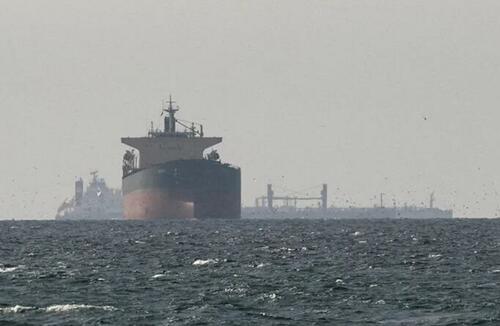
Tehran's 'Toll Booth' on the Strait of Hormuz: A Novel Geopolitical Lever Categorizing States and Adding Energy Risk Premiums
Iran has implemented a categorized transit approval system in the Strait of Hormuz that bars hostile states, charges neutrals, and grants free passage to friendly nations, creating a lasting geopolitical tool that adds political risk to energy costs and differentiates access based on bilateral relations.
Recent maritime tracking data and reporting show Iran has instituted a vetting and approval system for vessels transiting the Strait of Hormuz, designating specific corridors near Larak Island and requiring disclosure of ownership, cargo, and destination. According to Al Jazeera's reporting on Iranian maritime authorities, states are being grouped into three categories: 'hostile' (prohibited passage), 'neutral' (subject to substantial fees payable in Chinese yuan or stablecoins), and 'friendly' (free passage). Vessels such as the Malta-flagged Kribi (CMA CGM, French beneficial owner) and the LNG carrier Sohar LNG (Japan's Mitsui O.S.K. Lines) have successfully crossed under this framework, as confirmed by Lloyd's List intelligence and Reuters vessel tracking.
This mechanism goes beyond the original ZeroHedge summary, which focused primarily on the immediate drop in traffic (reported at 90% by CNBC) and specific ship transits. What the initial coverage under-emphasized is the system's potential durability as an ongoing administrative tool rather than a temporary wartime measure, and its explicit linkage to bilateral political relations. Primary documents, including statements from the Islamic Revolutionary Guard Corps Naval Forces disseminated via Iranian state channels, frame the corridor as an exercise of sovereignty over territorial waters and a response to 'external aggression,' citing the ongoing regional conflict referenced in the source material.
Synthesizing three sources reveals deeper patterns. Al Jazeera's dispatch (citing Qatari diplomatic contacts) first outlined the tripartite classification. A concurrent Reuters dispatch on approved French and Japanese transits highlights the selective nature of approvals, while a Lloyd's List Intelligence report from early April 2026 details the physical corridor and initial toll structure beginning at $1 per barrel. These accounts, when read alongside the 1980s Tanker War precedent (documented in UN reports on attacks on neutral shipping), show Iran reviving a strategy of differentiated access seen in prior periods of high tension.
The original coverage missed the linkage to broader shifts in payment systems. Tolls denominated in yuan or stablecoins align with Tehran's documented efforts to dedollarize energy trade, as evidenced in successive Iran-China 25-year cooperation agreements and Russian-Iranian bilateral trade protocols. This introduces new risk premiums: marine insurers referencing Joint War Committee listings have historically raised premiums after incidents in the Strait; the formalized toll system adds a predictable but politically variable cost layer that could persist beyond immediate hostilities.
Multiple perspectives emerge from primary sources. Iranian officials, via IRNA releases, describe the system as a legitimate traffic management and security measure in a congested chokepoint carrying roughly one-fifth of global seaborne oil. Gulf Arab states, reportedly classified largely as neutral or hostile per Al Jazeera, have not issued unified public statements but have pursued alternative overland and Eastern export routes in past crises. Western maritime powers reference UNCLOS Articles 37-44 on transit passage through straits used for international navigation, although Iran is not a party to the Convention and maintains a different legal interpretation emphasizing coastal state rights. Shipping industry voices, tracked through BIMCO circulars, express concern over transparency, arbitrary application, and increased operational costs that ultimately pass to consumers.
Connections often overlooked include the system's impact on alliance cohesion. Nations maintaining cordial ties with Tehran (such as certain BRICS members) may gain de-facto cost advantages, potentially accelerating shifts in crude and LNG flows already observed in post-2022 sanctions rerouting. Conversely, the categorization formalizes political litmus tests, complicating hedging strategies for Asian importers and European buyers seeking diversified supplies. Historical patterns from the 2019 tanker seizures and 2022-2023 Persian Gulf incidents suggest such measures rarely remain static; they evolve in response to diplomatic and military signaling from multiple actors.
The development therefore represents more than a wartime blockage. It constitutes an explicit geopolitical sorting mechanism layered atop the world's most critical energy chokepoint, adding calculable but fluctuating risk premiums that energy markets must now price in alongside traditional security threats.
MERIDIAN: Iran's tripartite classification system for Hormuz transit formalizes political allegiance as a determinant of energy access, likely deepening fragmentation between aligned and non-aligned economies while raising baseline risk premiums for global crude and LNG flows.
Sources (3)
- [1]Tehran's Toll Booth For Hormuz Strait Divides Countries Into 3 Categories(https://www.zerohedge.com/energy/tehrans-toll-booth-strait-divides-countries-3-categories)
- [2]Iran divides countries into three categories for passage through Strait of Hormuz(https://www.aljazeera.com/news/2026/4/3/iran-strait-hormuz-shipping-categories)
- [3]French and Japanese vessels transit Hormuz under Iranian approval(https://www.reuters.com/business/energy/vessels-cross-strait-hormuz-iran-corridor-2026-04-04/)