Palantir's Alex Karp Exposes AI 'Tokenmaxxing' as Elite Control Play: Safety Rhetoric Masks Sovereignty Grab
Karp's July 2026 CNBC tirade and Palantir manifesto expose token economics as a sovereignty trap, linking AI safety posturing to elite mechanisms of innovation control and data extraction—corroborated across major outlets.
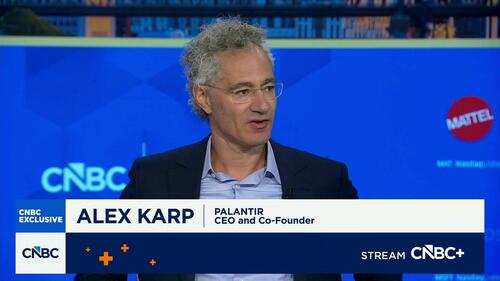
On July 1, 2026, Palantir CEO Alex Karp delivered a pointed critique during a CNBC Squawk Box appearance, declaring that 'something has gone completely wrong' with the token-based pricing models of frontier AI labs like OpenAI and Anthropic. Enterprises, he argued, are effectively paying a 'wealth tax' that transfers their proprietary data, intellectual property, and competitive 'alpha' to third parties while receiving limited value—often little more than 'disposable scripts' incentivized by high token usage rather than robust, sovereign systems.
Karp's remarks aligned precisely with a nine-point 'AI sovereignty' manifesto Palantir posted on X the prior day. It warns that relinquishing control over data, model weights, and compute hands adversaries the means to exploit institutional edges, while 'tokenmaxxing' hijacks value orientation and erodes institutional intelligence. 'Controlling your weights is controlling your fate,' the manifesto states.
This insider tech critique lands amid broader elite dynamics. Frontier labs simultaneously amplify AI risk narratives—often framed as existential safety concerns—to justify regulatory influence and restricted access, yet aggressively market powerful models globally, including to governments. Karp highlighted the contradiction: overselling risks while pushing deployment, and questioned outsourcing national security capabilities to 'the consensus view in Silicon Valley.'
The comments coincide with enterprise pushback, including shifts toward cheaper Chinese alternatives and Palantir's Nvidia partnership emphasizing open-weight models for data control. CNBC reported Karp channeling 'the voice of American business,' with peers 'livid' over escalating costs and IP risks. Forbes and other outlets captured the 'effing insane' characterization of the business model.
Deeper connections emerge in the hypocrisy lens: dominant institutions promote innovation rhetoric while architecting dependency structures that concentrate power. Palantir's sovereignty push advocates retaining tribal knowledge and compounding data advantages internally—positioning control as precondition for genuine choice, not theatrical restraint. This resonates with documented enterprise frustrations and regulatory headwinds, revealing how safety theater may serve as cover for maintaining leverage over compute, weights, and outcomes.
Palantir: Accelerates shift to sovereign/open-weight AI deployments among enterprises and governments, pressuring frontier labs to adapt pricing or lose market share.
Sources (4)
- [1]Palantir’s Karp bashes OpenAI, Anthropic token model(https://www.cnbc.com/2026/07/01/palantir-karp-open-ai-anthropic-tokens.html)
- [2]Palantir Billionaire Karp Blasts AI Industry As 'Effing Insane'(https://www.forbes.com/sites/tylerroush/2026/07/01/palantir-billionaire-alex-karp-calls-ai-industry-effing-insane-in-heated-interview/)
- [3]Read Palantir's 9-point manifesto that decries tokenmaxxing and trumpets 'AI sovereignty'(https://www.businessinsider.com/palantir-ai-data-sovereignty-tokenmaxxing-politics-europe-2026-7)
- [4]Palantir CEO Alex Karp says 'something has gone completely wrong' with how AI is sold(https://www.cnbc.com/video/2026/07/01/palantir-ceo-alex-karp-says-something-has-gone-completely-wrong-with-how-ai-is-sold.html)