Squad-Level Counter-Drone Revolution: US Army's Precision Grenadier System Reflects Hard Lessons from Ukraine and the Middle East
The Army's PGS program with counter-drone munitions is a direct response to cheap UAV proliferation in Ukraine and the Middle East, revealing an urgent evolution in squad-level tactics that mainstream coverage frames too narrowly as a continuation of 2008 defilade requirements.
The Defense News article frames the US Army's Precision Grenadier System (PGS) solicitation as the latest chapter in a two-decade quest to solve the defilade problem identified in the 2008 Small Arms Capabilities-Based Assessment. While accurate on the timeline from the failed XM25 Punisher to the current M320 limitations, this coverage misses the central driver: the explosive proliferation of low-cost UAVs that has rendered traditional infantry tactics obsolete since 2022. What began as a requirement for hitting enemies behind walls at 500 meters has morphed into an urgent need for organic squad-level air defense against cheap commercial and FPV drones now ubiquitous on battlefields.
The solicitation's emphasis on counter-UAS ammunition alongside counter-defilade and close-quarters rounds signals a profound tactical shift. In Ukraine, both Russian and Ukrainian forces have experienced daily drone densities that make unmasked movement nearly impossible. RUSI's detailed battlefield studies document how quadcopters costing under $500 routinely deliver grenades or act as kamikaze munitions against armor and exposed infantry, creating a persistent overhead threat that no amount of ground fire from standard rifles can reliably address. Similarly, Middle East operations, including Israeli engagements with Hamas and Hezbollah drone tactics as well as Houthi UAV strikes in the Red Sea, demonstrate how non-state actors can impose disproportionate costs using commercially available technology.
Mainstream reporting often treats these developments as niche or exotic, focusing instead on high-end systems like directed-energy weapons or vehicle-mounted jammers. The PGS program reveals what much coverage gets wrong: the Pentagon now recognizes that counter-drone capability must be pushed to the lowest tactical echelon. Issuing two launchers per rifle squad with integrated fire controls and specialized proximity or air-burst munitions represents the democratization of air defense, acknowledging that waiting for brigade-level assets is tactically fatal in drone-saturated environments.
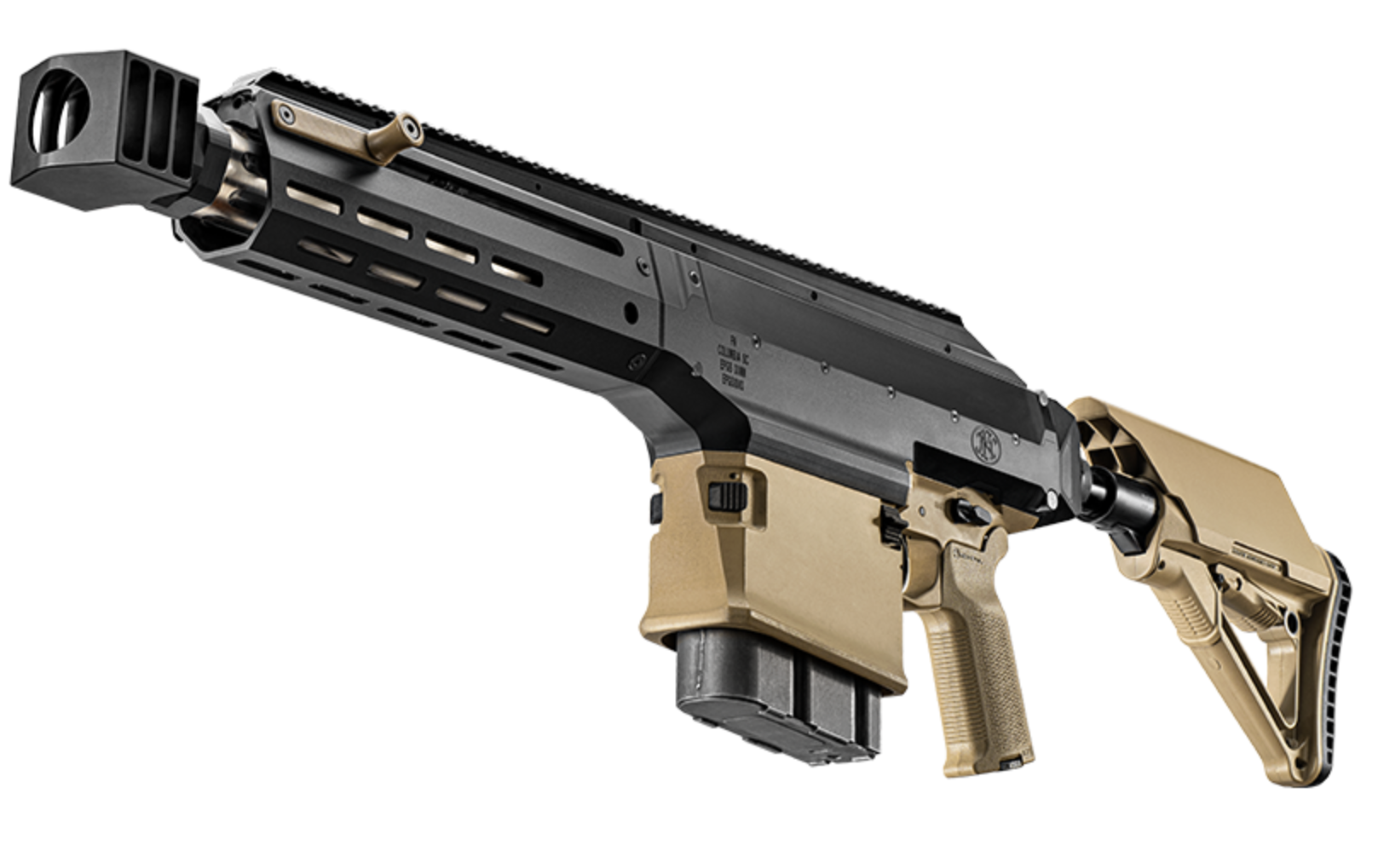
Synthesizing the Defense News reporting with a 2024 RUSI commentary on Ukrainian drone operations and a CSIS analysis of ground combat lessons from the Ukraine war, a clearer pattern emerges. The 2020 RFI's broader requests for breaching and anti-armor capabilities have been deprioritized in favor of multi-role rounds optimized for thin-skinned targets, personnel in defilade, and small aerial systems while minimizing collateral damage. This evolution tracks with observed battlefield realities where massed cheap drones overwhelm sophisticated but scarce electronic warfare assets. FN America's MTL-30 prototype and competing systems will likely feature programmable munitions and enhanced optics capable of rapid elevation adjustments for aerial intercepts.
This is not mere procurement continuity but a quiet revolution in infantry organization. The return to kinetic solutions at squad level, after years of emphasis on exotic countermeasures, highlights the limitations of high-tech approaches against adversaries who can sustain high sortie rates with low-cost attritable systems. Challenges remain: ammunition carriage will strain squad logistics, training must overcome the difficulty of engaging fast-moving small targets with grenade launchers, and effectiveness against true swarms is unproven. Yet the OTA prototyping approach with 25,000 mixed rounds demonstrates learning from past acquisition failures like the XM25.
The deeper implication, missed by coverage that treats drone defense as a specialized technical issue, is that the character of close combat has permanently changed. Cheap UAVs have compressed the air-ground spectrum, forcing every infantry unit to maintain an anti-air capability once reserved for dedicated ADA formations. As peer competitors and proxies alike adopt these tactics, the PGS may represent the first visible step in a broader retooling of NATO small-unit tactics for a drone-pervasive future.
SENTINEL: The Army's integration of counter-drone munitions into squad grenade launchers shows that proliferating cheap UAVs have forced a fundamental rethinking of infantry air defense, shifting from specialized high-tech systems to organic kinetic tools that will likely be adopted by allies facing similar threats from state and non-state actors.
Sources (3)
- [1]US Army wants new grenade launcher, ammunition to be able to destroy drones(https://www.defensenews.com/industry/techwatch/2026/04/06/us-army-wants-new-grenade-launcher-ammunition-to-be-able-to-destroy-drones/)
- [2]Observations from the Russian War in Ukraine: UAVs and the Future of Warfare(https://rusi.org/explore-our-research/publications/commentary/observations-drone-war-ukraine)
- [3]The Lessons of the Ukraine War for Ground Combat(https://www.csis.org/analysis/lessons-ukraine-war-ground-combat)