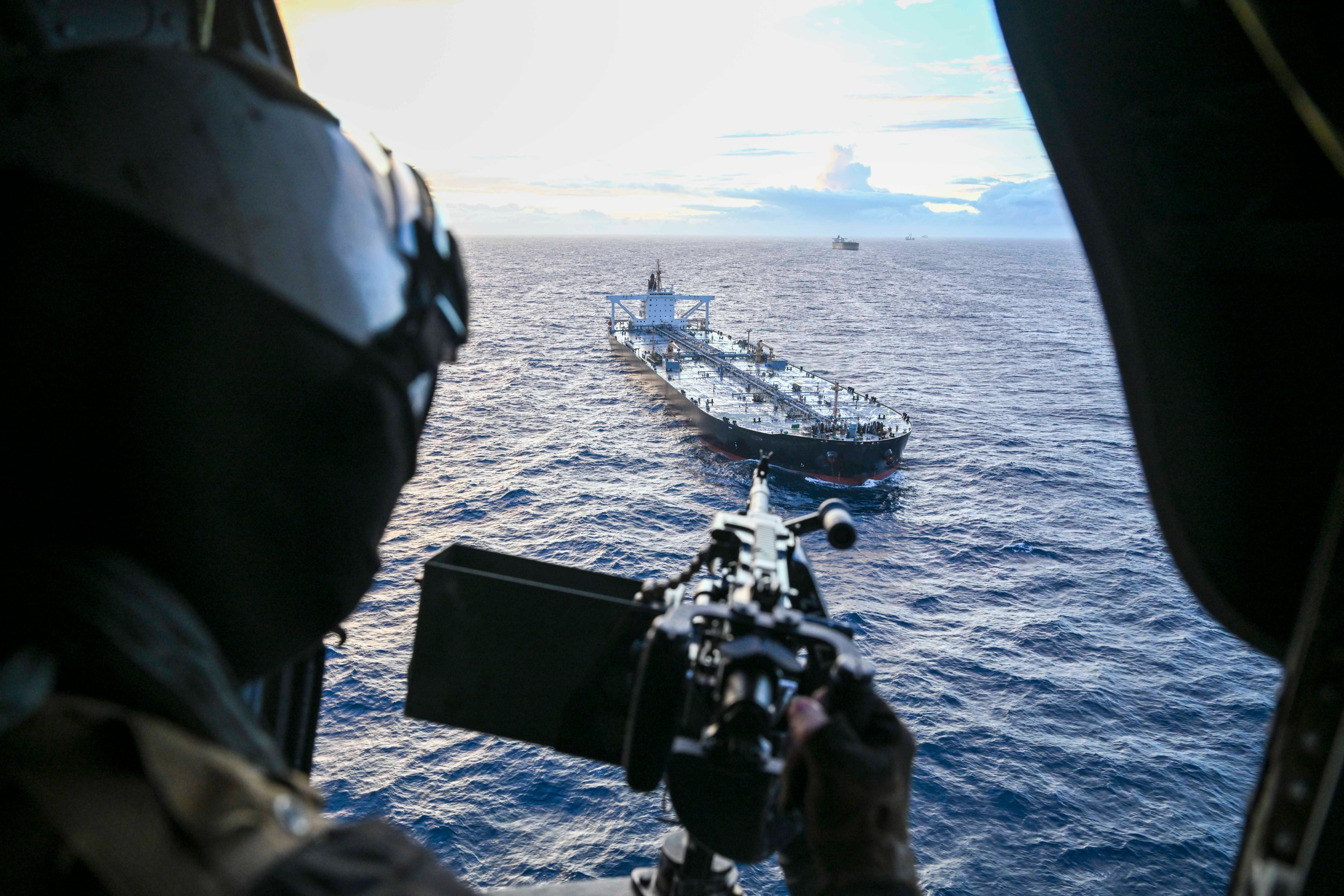
US Interdiction of Davina Exposes Fragile Oil Chokepoints as Hormuz Shadow War Intensifies
US boarding of sanctioned tanker Davina signals direct supply disruption with rapid downstream effects on global oil prices and pump costs amid Hormuz tensions.
The Pentagon's interdiction of the stateless supertanker Davina in the Indian Ocean marks a tangible escalation in maritime enforcement against Iranian crude, extending beyond routine sanctions into direct supply-chain disruption. While the original Defense News report notes the vessel's 2 million barrel capacity and prior sanctions, it underplays how repeated US boardings since early 2025 have already curtailed Tehran's shadow fleet operations by an estimated 15-20 percent, according to tanker tracking analyses. This action coincides with Iranian naval harassment in the Strait of Hormuz, creating dual pressure points that could constrict 20 percent of global oil transit. Cross-referencing with Reuters reporting on Iran's export surge to China and a CSIS assessment of Hormuz vulnerabilities reveals what the Pentagon statement omits: these interceptions risk retaliatory closures or insurance spikes that transmit directly to Brent crude benchmarks and US retail gasoline prices within 30-60 days. The Davina's draft data indicating near-full load underscores immediate cargo seizure potential, amplifying market volatility absent from surface-level coverage.
SENTINEL: Sustained US interdictions may trim Iranian exports enough to lift Brent above $90, transmitting to higher pump prices within weeks as Hormuz risks compound.
Sources (3)
- [1]Primary Source(https://www.defensenews.com/news/your-military/2026/06/05/us-forces-board-sanctioned-tanker-in-indian-ocean-pentagon-says/)
- [2]Related Source(https://www.reuters.com/business/energy/iran-oil-exports-shadow-fleet-2025/)
- [3]Related Source(https://www.csis.org/analysis/hormuz-strait-vulnerabilities-2026)