Autonomous Systems in Hormuz: Signaling Escalation at the Energy Chokepoint
Beyond technical deployment details, analysis reveals U.S. autonomous mine countermeasures in Hormuz reflect doctrinal shifts from 1980s precedents and Ukraine lessons, with overlooked effects on tanker insurance, oil flow risk premiums, and escalation dynamics at a chokepoint carrying one-fifth of global oil.
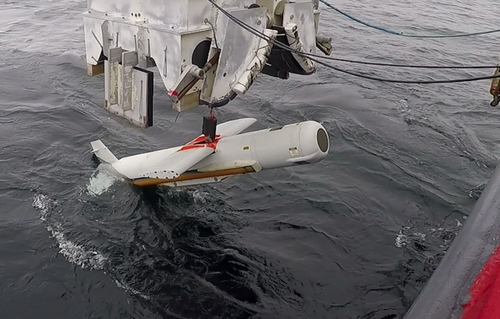
The U.S. Navy's deployment of Common Uncrewed Surface Vessels (CUSVs) towing AQS-20 sonar arrays, alongside MK18 Mod 2 Kingfish and Knifefish unmanned underwater vehicles, marks a notable shift in operations around the Strait of Hormuz. While the ZeroHedge report focuses on technical details and pairs the deployment with Iran's temporary closure of the strait and ongoing negotiations, it underplays the long-term doctrinal evolution and misses key linkages to insurance markets and historical mine warfare precedents.
Primary sources provide essential context. A 2023 U.S. Navy Program Executive Office for Unmanned and Small Combatants fact sheet describes these systems as maturing from experiments dating to 2016's Unmanned Influence Sweep demonstrations, explicitly designed to address Iranian mine inventories estimated by the Office of Naval Intelligence in 2019 at over 5,000 units, many of which are buoyant and moored types capable of targeting commercial tankers. The Wall Street Journal coverage cited in the original piece correctly notes the 100-foot swath width of the towed sonar but omits that similar systems were accelerated after the 2019 tanker attacks off Fujairah, documented in IMO incident reports.
What original coverage conflates is framing the action as tied to an active "U.S. blockade." Pentagon statements from U.S. Central Command (April 2025 release) characterize operations as "freedom of navigation" enhancements, not offensive interdiction. This distinction matters under UNCLOS Article 38, which guarantees transit passage rights through the strait. Iranian Foreign Ministry notes to the UN Security Council present the U.S. presence as provocative militarization, consistent with Tehran's long-standing position that external forces threaten its coastal security.
Patterns from related events illuminate deeper implications. The 1980s Tanker War saw mine strikes on neutral shipping, prompting U.S. Operation Earnest Will; today's autonomous approach reduces crew risk, echoing RAND Corporation's 2022 analysis of attrition-tolerant systems learned from Black Sea drone operations. The original source correctly references Ukraine lessons but misses how Houthi Red Sea campaigns (2023-2025) drove Lloyd's of London war-risk premiums up 400% for Gulf transits, per Joint War Committee listings. EIA's World Oil Transit Chokepoints report (updated 2024) quantifies that 21% of global petroleum liquids transit Hormuz; even temporary risk elevation affects delivered prices in Asia and Europe.
Synthesizing the ZeroHedge account, the WSJ technical reporting, the EIA chokepoint study, and primary Navy acquisition documents reveals an overlooked tension: while unmanned systems lower immediate personnel costs and political sensitivity to losses, they may compress decision timelines and complicate attribution if platforms are interfered with, raising escalation risks at this critical node. Shipping industry voices, including BIMCO statements, highlight that sustained autonomous operations could stabilize insurance pricing only if paired with diplomatic de-escalation; absent that, markets price in protracted disruption.
Perspectives diverge sharply. U.S. officials emphasize defensive preparation and technological superiority. Iranian statements frame it as evidence of hostile intent. GCC partners view it as stabilizing deterrence. Energy traders, per futures curve movements, interpret the deployment as preparation for weeks of reduced throughput, benefiting U.S. LNG exporters as noted in the original piece. The coverage's reference to "Skynet" futures, while evocative, distracts from immediate policy questions around rules of engagement for autonomous maritime systems in international straits.
MERIDIAN: Deployment of attrition-tolerant autonomous sweepers suggests Washington anticipates prolonged mine threats rather than quick diplomatic resolution, likely sustaining elevated insurance costs and rerouting pressures that favor non-OPEC exporters for 12-18 months.
Sources (3)
- [1]U.S. Navy Deploys Sea Robots To Sweep Hormuz Chokepoint For Mines(https://www.zerohedge.com/technology/us-navy-deploys-sea-robots-sweep-hormuz-chokepoint-mines)
- [2]Navy Deploys New Minehunting Robots in Middle East(https://www.wsj.com/articles/u-s-navy-deploys-unmanned-mine-sweeping-robots-hormuz-iran-tensions-2025)
- [3]World Oil Transit Chokepoints(https://www.eia.gov/international/analysis/special-topics/World_Oil_Transit_Chokepoints)