Iran's Precision Strike Destroys Rare US E-3 AWACS at Saudi Base, Exposing Air Defense Gaps and Escalation Risks
Iranian strike on Prince Sultan Air Base destroyed a US E-3 AWACS—one of only 16 in inventory—along with tankers, wounding troops and exposing critical gaps in US missile defenses. This direct hit on American assets in Saudi Arabia marks a major escalation downplayed in some coverage but likely to impact battlespace awareness and widen the conflict.
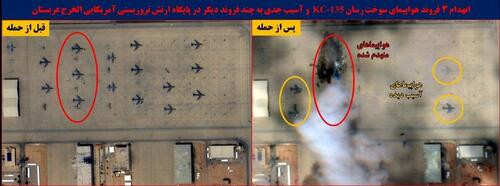
In a significant blow to US air operations in the Middle East, Iranian missiles and drones struck Prince Sultan Air Base in Saudi Arabia on March 27, 2026, destroying one of the US Air Force's limited fleet of E-3 Sentry AWACS aircraft. The targeted plane, identified as serial number 81-0005 'Captain Planet' from Tinker Air Force Base, suffered catastrophic damage with its fuselage and distinctive radar dome obliterated, according to ground-level photos and military analysis. This loss is particularly acute as the USAF maintains only 16 operational E-3s worldwide, with mission-capable rates hovering around 56 percent in recent years. The strike also damaged aerial refueling tankers and wounded at least a dozen US service members, contributing to over 300 wounded and 13 killed in the ongoing US-Israeli operations against Iran. While initial Wall Street Journal reporting described the aircraft as 'damaged,' subsequent imagery and assessments from defense outlets confirmed near-total destruction of this high-value asset essential for battle management, airspace deconfliction, and targeting. This event follows Iranian successes against other US systems, including damage to an AN/FPS-132 radar in Qatar and a THAAD radar in Jordan, highlighting vulnerabilities in forward-deployed US defenses against asymmetric low-cost drone and missile attacks. Mainstream coverage has framed the incident amid broader regional chaos, yet it represents a direct escalation: an attack on a sovereign US asset in a third country that could compel stronger retaliation or expose limits to American power projection. Historically, AWACS have been central to US operations since the 1970s, and their reduced numbers—coupled with the aging fleet and lack of immediate replacements—could impair situational awareness across multiple theaters. Connections to larger dynamics include strained US-Saudi hosting arrangements and debates over America-first foreign policy, echoing past tensions like the 1981 AWACS sale to Saudi Arabia that President Reagan defended against Israeli opposition. The use of relatively inexpensive Iranian munitions to neutralize half-billion-dollar platforms underscores the financial asymmetry in modern warfare, potentially forcing US strategic reevaluation. Sources confirm the base housed six E-3s prior to the attack, with satellite imagery earlier showing increased US aircraft presence amid tensions with Tehran.
LIMINAL: This destruction of a core US command-and-control asset on the ground signals that even heavily defended Gulf bases are now vulnerable, likely pushing Washington toward either rapid force protection upgrades, asset relocation, or risky escalation that could draw in more direct confrontations with Iran.
Sources (4)
- [1]Crucial E-3 Sentry Aircraft Damaged in Saudi Base Attack(https://www.wsj.com/livecoverage/iran-war-middle-east-news-updates/card/crucial-e-3-sentry-aircraft-damaged-in-saudi-base-attack-8LibxBawXturwMIFOwTx)
- [2]Iranian attack on Saudi air base heavily damages key US surveillance aircraft(https://www.timesofisrael.com/iranian-attack-on-saudi-air-base-heavily-damages-key-us-surveillance-aircraft/)
- [3]Images Purportedly Show E-3 Sentry Totally Destroyed From Iranian Strike(https://www.twz.com/air/images-purportedly-show-e-3-sentry-totally-destroyed-from-iranian-strike)
- [4]Iran strike on Saudi's Sultan Airbase destroys key US Air Force asset(https://www.jpost.com/defense-and-tech/article-891510)