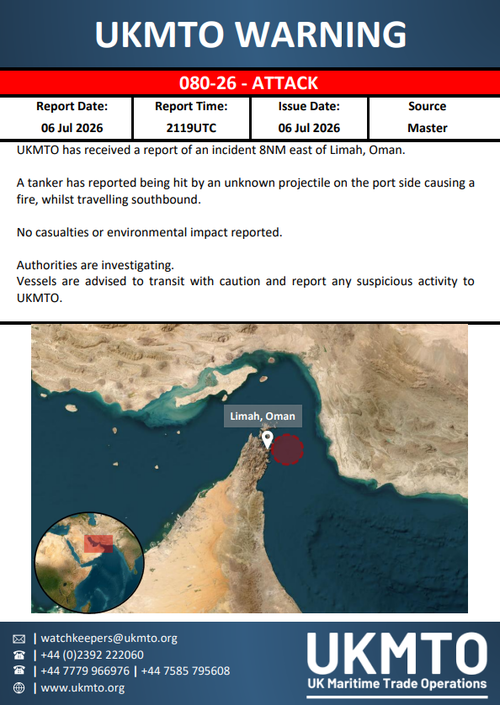
Iranian Missile Strikes Qatari LNG Tanker Al Rekayyat in Strait of Hormuz
The missile strike on the Al Rekayyat demonstrates Iran's willingness to impose direct costs on Qatari energy exports to extract negotiating concessions. Shipping patterns have fragmented along risk lines with flows remaining depressed. Price and insurance data will reveal whether the June arrangement has collapsed or merely paused.
The Al Rekayyat, operated by Qatar's Nakilat from Ras Laffan terminal, sustained fire damage from either a missile or suicide drone according to EOS Risk Group reporting. No crew casualties occurred. Ship tracking data showed the vessel avoided Iran-approved lanes. A second Nakilat carrier, Al Areesh, executed an immediate U-turn upon receiving reports. Brent crude increased 1 percent to 72.76 dollars per barrel as traders repriced Gulf war-risk premia. Vessel transits remain fragmented with owners selecting separate routing protocols based on individual exposure calculations.
Primary records indicate the strike occurred hours after Iranian Foreign Minister Abbas Araghchi stated that final agreement talks would not proceed amid continued threats. The incident followed a late-June US-Iran arrangement intended to suspend waterway attacks during negotiations. Tehran currently observes funeral protocols for Supreme Leader Ali Khamenei, after which Qatar expects talks to resume. Shipping data from Kpler confirms flows through the strait sit substantially below pre-conflict baselines with no rapid recovery visible.
Iran gains leverage to slow normalization of energy exports that benefit Gulf rivals while testing the durability of the June arrangement. Qatar absorbs direct costs to its LNG fleet and faces higher insurance rates that erode margins on long-term contracts. The United States retains capacity to reroute naval assets and impose additional sanctions but must weigh alliance cohesion at the Ankara NATO summit against escalation thresholds. Both sides document the other's violations while preserving off-ramps for resumed talks.
Insurance markets will register the next measurable signal. Sustained premiums above 1.5 percent of hull value for Hormuz transits over the next 14 days would indicate persistent risk aversion rather than isolated incident pricing. Additional Qatari loadings may divert to southern routes if two further strikes occur within the same window.
Kpler: Hormuz transits with transponders active will remain below 55 percent of February baseline through 15 September absent a new written commitment from Tehran.
Sources (2)
- [1]EOS Risk Group Alert(https://eosrisk.com/maritime-alerts)
- [2]Kpler Vessel Tracking Data(https://kpler.com/analytics/hormuz-flows)