California's Carbon Compromise: Free Allowances to Refiners Expose Limits of Aggressive Climate Mandates
CARB approved up to $4B in free carbon allowances for California oil refiners and industry to curb emissions leakage, support investments, and ease high fuel prices, despite environmentalist claims it weakens 2030 climate targets. This reflects pragmatic policy adjustment where economic pressures force moderation of aggressive green mandates.
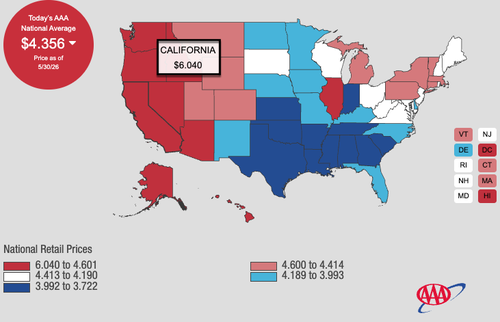
In a significant policy adjustment largely overlooked by national mainstream coverage, the California Air Resources Board (CARB) voted on May 29-30, 2026 to overhaul its Cap-and-Invest program, creating a pool of up to $4 billion in free carbon allowances for oil refiners, cement plants, and other industrial facilities. These allowances, tied to commitments for clean energy investments and efficiency upgrades, aim to prevent further refinery closures and contain soaring gasoline prices that have pushed California's average above $6 per gallon.[1][2]
Official CARB statements frame the changes as a balanced approach: removing 118 million allowances from the market to align with 2030 and 2045 emissions targets (delivering an 11% cap decline this decade), while dedicating 80% of allowances to direct consumer benefits—including $10 billion in electricity bill credits and $8 billion for the Greenhouse Gas Reduction Fund. The Manufacturing Decarbonization Incentive Fund was doubled to $4 billion specifically to support refiners and manufacturers amid lost federal incentives and economic pressures. CARB Chair Lauren Sanchez emphasized that the updates allow California to remain a climate leader while addressing affordability and business retention.[3]
However, environmental groups protested strongly, arguing the move undermines the program's core incentive to reduce emissions by effectively reallocating permits that were slated for removal to meet climate goals. Critics, including analysts from UC Berkeley, warned that refiners could receive more free permits than needed, potentially erasing promised reductions and cutting program revenue by roughly half according to the Legislative Analyst’s Office. This comes against a backdrop of California functioning as an 'energy island,' disconnected from Gulf Coast refining centers, importing 20% of fuels from Asia, and facing supply risks amplified by global tensions.[4][1]
The decision reveals a deeper pattern: aggressive green mandates, including tightening the cap-and-invest rules earlier in 2026, have contributed to the hollowing out of California's refining sector, record-high pump prices (far exceeding the national average), and warnings from majors like Chevron about an impending energy crisis. Industry leaders highlighted how such policies exacerbate vulnerabilities for a state with the nation's largest military presence, where fuel security carries national defense implications. This pragmatic retreat mirrors compromises in other jurisdictions where economic reality—impacts on working households, inflationary pressures, and industrial flight—forces recalibration of net-zero timelines.
Mainstream outlets have downplayed the retreat as mere 'updates for affordability,' yet the $3.5-4 billion subsidy to polluters underscores how carbon markets, when costs pass through to consumers and threaten supply, bend toward economic and energy security necessities. As heterodox analysis suggests, this is not anomaly but signal: degrowth-oriented policies falter against lived realities of price spikes and deindustrialization, potentially previewing wider policy fatigue as similar tensions emerge nationally.
LIMINAL: California's allowance giveaway signals that steep carbon costs and refinery attrition are compelling even deep-blue states to prioritize fuel affordability and industrial survival over rigid 2030 targets, likely accelerating similar quiet retreats elsewhere as energy prices and security concerns override pure climate modeling.
Sources (4)
- [1]California air regulators update a key climate program, sparking pushback from environmentalists(https://apnews.com/article/california-cap-trade-invest-carb-climate-emissions-0bf81dfaa623e26bd8ce40968d1edb77)
- [2]California may give Big Oil billions in free climate permits(https://calmatters.org/environment/climate-change/2026/05/carbon-market-free-permit-california/)
- [3]CARB adopts updates to California's Cap-and Invest Program to support affordability and align with climate goals(https://ww2.arb.ca.gov/news/carb-adopts-updates-californias-cap-and-invest-program-support-affordability-and-align-climate)
- [4]California overhauls carbon market — critics say it's a giveaway to oil(https://www.almanacnews.com/calmatters/2026/05/29/california-overhauls-carbon-market-critics-say-its-a-giveaway-to-oil/)