US Deploys Ukrainian-Style Autonomous Drone Boats in Iran Conflict, Accelerating AI-Driven Warfare Paradigm
US confirmation of GARC autonomous drone boat deployment in Operation Epic Fury against Iran highlights rapid integration of Ukraine-honed low-cost unmanned systems into American operations, pointing to an accelerated global AI weapons race and evolving tech-driven conflict patterns.
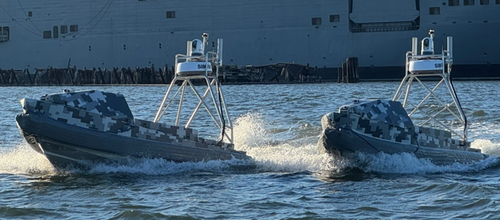
The United States has integrated Ukrainian-inspired unmanned surface vessels into its ongoing military campaign against Iran, marking a significant step in the adoption of low-cost autonomous systems for active combat operations. According to Reuters, U.S. forces are employing the Global Autonomous Reconnaissance Craft (GARC), developed by Maryland-based BlackSea Technologies, for reconnaissance and maritime patrols as part of Operation Epic Fury. Central Command spokesperson Tim Hawkins confirmed that these drone boats have logged over 450 underway hours and more than 2,200 nautical miles in support of the operation. This deployment directly adapts lessons from the Russia-Ukraine war, where inexpensive autonomous platforms like FPV drones and unmanned boats have redefined attrition warfare by minimizing human risk while maximizing operational tempo. Operation Epic Fury, which commenced in late February 2026 with U.S. and Israeli strikes targeting Iranian nuclear, missile, and naval infrastructure, represents a major escalation involving American combat assets in the region. Official CENTCOM documentation and White House statements describe the operation as focused on dismantling Iran's security apparatus and preventing nuclear weapon development. Analyses from the Center for Strategic and International Studies (CSIS) contextualize this as part of a prolonged conflict, where advanced technologies including unmanned systems play a central role in degrading adversary capabilities. This development connects to broader patterns of tech-driven warfare: the U.S. shift toward scalable, attritable autonomous assets mirrors developments in Eurasia, potentially foreshadowing AI-enabled 'kill chains' that reduce decision times and raise profound questions about human oversight, escalation thresholds, and the ethics of delegating lethal authority to machines. By deploying these systems directly into an active theater against Iran, the U.S. signals not just tactical adaptation but a strategic embrace of 2030s-style robotic warfare, where human involvement may increasingly shift from direct combat to supervision of AI swarms.
Liminal Analyst: Widespread adoption of cheap autonomous naval drones in active US combat lowers barriers to prolonged engagements, risks normalizing AI-augmented kill chains, and may spark an international arms race in fully independent lethal systems by the early 2030s.
Sources (4)
- [1]US deploys uncrewed drone boats in conflict with Iran(https://www.reuters.com/business/aerospace-defense/us-deploys-uncrewed-drone-boats-conflict-with-iran-2026-03-26/)
- [2]US deploys drone boats in Iran conflict, report says(https://www.stripes.com/branches/navy/2026-03-27/iran-navy-drones-patrol-middle-east-21197987.html)
- [3]U.S. Central Command | Operation Epic Fury(https://www.centcom.mil/OPERATIONS-AND-EXERCISES/EPIC-FURY/)
- [4]Operation Epic Fury and the Remnants of Iran’s Nuclear Program(https://www.csis.org/analysis/operation-epic-fury-and-remnants-irans-nuclear-program)