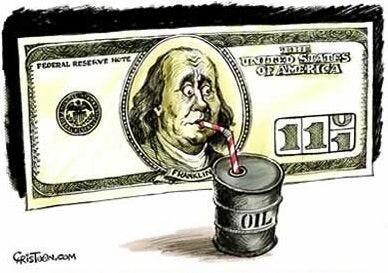
Iran War Accelerates Scrutiny of Petrodollar System as Gulf States Deepen China Ties
The 2026 Iran conflict has intensified discussion of petrodollar vulnerabilities through disrupted oil flows and Gulf hedging toward China via yuan mechanisms and mBridge, though major analyses indicate gradual erosion rather than sudden collapse, consistent with pre-war trends.
The ongoing Iran conflict, which erupted in early 2026 and disrupted flows through the Strait of Hormuz, has revived debate over the durability of the petrodollar system—the arrangement under which Gulf oil exporters price sales in dollars and recycle revenues into US assets in exchange for US security guarantees. A ZeroHedge analysis argues that eroded confidence in US protection could prompt Gulf Cooperation Council (GCC) states to accelerate non-dollar trade with China, the world's top oil importer and the GCC's largest trading partner.
Documented developments lend partial context. SUERF Policy Brief (May 2026) describes the conflict as creating a 'perfect storm' for the petrodollar, citing pre-existing trends like Saudi Arabia's Vision 2030 localization of defense spending, participation in Project mBridge (a multi-CBDC platform bypassing SWIFT and USD rails), and yuan swap lines with China. ING THINK (June 2026) notes a March 2026 spike in renminbi settlements via China's CIPS coinciding with the war's onset, though activity normalized afterward; GCC international assets remain heavily dollar-denominated at 69% versus a global 46% average.
Alternative payment infrastructure exists and is expanding. The Asia Society Policy Institute's January 2025 report 'Petrodollar to Digital Yuan' outlines China's efforts to build yuan settlement corridors and gold-conversion pathways for oil exporters, projecting gradual erosion of dollar use in oil trade settlement rather than rapid collapse. World Ports Organization reporting (October 2026) highlights opaque bilateral deals and potential non-dollar or barter settlements amid Hormuz disruptions. Gavekal Research and Northern Trust commentaries (2026) acknowledge hedging incentives but emphasize that full de-dollarization faces hurdles like GCC currency pegs to the USD and limited yuan liquidity outlets.
Ron Paul's February 15, 2006, House speech 'The End of Dollar Hegemony'—widely referenced in current analysis—predicted that oil producers demanding gold or equivalents for oil would signal fiat system strain. While no wholesale shift to gold pricing has occurred, incremental yuan invoicing (e.g., Saudi tests and mBridge transactions, ~95% in digital yuan per some reports) aligns with the broader multipolar trend.
Evidence points to measured adaptation rather than imminent rupture: Asian importers have rerouted some supply via pipelines and accepted higher costs, while GCC sovereign wealth funds (~$6 trillion assets) continue significant USD allocations. The war has tested but not severed the security-for-dollar-recycling bargain, though it has lowered the perceived value of the US umbrella for some actors.
Analyst: Sustained but incremental growth in yuan-settled Gulf-China oil trade and alternative rails like mBridge could modestly reduce new USD inflows from petrodollar recycling without triggering immediate systemic upheaval in dollar dominance.
Sources (5)
- [1]Still king – why the petrodollar isn’t going anywhere soon(https://think.ing.com/articles/still-king-why-the-petrodollar-isnt-going-anywhere-soon/)
- [2]What Iran means for the dollar: a perfect storm for the petrodollar(https://www.suerf.org/publications/suerf-policy-notes-and-briefs/what-iran-means-for-the-dollar-a-perfect-storm-for-the-petrodollar/)
- [3]New Report | Petrodollar to Digital Yuan: China, the Gulf, and the 21st Century Path to De-Dollarization(https://asiasociety.org/policy-institute/new-report-petrodollar-digital-yuan-china-gulf-and-21st-century-path-de-dollarization)
- [4]OPINION | Trading in the shadows: Opaque energy deals challenge the petrodollar(https://www.worldports.org/opinion-trading-in-the-shadows-opaque-energy-deals-challenge-the-petrodollar/)
- [5]The End of Dollar Hegemony (Ron Paul speech transcript)(https://www.congress.gov/109/crec/2006/02/15/152/19/CREC-2006-02-15-pt1-PgH315.pdf)