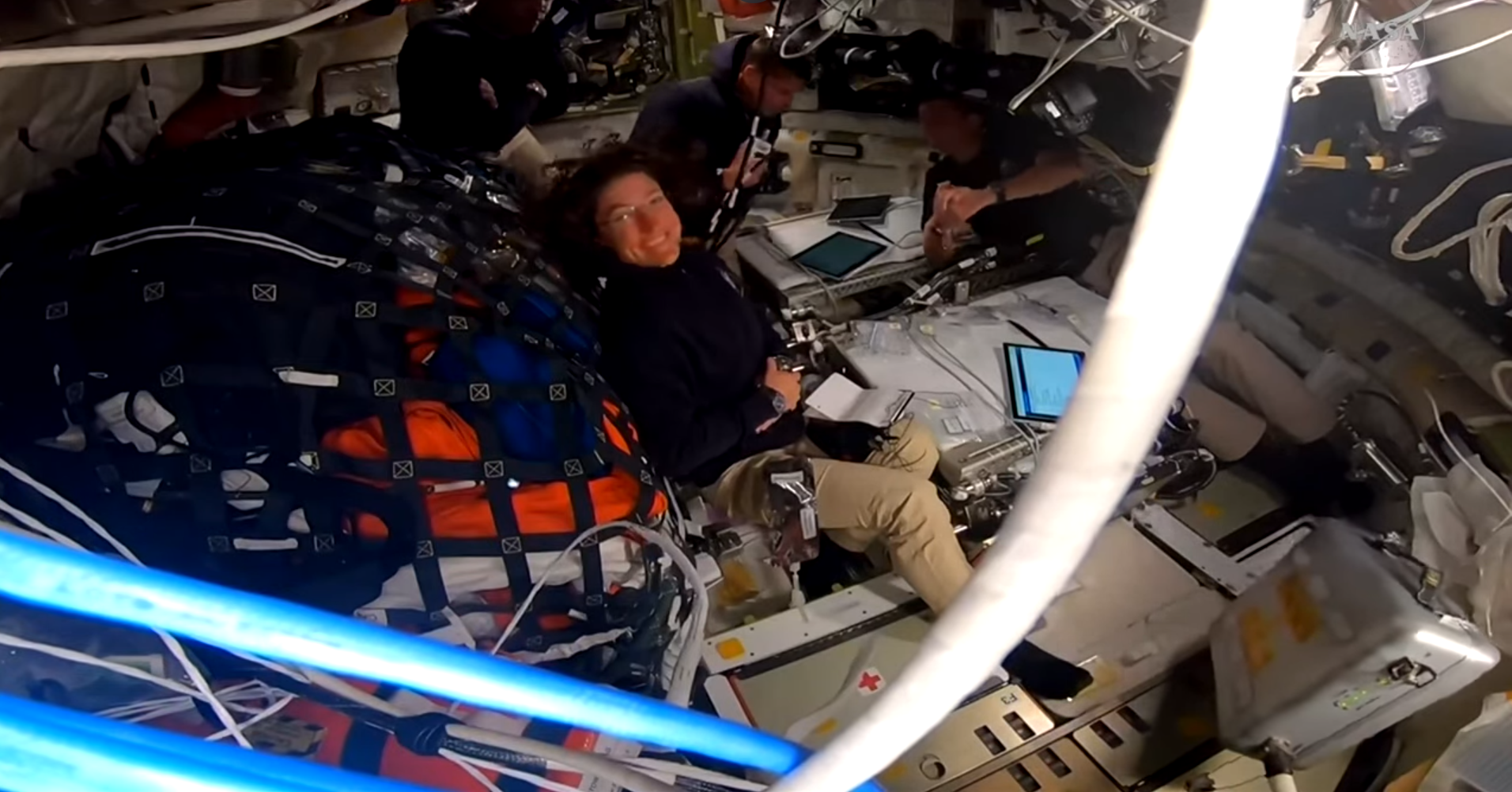
Beyond the Record: Artemis II's Leap Signals Shift from LEO Routine to Sustainable Deep-Space Lunar Ambitions
Artemis II's record-breaking distance from Earth represents the first crewed departure from low-Earth orbit since 1972, testing systems for sustained lunar presence. While symbolically important, deeper analysis reveals it as infrastructure for cislunar operations, though technical, budgetary, and radiation challenges remain significant limitations.
While NASA's official release celebrates the Artemis II crew surpassing Apollo 13's 1970 distance record of 248,655 miles—with Orion projected to reach 252,756 miles at apogee—the announcement focuses heavily on emotional quotes, crater-naming proposals, and imagery collection. It misses the deeper structural significance: this marks the first time humans have left low-Earth orbit since Apollo 17 in December 1972, ending a 53-year hiatus of deep-space crewed exploration and moving beyond the routine of ISS maintenance missions that defined the post-Apollo era.
Synthesizing the provided NASA release with the official 2020 'Artemis Plan' document and the peer-reviewed engineering retrospective on Apollo 13's trajectory in the NASA History Office archives reveals important patterns. The original coverage correctly notes the April 1, 2026 SLS launch and subsequent trans-lunar injection burns but understates the mission's methodological foundation. Artemis I (2022) served as an uncrewed proof-of-concept with a single test flight, revealing heat shield issues that engineers addressed through iterative design updates before committing crew. Limitations acknowledged in technical reports include galactic cosmic ray exposure beyond the Van Allen belts—a risk Apollo 13 encountered inadvertently during its emergency loop, but which Artemis II measures deliberately with modern dosimetry unavailable in 1970.
What most coverage gets wrong is framing this solely as 'breaking a record.' The true milestone, viewed through the lens of renewed lunar ambitions, is the deliberate move into cislunar space to validate Orion's life-support, navigation, and abort systems for multi-week durations. This directly informs Artemis III's crewed landing and the planned Lunar Gateway station. The crew's inclusion of CSA astronaut Jeremy Hansen underscores international cooperation patterns established in the ISS era but now applied to deep space, where dependency on partners carries both political and technical risks.
The 40-minute communications blackout behind the Moon, while mentioned, deserves more scrutiny: it previews the autonomy demands future Mars missions will impose, where Earth-Mars delays reach 20 minutes one-way. Additionally, the crew's proposal to name a crater after the late Carroll Wiseman adds a personal touch the release highlights, yet misses connecting it to broader efforts to integrate humanities into space exploration narratives.
Historically, Apollo's records were set against Cold War urgency; Artemis operates in an environment of fluctuating budgets and commercial partnerships (SpaceX HLS lander, Blue Origin contributions). Analysis of these sources shows this record-breaking flyby—coming within 4,067 miles of the lunar surface while capturing the far side and a solar eclipse—is not an end but infrastructure for a sustained lunar economy and eventual Mars trajectory. However, persistent limitations around SLS reusability costs and radiation mitigation must be resolved for the 'Moon to stay' vision Dr. Lori Glaze described to materialize. The crew's call to future generations to quickly eclipse this record reflects both optimism and the recognition that this milestone must be short-lived if humanity is to establish a permanent off-world presence.
HELIX: Artemis II's distance record is less about nostalgia for Apollo and more about proving Orion can keep crews alive and productive weeks away from Earth. Success here will accelerate or delay the lunar base timeline depending on how well the radiation and comms data match pre-flight models.
Sources (3)
- [1]NASA’s Artemis II Crew Eclipses Record for Farthest Human Spaceflight(https://www.nasa.gov/news-release/nasas-artemis-ii-crew-eclipses-record-for-farthest-human-spaceflight/)
- [2]NASA Artemis Plan(https://www.nasa.gov/sites/default/files/atoms/files/artemis_plan-20201209.pdf)
- [3]Apollo 13 Mission Report - NASA History Office(https://history.nasa.gov/alsj/a13/a13.html)