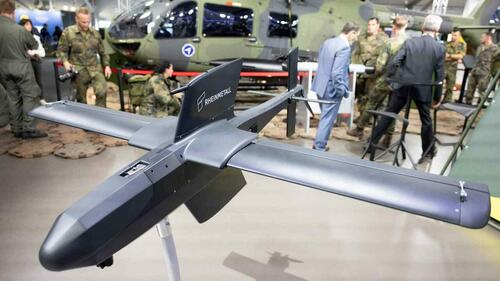
China's Grip on Critical Materials Emerges as Hidden Chokepoint for Europe's Rearmament Push
Credible reporting from Nikkei, EUISS, and MERICS confirms Chinese control over critical minerals poses a structural risk to EU defense buildup, beyond symbolic tit-for-tat measures, with policy responses still lagging targets.
European efforts to ramp up defense production amid Russia's war in Ukraine and shifting U.S. security commitments face an underappreciated obstacle: Beijing's dominant position in critical raw materials essential for weapons systems, electronics, and advanced munitions. A June 23, 2026 Nikkei Asia report details how China's export controls and sales restrictions on these minerals are hampering the EU's ambitions, prompting calls for accelerated supply-chain diversification. For 17 of the 34 materials the EU classifies as critical, China controls at least 70% of global mining or refining, with eight already under export controls, according to analysis by Joris Teer of the EU Institute for Security Studies (EUISS). Teer's May 2026 Chaillot Paper, 'Beijing’s critical raw material weapon - And how to dismantle it,' frames this dominance as a geo-economic tool that has already demonstrated disruptive potential through calibrated export tightening, raising costs and exposing vulnerabilities across defense and civilian sectors. The EU's 2024 Critical Raw Materials Act sets non-binding 2030 targets for domestic extraction, processing, and recycling while capping reliance on any single third country at 65%, backed by a €3 billion fund. Yet the European Court of Auditors has highlighted implementation shortfalls, and industry voices warn that stockpiling—as practiced by firms like Rheinmetall—offers only short-term buffers. Complementary reporting from MERICS in October 2025 notes that rare-earth export controls specifically threaten European defense manufacturers, though EU frameworks could mitigate risks if deployed decisively. Connections often overlooked include the dual-use nature of these materials in jet engines, drones, and precision-guided munitions, where even partial disruptions could cascade through NATO supply lines and delay rearmament timelines by years.
LIMINAL: Supply-chain vulnerabilities in critical materials will force Europe into deeper strategic partnerships with non-Chinese suppliers like Australia, Canada, and African nations, accelerating but also complicating rearmament timelines through 2030.
Sources (3)
- [1]China minerals control threatens EU rearmament, as bloc seeks new sources(https://asia.nikkei.com/business/aerospace-defense-industries/china-minerals-control-threatens-eu-rearmament-as-bloc-seeks-new-sources)
- [2]Beijing’s critical raw material weapon - And how to dismantle it(https://www.iss.europa.eu/publications/chaillot-papers/beijings-critical-raw-material-weapon-and-how-dismantle-it)
- [3]China’s rare-earths export controls hit EU rearmament – but open a strategic window(https://merics.org/en/comment/chinas-export-controls-hit-eu-rearmament-open-strategic-window)