Supertankers Retreat from Fujairah as Iranian Attacks Disrupt Hormuz Oil Shuttle System
Bloomberg-confirmed tanker reversals at Fujairah signal mounting risks to Middle East oil exports via the Hormuz shuttle workaround amid Iranian attacks, with potential ripple effects on global energy supply and shipping economics.
At least 10 very large crude carriers (VLCCs) and several Suezmax vessels have reversed course or halted while approaching the UAE port of Fujairah amid escalating Iranian attacks on shipping near the Strait of Hormuz, according to tanker-tracking data from Bloomberg. The port serves as a critical waypoint for wartime oil transfers, where larger tankers wait in safer waters of the Gulf of Oman while smaller shuttle vessels risk transit through the strait to load crude via ship-to-ship operations.
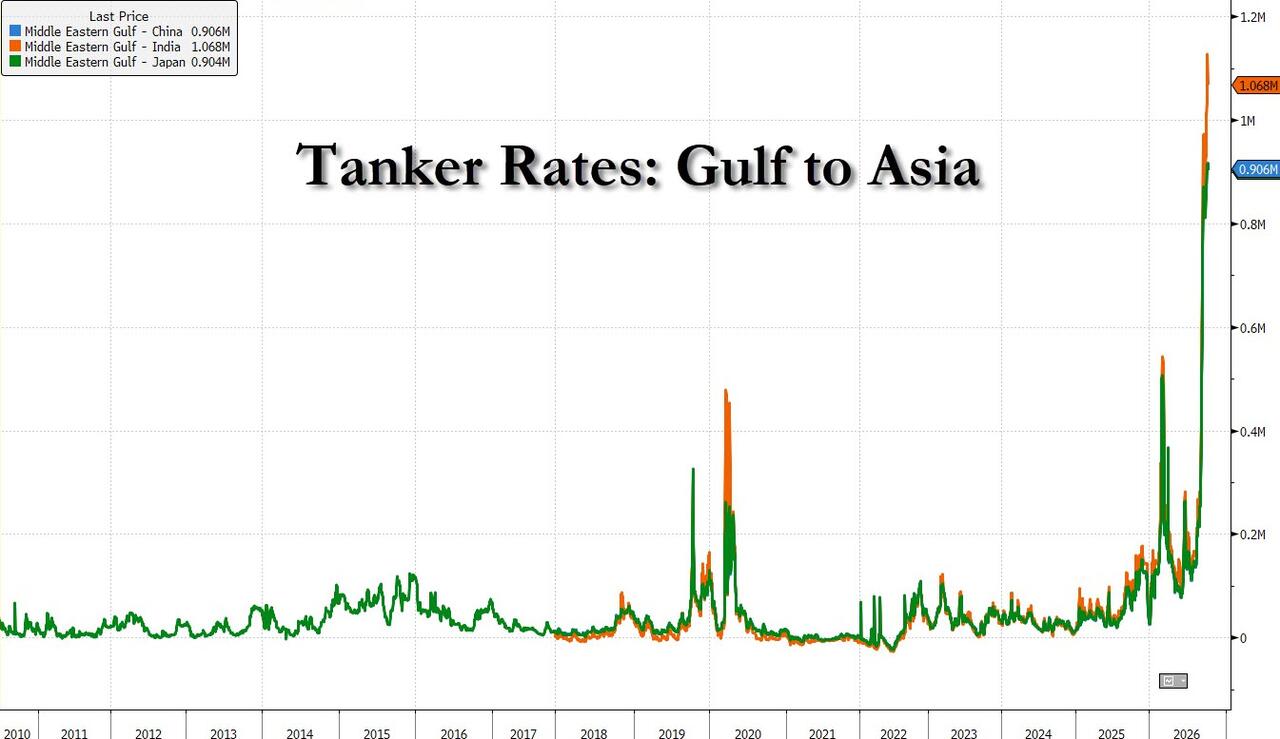
This pullback threatens a key workaround that had allowed Persian Gulf oil exports to recover toward pre-conflict levels despite the waterway's volatility. The system relies on a steady influx of empty receiving tankers; their retreat could tie up shuttles longer amid an already tight global tanker market, where rates for long-haul voyages have reached extraordinary levels.
The developments occur against a backdrop of near-daily attacks on commercial vessels in and around the strait, with Iran’s Islamic Revolutionary Guard Corps (IRGC) asserting control and targeting ships that disable transponders or use unauthorized routes. Recent incidents include strikes on multiple tankers, some near Fujairah itself, as reported by UK Maritime Trade Operations (UKMTO) and maritime intelligence firms like Windward. Broader context includes a US naval presence and ongoing regional hostilities, amplifying risks to the 21% of global oil trade that transits Hormuz.
Geopolitically, the disruptions underscore Iran’s leverage over the chokepoint, potentially pressuring Gulf exporters like Saudi Arabia and the UAE while raising insurance premiums and rerouting incentives. Energy markets face heightened volatility, with Brent crude sensitive to any sustained reduction in flows. Historical parallels to past Hormuz tensions highlight how even partial blockades can spike prices, though current high freight rates reflect both risk and scarcity of tonnage.
[Energy Analyst]: Sustained tanker pullbacks could reduce effective export capacity by 10-20% short-term, driving Brent above $100/bbl if attacks persist and forcing accelerated diversification to non-Hormuz routes or strategic reserves.
Sources (5)
- [1]Supertankers Turn From Gulf Oil Transfer Hub Amid Iran’s Attacks(https://www.bloomberg.com/news/articles/2026-10-12/supertankers-turn-from-gulf-oil-transfer-hub-amid-iran-s-attacks)
- [2]Iran attacks tankers beyond Strait of Hormuz(https://www.ft.com/content/83b817d5-df71-41a6-bef5-3db55a3a89cf)
- [3]Iran Seems Prepared for Major—But Measured—Escalation in the Gulf(https://www.washingtoninstitute.org/policy-analysis/iran-seems-prepared-major-measured-escalation-gulf)
- [4]Iran sets crosshairs on ‘US-UAE’ oil shuttle out of Strait of Hormuz(https://www.aljazeera.com/economy/2026/10/12/iran-sets-crosshairs-on-us-uae-oil-shuttle-out-of-strait-of-hormuz)
- [5]Strait of Hormuz | Windward Daily Intelligence(https://windward.ai/knowledge-base/strait-of-hormuz-live-report/)