Iran War's $25 Billion Price Tag Exposes Deeper U.S. Strategic and Financial Strain Amid Global Conflict Surge
The $25 billion cost of the Iran war, Operation Epic Fury, reveals deeper U.S. financial and strategic strains amid global conflicts. Beyond munitions and immediate expenses, the conflict risks military overstretch, domestic political fallout, and geopolitical shifts, including Iran’s alignment with Russia and China, while lacking a clear exit strategy.
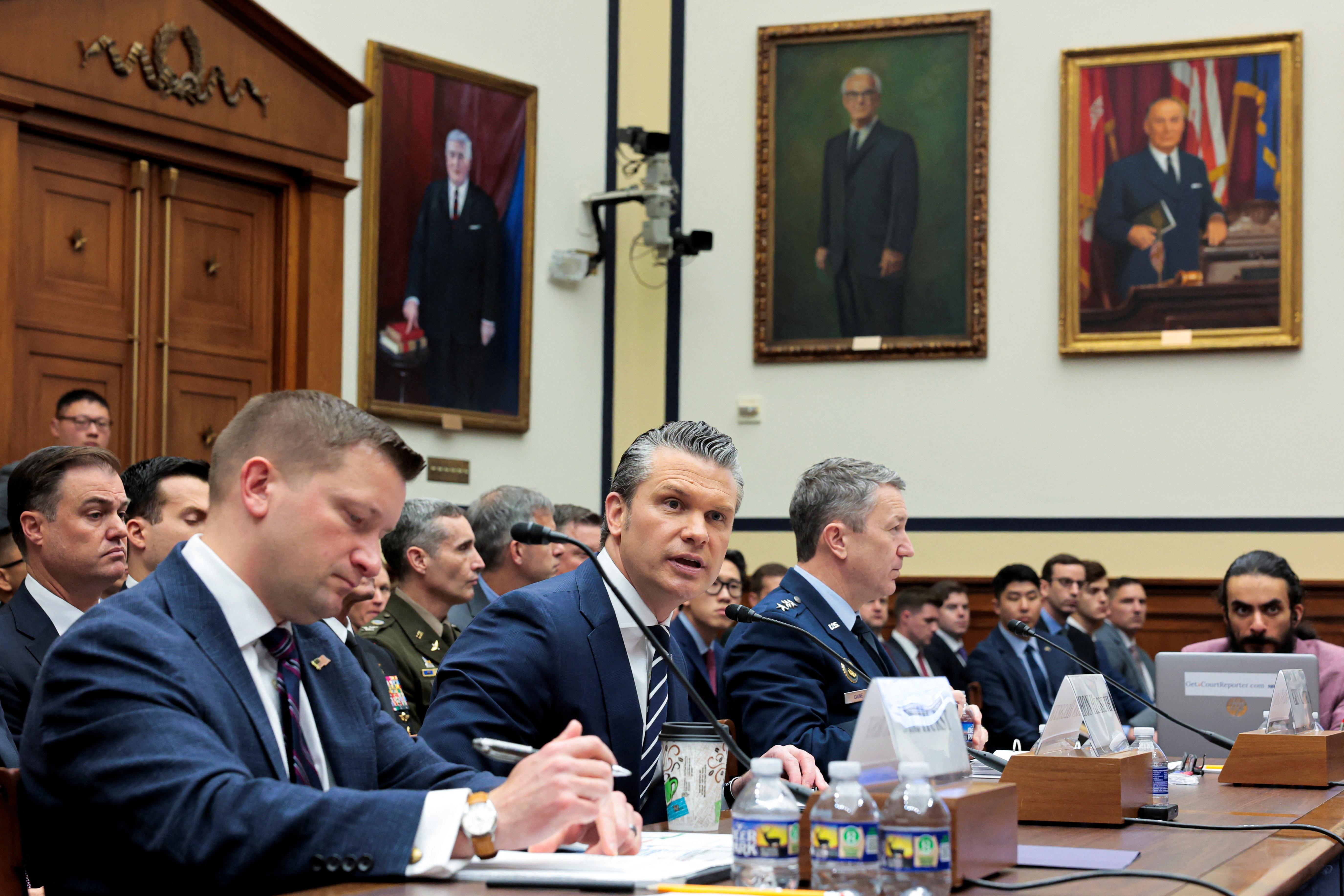
The revelation that Operation Epic Fury in Iran has cost U.S. taxpayers $25 billion in just eight weeks, as disclosed by Pentagon Chief Financial Officer Jules Hurst III during a House Armed Services Committee hearing on April 29, 2026, is more than a fiscal footnote. It underscores a broader pattern of escalating financial and strategic burdens on U.S. defense resources at a time of multiplying global conflicts. While the original reporting by Defense News highlights the raw cost—primarily driven by munitions, alongside operations, maintenance, and equipment replacement—it misses the deeper implications of this expenditure within the context of U.S. military overstretch, domestic political pressures, and shifting geopolitical alignments.
First, the $25 billion figure must be viewed against the backdrop of a defense budget already straining under a proposed $1.5 trillion for FY2027. This war, initiated by a joint U.S.-Israeli strike on February 28, 2026, compounds existing commitments in Ukraine, tensions in the Indo-Pacific with China, and counterterrorism operations across Africa and the Middle East. Historical parallels are stark: the U.S. spent over $2 trillion in Afghanistan and Iraq over two decades, with questionable strategic gains, according to a 2021 report from Brown University’s Costs of War project. Iran, with its rugged terrain, proxy networks, and ideological resilience, promises an even costlier quagmire if the conflict drags on. The Pentagon’s need for a supplemental funding bill signals not just immediate fiscal strain but a potential reallocation of resources from other critical areas, such as modernization programs (e.g., hypersonic weapons or cyber defense), which are vital to countering near-peer adversaries like China and Russia.
Second, the original coverage underplays the domestic political ramifications. Defense Secretary Pete Hegseth’s justification—framing the war as a necessary bulwark against Iran’s nuclear ambitions—echoes post-9/11 rhetoric that often prioritized threat inflation over measurable outcomes. With 13 U.S. service members killed and 400 wounded, public tolerance for casualties will be tested, especially under President Trump’s polarizing leadership. His Truth Social post, accompanied by a provocative image, suggests a reliance on personal bravado over coherent diplomacy, a tactic that risks alienating allies and hardening Iranian resolve. This approach contrasts with historical U.S.-Iran negotiations, such as the 2015 JCPOA, which, while flawed, at least delayed Iran’s nuclear timeline without military escalation. The stalled talks with Tehran, as reported, hint at a strategic miscalculation: a war costing billions may achieve less than diplomacy could have.
Third, the geopolitical ripple effects are underexplored in the initial report. Iran’s alliances with Russia and China, strengthened by shared anti-Western interests, mean that U.S. actions risk pushing Tehran deeper into their orbit. A 2023 RAND Corporation study on Iran’s strategic partnerships noted that prolonged conflict could accelerate Russian arms transfers or Chinese economic support to Tehran, undermining U.S. sanctions and containment efforts. Meanwhile, the joint U.S.-Israeli operation strains relations with other Middle Eastern states wary of escalation, potentially destabilizing energy markets—Brent crude prices have already spiked 15% since February 2026, per Bloomberg data. The original story’s focus on immediate costs misses how this war could reshape power dynamics in the region for decades, possibly emboldening Iran’s proxies like Hezbollah or the Houthis.
Finally, the human and ethical cost—beyond the 13 dead and 400 wounded U.S. troops—receives scant attention. Iranian civilian casualties, though unreported here, are likely significant given the intensity of airstrikes and urban combat. The long-term security implications include a potential surge in anti-American sentiment, fueling recruitment for extremist groups, much as the Iraq War did post-2003. The U.S. risks not just financial depletion but a loss of moral authority, a currency harder to replenish than dollars.
In sum, the $25 billion cost of Operation Epic Fury is a symptom of a larger malaise: a U.S. defense posture stretched thin by global overcommitment, exacerbated by domestic political brinkmanship and insufficient diplomatic foresight. Without a clear exit strategy or measurable objectives, this conflict threatens to bleed resources and credibility at a time when both are in short supply. Congress must scrutinize not just the price tag but the strategic logic of a war that could cost far more than money in the long run.
SENTINEL: If the Iran conflict extends beyond six months without diplomatic resolution, expect U.S. defense spending to balloon past $50 billion, diverting funds from critical modernization programs and heightening tensions with China and Russia.
Sources (3)
- [1]Iran War Has Cost $25 Billion So Far, Pentagon Official Says(https://www.defensenews.com/news/pentagon-congress/2026/04/29/iran-war-has-cost-25-billion-so-far-pentagon-official-says/)
- [2]Costs of War Project: U.S. Post-9/11 Wars(https://watson.brown.edu/costsofwar/figures/2021/human-and-budgetary-costs-date-us-war-afghanistan-2001-2022)
- [3]RAND Corporation: Iran’s Strategic Partnerships(https://www.rand.org/pubs/research_reports/RR1846.html)