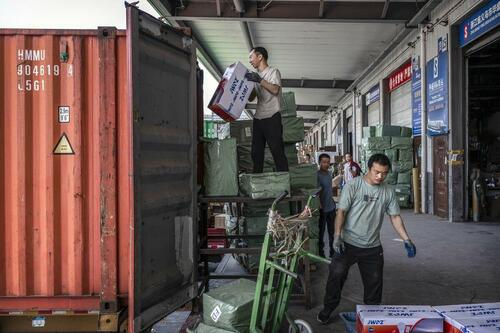
China's Private Sector Crisis in Zhejiang: A Warning for Global Supply Chains
Zhejiang Province, a major Chinese industrial hub, faces a private sector crisis with shrinking export orders and factory closures, signaling deeper economic woes. Beyond local impacts, this threatens global supply chains and export-dependent economies in Asia, highlighting the fragility of China’s economic model and the need for international recalibration of trade dependencies.
Zhejiang Province, a critical industrial hub in eastern China, is grappling with a deepening crisis in its private sector, as reported by local industry insiders. Once a powerhouse of export-driven growth, the region is witnessing a sharp decline in trade orders, with profit margins for many enterprises dropping below 3 percent, and numerous family-run businesses shutting down. This is not merely a local issue but a signal of broader economic challenges in China that could reverberate through global supply chains and impact export-dependent economies worldwide.
The original coverage by The Epoch Times highlights the struggles of Zhejiang’s textile and manufacturing sectors, attributing the decline to shrinking export orders and supply chain diversification. However, it overlooks the structural and policy-driven factors exacerbating this downturn, as well as the potential international fallout. Beyond the anecdotal evidence of factory closures, the crisis in Zhejiang reflects a confluence of domestic policy missteps and global trade shifts. For instance, the Chinese Communist Party’s tightening regulatory grip, including aggressive tax audits and fines, has created a hostile environment for private enterprises, as noted by local businessmen. This aligns with broader patterns of capital flight and factory relocations to Southeast Asia, driven by geopolitical tensions and trade frictions with the West, particularly the United States.
Official data from Hangzhou Customs claims a 7.1 percent year-on-year increase in Zhejiang’s trade volume for Q1 2026, reaching 1.38 trillion yuan ($201.83 billion). Yet, insiders cited in the original report allege that these figures are inflated through fraudulent reporting and double-counting to secure government subsidies. This discrepancy raises questions about the reliability of China’s economic data—a longstanding concern among international analysts. The World Bank’s 2023 China Economic Update corroborates this skepticism, noting that discrepancies between reported GDP growth and on-the-ground indicators like energy consumption and freight activity suggest overstatement of economic health.
What the original coverage misses is the cascading effect of Zhejiang’s struggles on global supply chains. As a key node in the production of textiles, electronics, and consumer goods, disruptions here could exacerbate delays and cost increases for manufacturers in North America and Europe, already strained by post-COVID recovery and the Russia-Ukraine conflict’s impact on logistics. Furthermore, the shift of manufacturing to countries like Vietnam and Indonesia, while reducing reliance on China, introduces new risks—less mature infrastructure and political instability in these regions could create additional bottlenecks.
Another underexplored angle is the impact on export-dependent economies, particularly in Asia. Countries like South Korea and Taiwan, which supply intermediate goods to Chinese manufacturers, may face declining demand as Zhejiang’s factories shutter. A 2022 report from the Asian Development Bank highlights that a 1 percent slowdown in China’s industrial output correlates with a 0.3 percent drop in GDP growth for neighboring economies—a pattern likely to intensify if Zhejiang’s decline persists.
In synthesizing these perspectives, it becomes clear that Zhejiang’s crisis is not an isolated downturn but a microcosm of China’s broader economic challenges, including overreliance on state-driven growth, policy inconsistency, and eroding private sector confidence. While official narratives project stability, the ground reality suggests a tipping point. The international community must brace for supply chain disruptions and reassess dependencies on Chinese manufacturing, while policymakers in Beijing face the urgent task of rebuilding trust with private enterprises. Without meaningful reforms, the ripple effects could destabilize not just China’s economy but the global trade ecosystem.
MERIDIAN: Zhejiang’s private sector collapse could accelerate global supply chain shifts, with disruptions likely to peak within 12-18 months if China fails to stabilize its industrial base.
Sources (3)
- [1]Private Sector Struggles in Major Chinese Industrial Base(https://www.zerohedge.com/economics/private-sector-struggles-major-chinese-industrial-base-export-orders-shrink-local)
- [2]World Bank China Economic Update 2023(https://www.worldbank.org/en/country/china/publication/china-economic-update)
- [3]Asian Development Bank Outlook 2022(https://www.adb.org/publications/asian-development-outlook-2022)