Wall Street's Quiet Institutionalization of Prediction Markets: Schwab, Citadel Moves Signal Shift in Information Aggregation and Political Risk Hedging
Schwab and Citadel's exploration of financial/event prediction markets amid surging institutional interest signals their evolution from fringe betting tools into sophisticated hedging and information mechanisms, with underreported potential to reshape political narratives, crowd wisdom aggregation, and ongoing CFTC/state regulatory conflicts.
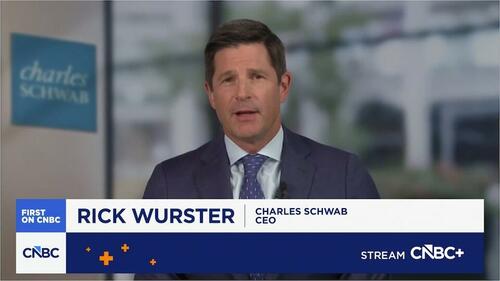
Traditional finance giants Charles Schwab and Citadel Securities are actively evaluating entry into prediction markets, marking a pivotal step toward mainstream institutional adoption of event-based trading. Schwab CEO Rick Wurster stated during the firm's Q1 2026 earnings call that the company will "likely" offer prediction markets at some point, though focused exclusively on financial and economic events such as inflation rather than sports, politics, or pop culture. Wurster emphasized Schwab's mission of long-term wealth building, noting poor historical returns for gamblers.[1][2]
Simultaneously, Citadel Securities President Jim Esposito told attendees at the Semafor World Economy conference that the firm is "absolutely keeping an eye" on the sector and views it as "certainly possible" they will participate as liquidity providers. Esposito highlighted a "sound industrial logic" for institutional clients to hedge portfolio risks from major events like elections or geopolitical shocks, explicitly ruling out sports betting.[3][4]
This development occurs as prediction platforms like Kalshi and Polymarket have seen explosive growth, with combined monthly volumes hitting record highs. It reflects broader Wall Street interest: Intercontinental Exchange (NYSE parent) has committed billions to Polymarket, Tradeweb has partnered with Kalshi for institutional access, and firms like Jump Trading and Susquehanna have taken stakes or begun market-making.[5]
The institutionalization lens reveals connections largely overlooked in day-to-day finance reporting. Prediction markets excel at information aggregation by incentivizing participants to bet real money on outcomes, often outperforming traditional polls or expert forecasts. As sophisticated players like Citadel provide liquidity and hedging tools, these markets could evolve from retail speculation into calibrated instruments for managing political and macro risks—potentially stabilizing portfolios ahead of volatile events like U.S. midterms while sharpening real-time probability signals that media outlets (including CNBC, CNN, and the Wall Street Journal) increasingly cite.[6]
This shift carries profound implications for political discourse. Academic analysis shows prediction markets can influence what politicians say, with "mention markets" correlating to increased usage of specific terms in speeches when trading volume rises. Partnerships between platforms and major news organizations further embed these probabilities into public narratives, turning crowd-sourced odds into benchmarks that shape voter perceptions and elite rhetoric far beyond traditional polling.[7]
Regulatory battles are intensifying in tandem. The CFTC has issued advisories on insider trading and manipulation risks, pursued enforcement actions, and clashed with states attempting to classify event contracts as unlicensed gambling. Lawmakers have raised alarms over potential insider trading on sensitive topics like military actions or elections, while platforms have responded with self-imposed bans on certain participants. Major Wall Street entry could tip these debates toward clearer federal derivatives-style oversight rather than gambling prohibitions, professionalizing the sector but also concentrating influence among established players.[8][9]
While mainstream coverage has emphasized retail volumes and election betting, the deeper story is the quiet integration into institutional finance infrastructure. This could transform prediction markets into more accurate, liquid aggregators of collective intelligence—reshaping how society anticipates, prices, and responds to political, economic, and geopolitical uncertainty. The entry of Schwab and Citadel suggests the genie is out of the bottle; the question is whether regulators, politicians, and traditional information gatekeepers will adapt or resist this realignment of incentives.
Liminal: Major Wall Street entry will professionalize prediction markets into legitimate portfolio tools and superior information aggregators, amplifying their influence on political discourse and narratives while escalating regulatory fights over manipulation, insider edges, and whether crowd wisdom should shape elections more than polls or pundits.
Sources (6)
- [1]Schwab Considering Prediction Markets Tied to Finance Events(https://www.bloomberg.com/news/articles/2026-04-16/schwab-considering-prediction-markets-linked-to-finance-events)
- [2]Citadel Securities Looks at Prediction Markets as Trading Scales(https://www.bloomberg.com/news/articles/2026-04-16/citadel-securities-looks-at-prediction-markets-as-trading-scales)
- [3]Citadel Securities says prediction markets are a good hedge for geopolitical risks(https://www.semafor.com/article/04/16/2026/citadel-securities-says-prediction-markets-are-a-good-hedge-for-geopolitical-risks)
- [4]Kalshi, Polymarket lobby as insider trading, betting eyed by Congress(https://www.cnbc.com/2026/04/15/kalshi-and-polymarket-congress-regulation-washington-influence.html)
- [5]Wall Street Is Already Betting on Prediction Markets(https://www.wired.com/story/prediction-markets-find-a-welcome-on-wall-street/)
- [6]How Prediction Markets Affect Political Speech(https://osf.io/preprints/socarxiv/n6zxw_v1)