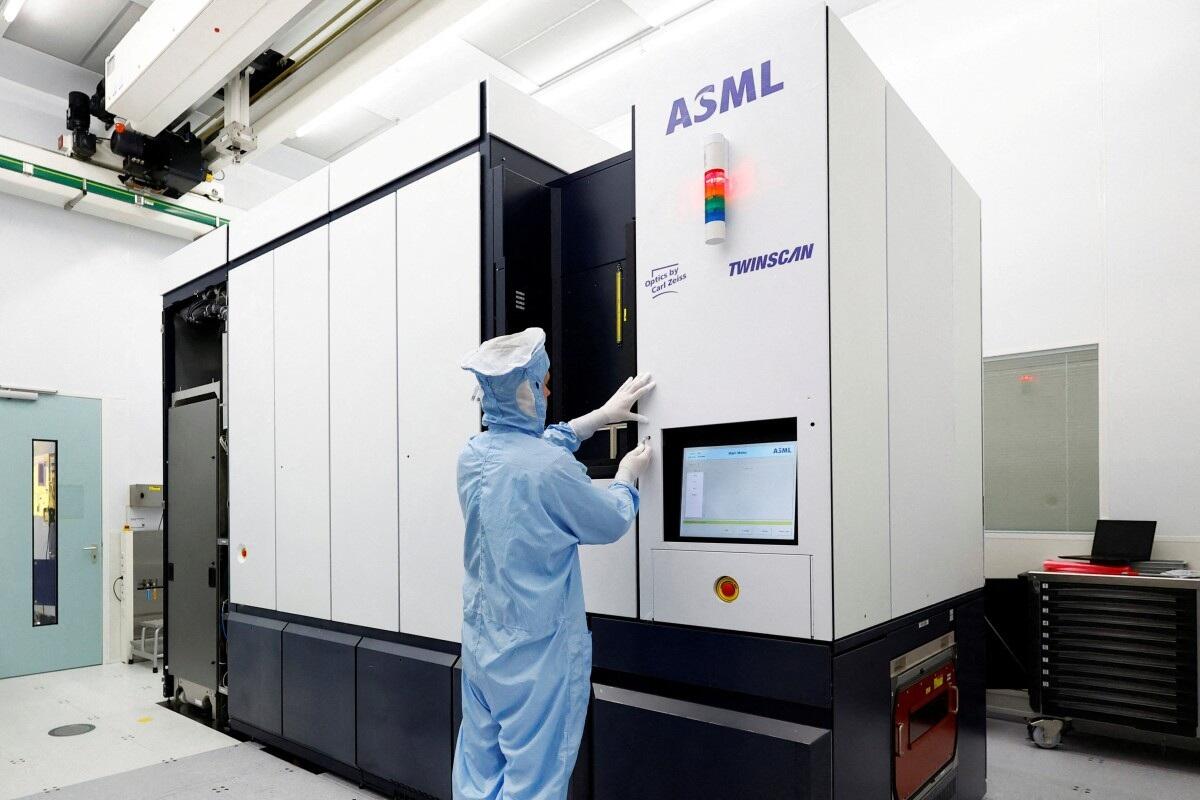
US Bill Would Give Allies 150 Days to Match China Chip Limits, Pressuring ASML
The MATCH Act proposal would force allies to align with US semiconductor export controls or face US restrictions on foreign-made machines. It puts Washington’s security hawks in direct conflict with the Netherlands, Germany and ASML over China revenue, extraterritorial authority, and allied sovereignty. The dispute matters because it could shift compliance costs and strategic risk onto European chipmakers while exposing a split over China policy.
A proposed US bill would make allied compliance with Washington’s advanced chipmaking export controls a condition of access to US-linked technology. The Multilateral Alignment of Technology Controls on Hardware Act, introduced in April and proposed for inclusion in the year-end National Defense Authorization Act, would give allies including the Netherlands and Japan 150 days to match US limits on selling and repairing advanced chipmaking equipment in China. If they refuse, the Commerce Department would be required to apply US export bans to foreign-made machines anyway.
The bill’s immediate pressure point is ASML, the Dutch supplier of lithography systems used to print advanced microchips. The source says China accounted for nearly a third of ASML’s revenue last year, and the proposal would further restrict sales and servicing there. The Netherlands has already imposed some export controls on ASML equipment for China but has resisted broader US demands. Dutch Prime Minister Rob Jetten and Foreign Trade Minister Sjoerd Sjoerdsma have lobbied Washington, while Germany has also raised objections because its firms face similar exposure.
European officials frame the issue as sovereignty: a Dutch foreign ministry spokesperson said each country is responsible for its own export control policy and called extraterritorial measures unacceptable between partners. ASML finance chief Roger Dassen warned that cutting off sales could push Chinese rivals to build machines faster. CEPA analysis cited in the source says Europe’s primary security problem is Russia, not China, and Dutch and German objections are tied to underinvested defense and suspicion of US posture toward Moscow.
The dispute affects semiconductor equipment makers, allied governments, and China-facing revenue. The proposal would convert US export policy into a condition for allied firms’ access to US technology, shifting compliance costs to European and Japanese suppliers. For ASML, the ledger is stark: tighter China sales reduce revenue and service income, while European officials say compliance transfers sovereignty and raises retaliation exposure. The friction also exposes a double standard cited by Dutch lawmakers, who object to blocking European machine sales while some US firms retain limited AI chip sales to China.
It affects semiconductor equipment makers and allied governments because compliance with US export limits could reduce ASML’s China-linked revenue and service income while giving Washington leverage over foreign-made machines.
Sources (1)
- [1]America's China Chip Crackdown Pits US Security Hawks Against Dutch Tech Giant ASML(https://www.zerohedge.com/geopolitical/americas-china-tech-crackdown-pits-us-security-hawks-against-dutch-tech-giant-asml)