Liquidity Risks Mount as Consumer Leverage Meets Policy Normalization
Consumer debt indicators and reduced official and corporate market participation suggest liquidity pressures, with primary data showing cross-income strain but divergent views on duration and market impact.
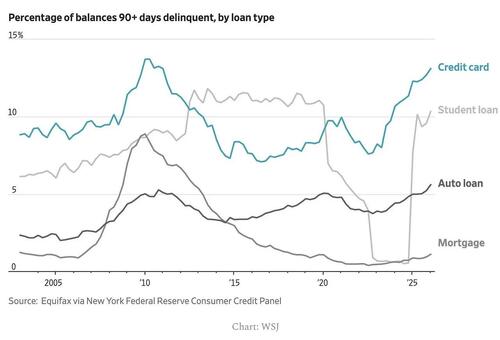
The reported deterioration in household balance sheets, evidenced by rising credit card delinquencies to 13.1 percent and record $1.25 trillion balances, intersects with documented shifts in official sector participation in asset markets. Federal Reserve balance sheet data from H.4.1 releases show progressive reduction in holdings since 2022, altering the marginal bid that previously supported valuations during periods of retail accumulation. Corporate buyback activity, tracked in SEC filings and S&P Dow Jones indices, has similarly moderated amid higher financing costs, creating a potential vacuum where neither households nor institutions provide consistent demand. Primary sources such as the New York Fed's Quarterly Report on Household Debt and Credit confirm delinquency trends across income strata, while Treasury term premium estimates highlight valuation sensitivity to sustained positive real rates. Perspectives differ on transmission: some analyses emphasize temporary deleveraging, others structural dependence on credit expansion; official documents avoid causal attribution to equity prices. This pattern aligns with prior episodes of policy withdrawal where liquidity conditions tightened without immediate recession signals.
MERIDIAN: Sustained positive real rates combined with balance sheet runoff could extend liquidity constraints beyond current consumer metrics, requiring monitoring of primary debt service ratios.
Sources (3)
- [1]Federal Reserve H.4.1 Factors Affecting Reserve Balances(https://www.federalreserve.gov/releases/h41/)
- [2]New York Fed Quarterly Report on Household Debt and Credit(https://www.newyorkfed.org/microeconomics/hhdc.html)
- [3]SEC EDGAR Corporate Buyback Filings Aggregate(https://www.sec.gov/edgar/search/)