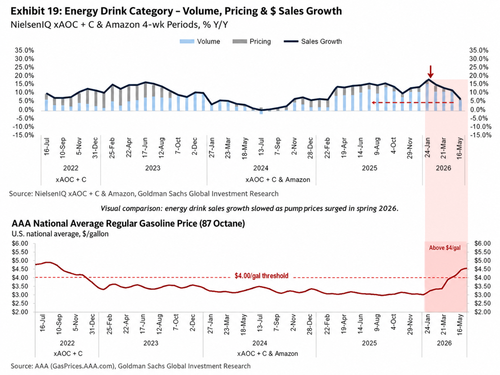
Even Heavy Drinkers Cutting Beer: High Gas Prices Deliver Immediate Inflation Signal Hitting Wallets Hard
High gas prices above $4/gallon are correlating with 5-6%+ drops in beer and alcohol sales, especially at c-stores, serving as a tangible inflation signal affecting even heavy consumers and revealing deeper macro pressures beyond weather or secular trends.
New high-frequency data reveals a troubling slowdown in beer demand, with sales dropping over 6% year-over-year in recent weeks, as elevated gasoline prices above $4 per gallon force consumers to prioritize fuel over familiar staples like beer. According to Nielsen-tracked figures cited in multiple reports, beer, flavored malt beverages, and cider volumes fell 6.3% through early May 2026, with the steepest declines at convenience stores tied directly to gas purchases and in states experiencing the highest fuel costs. This aligns with distributor surveys showing nearly half reporting deceleration in April and May versus Q1, citing a pressured macro environment, reduced disposable income, and unfavorable weather over the Memorial Day period—the wettest and one of the coldest in five years.
The pain is particularly acute among Hispanic consumers and those reliant on beer as an affordable vice or social ritual, echoing earlier Goldman Sachs analyst Bonnie Herzog's 'Bev Bytes' surveys that highlighted similar dynamics. While some brands like Constellation's portfolio have shown resilience, others including Miller Lite, Coors Light, and certain Boston Beer offerings continue to lag amid category switching to ready-to-drink cocktails, THC products, or simply abstaining. This isn't abstract economic theory: when filling up costs 30-40% more, impulse buys like a six-pack or energy drinks at the pump become luxuries that get axed first.
Deeper connections emerge when viewing this through the lens of broader consumer behavior shifts. Alcohol has long been considered recession-resistant, with Goldman Sachs analysis showing limited correlation between beer/spirits volumes and GDP growth in past cycles. Yet sustained high fuel prices—driven by geopolitical tensions pushing national averages near record levels around Memorial Day—appear to be breaking that resilience, accelerating structural declines in beer while exposing inflation fatigue at the most visceral level. BLS data further contextualizes this, noting modest rises in at-home alcohol prices but clear pullbacks in discretionary spending patterns. The result is a concrete, shareable signal: Americans feel the squeeze every time they gas up and then skip the beer cooler, a wallet-level indicator likely to ripple into weaker Q2 earnings for brewers, heightened pressure on savings rates already sliding, and early warnings of wider discretionary collapse. Winners may innovate with low-ABV or novelty products, but the macro backdrop suggests cautious outlook for the sector overall.
LIMINAL: Gas prices squeezing even hardcore beer buyers is an unmistakable, everyday signal of inflation's bite that will spread via personal stories, pointing to accelerating cutbacks across staples and rising recession risks by late 2026.
Sources (4)
- [1]Beer demand stumbles as gas prices surge, data shows(https://www.cnbc.com/2026/05/13/beer-demand-stumbles-as-gas-prices-surge-data-show.html)
- [2]Alcohol sales are down. Are gas prices partially to blame?(https://www.marketplace.org/story/2026/05/15/alcohol-sales-are-down-are-gas-prices-partially-to-blame)
- [3]Memorial Day sticker shock: Gas prices near all-time highs(https://www.cnn.com/2026/05/20/business/gas-prices-memorial-day-trump-iran)
- [4]Are Alcoholic Beverages Recession And Inflation Resistant?(https://www.forbes.com/sites/bill_stone/2022/06/29/are-alcoholic-beverages-recession-and-inflation-resistant/)