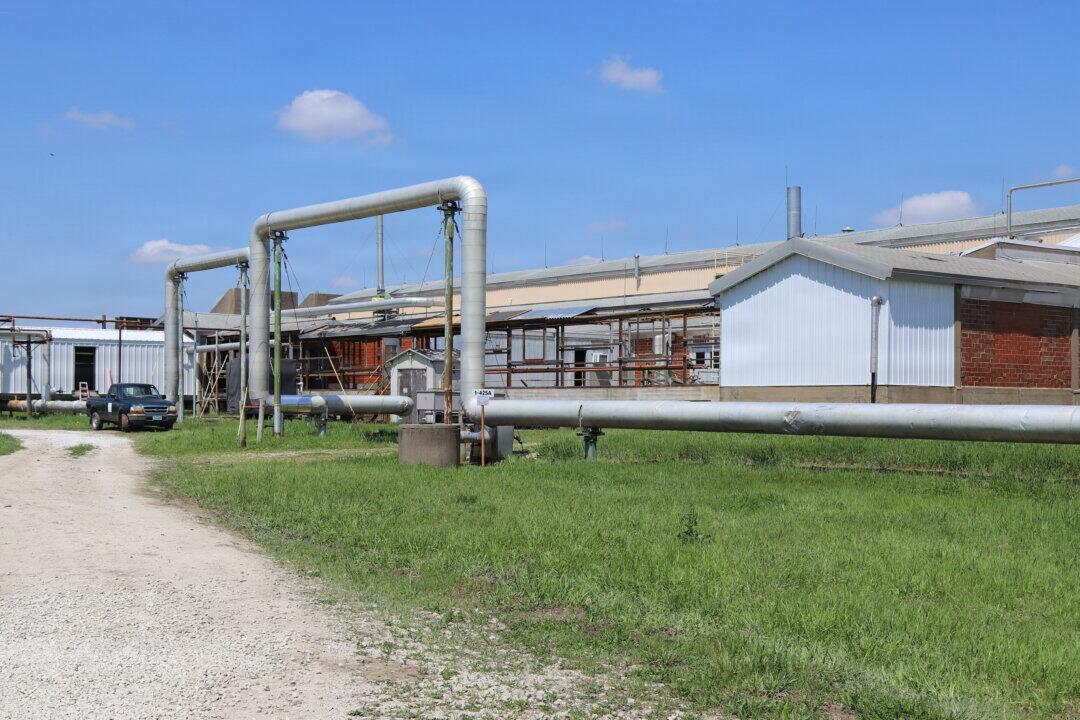
Eighth Circuit stays EPA permit for Army plan to detonate nearly 5 tons of lead azide at Iowa plant
A federal appeals court has paused the EPA permit for an Army plan to openly detonate nearly five tons of unstable lead azide next to Middletown, Iowa, while the government says it may still proceed under an emergency regulatory exclusion as cold weather approaches.
Documented: On Nov. 19, 2026, the U.S. Court of Appeals for the Eighth Circuit granted an administrative stay of an EPA emergency permit that had authorized the Army to conduct a controlled detonation of degraded lead azide at the Iowa Army Ammunition Plant in Middletown, Iowa. The stay remains in place until the court rules on an emergency motion filed the same day by the Iowa Environmental Council and the Sierra Club Iowa Chapter, represented by Earthjustice, in case No. 26-3374. The permit, issued Nov. 13 under the Resource Conservation and Recovery Act, covered 68 drums—about 9,700 to roughly 10,000 pounds, or nearly five tons—of lead azide, a primary explosive used in detonators. EPA found the material posed an imminent and substantial endangerment after recrystallization increased its sensitivity to shock and friction. The Army discovered the degraded stock earlier in 2026 and had scheduled the open detonation for noon on Nov. 20, then postponed it to Nov. 23 after public and official pressure, citing a forecast temperature drop that could further destabilize the material. Acting Army Secretary Adam Telle said public safety was the priority and that controlled detonation posed the least risk compared with moving the drums. Iowa Gov. Kim Reynolds and Sen. Chuck Grassley publicly pressed for delay and better communication. A joint Nov. 20 statement from the Army, EPA, and HHS said agencies had planned since March and would use extreme mitigation measures. Middletown has roughly 360–400 residents; the plant sits in southeast Iowa near the Mississippi River, and Illinois officials said they were not notified by EPA Region 7.
Claimed: Environmental groups argue the permit was arbitrary because it did not fully consider alternatives, lacked adequate protections against lead releases to air, water, and soil, and relied on sampling and cleanup instead of preventing a release. They cite Army modeling that a lead-dust plume could travel more than 100 miles depending on weather, and they say there is no safe level of lead exposure, especially for children and pregnant women. Earthjustice attorneys have said detonating while the permit is stayed would be unlawful. Army and Justice Department filings claim every alternative requires handling that risks an accidental explosion, and that a controlled blast is safer than an uncontrolled one. They also claim the Army can proceed without the stayed permit by invoking an emergency munitions exclusion in EPA’s RCRA rules (40 C.F.R. §§ 264.1(g)(8) and 270.1(c)(3)) if temperatures threaten spontaneous detonation, and that the Army still intends to follow mitigation steps such as barriers and dust suppression.
Speculated or unresolved: Whether the court will grant a longer stay, whether the Army will actually detonate under the emergency exclusion before a ruling, and how far any lead particles would travel or deposit under the weather that actually occurs. Reporting through Nov. 22 indicated the planned date had slipped toward Nov. 24 or later and that no final public schedule or updated plume maps had been locked in. The strength of the evidence is high on the stay, the quantity of material, the legal posture, and the postponement; it is weaker on the precise geographic reach of any plume and on whether a permit-free detonation would survive further court review.
Residents of Middletown and downwind communities in southeast Iowa and western Illinois face a documented plan to destroy nearly five tons of lead-bearing explosive in the open, with a court stay on the permit and a government claim that the blast may still go forward. Lead dust from that operation is what officials and challengers are arguing over, not a hypothetical risk.
Sources (7)
- [1]Federal appeals court halts detonation of nearly 5 tons of lead azide at Army plant(https://abcnews.com/US/federal-appeals-court-temporarily-blocks-controlled-detonation-iowa/story?id=138321357)
- [2]US Army delays detonation of bomb-making chemicals in Iowa after public safety concerns raised(https://apnews.com/article/iowa-army-ammunition-lead-detonation-2d2d7bfaf8ceacddcbea10ed97b097ce)
- [3]Update on Iowa Army Ammunition Plant in Middletown, Iowa(https://www.epa.gov/newsreleases/update-iowa-army-ammunition-plant-middletown-iowa)
- [4]Army plans to go ahead with detonation by Nov. 24, according to DOJ filing(https://iowacapitaldispatch.com/2026/11/22/army-plans-to-go-ahead-with-detonation-by-nov-24-according-to-doj-filing/)
- [5]Army says it will explode lead azide in Iowa without EPA permit(https://www.desmoinesregister.com/story/news/iowa/2026/11/22/lead-detonation-epa-permit-army-emergency/92912000007/)
- [6]Judge halts Army’s plan to detonate 5 tons of bomb-making material as Iowa residents worry about lead exposure(https://www.cnn.com/2026/11/20/us/iowa-lead-azide-army-detonation)
- [7]Army plans Iowa detonation this week despite court stay over toxic plumes(https://www.stripes.com/branches/army/2026-11-22/army-still-plans-detonation-iowa-23544688.html)