Europe's 2026 Heat Waves Linked to 10,000 Excess Deaths Amid Record Temperatures
Record 2026 heat waves across Western Europe produced approximately 10,000 excess deaths, driven by low air-conditioning penetration and urban design. NASA GEOS data and national meteorological records confirm repeated 40°C+ episodes. Adaptation via reflective materials and green infrastructure offers measurable risk reduction.
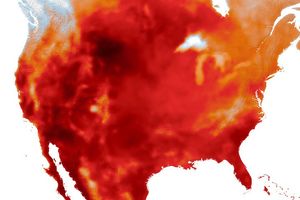
Western Europe endured repeated heat domes that shattered national records, including London’s May high of 35.1°C and Bordeaux’s 42.5°C June peak. Nighttime temperatures stayed elevated, highways buckled, and wildfires expanded into new regions while rivers reached record lows. Satellite-model composites from NASA’s GEOS system mapped the spatial extent of these extremes across multiple countries. Preliminary mortality counts from national health agencies show spikes in the UK, France, Germany, and Belgium. Europe’s 23 percent residential air-conditioning coverage, versus 90 percent in the United States, left populations more exposed, consistent with prior WHO findings that heat stress drives nearly 489,000 deaths globally each year. Urban heat-island mapping by researchers such as Anamika Shreevastava indicates that cities lacking tree canopy and reflective surfaces experienced the sharpest mortality increases. Limited green space and high overnight minima compounded cardiovascular and respiratory risks already elevated by concurrent drought. Longer-term adaptation will require systematic deployment of cool roofs, expanded parks, and drought-resilient power infrastructure. Without these measures, similar or stronger heat episodes are projected to recur within the next five years under current emission trajectories.
Copernicus: Western Europe summer 2027 mean temperature will exceed the 2026 June-July record by at least 0.8°C.
Sources (2)
- [1]Primary Source(https://science.nasa.gov/earth/europes-scorching-summer/)
- [2]Supporting Source(https://climate.copernicus.eu/)