Armenian Parliament Brawl Exposes Deepening Polarization and Governance Fragility
Verified reports confirm a major brawl in Armenia’s parliament on Oct 29, 2026, between ruling and opposition MPs over corruption remarks tied to a controversial ‘ministry’ proposal; leaders blame opposition while defending retaliation, signaling deeper institutional fragility.
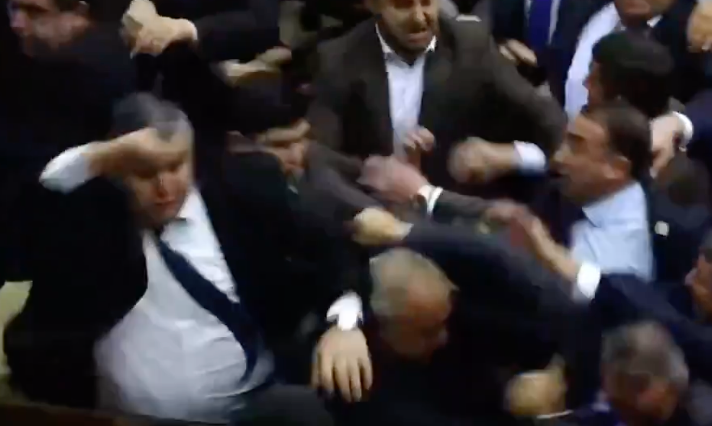
On October 29, 2026, Armenia’s National Assembly descended into a prolonged physical confrontation between lawmakers from Prime Minister Nikol Pashinyan’s ruling Civil Contract party and the opposition Strong Armenia faction. The clash erupted during a debate on an Audit Chamber appointment, triggered by Civil Contract MP Taron Chakhoyan’s remarks referencing opposition leader Narek Karapetyan’s family ties to arrested businessman Samvel Karapetyan and a controversial pre-election proposal by Karapetyan’s cousin for a “ministry to satisfy women.”
Speaker Ruben Rubinyan and Pashinyan both condemned the violence while assigning primary blame to the opposition, with Pashinyan stating the ruling faction’s response—including throwing a chair—was “proportionate and right.” Footage showed punches, kicks, thrown objects, torn clothing, and injuries requiring an ambulance; security intervened after several minutes, and the session resumed following a recess. No criminal proceedings have been initiated.
This incident, the second violent episode in the chamber this month, highlights systemic strains in Armenia’s post-2018 political landscape. Pashinyan’s government, born from anti-corruption protests, faces an opposition rooted in networks tied to former elites and oligarchs. The public exchange of insults over corruption and personal honor, followed by brawling and leadership endorsement of physical retaliation, risks normalizing force over deliberation. Such dynamics erode institutional trust, deter constructive opposition, and raise questions about the durability of democratic norms under sustained polarization—particularly as Armenia navigates regional security pressures and domestic accountability demands. Observers note parallels to other parliaments where unchecked factional animosity has preceded broader governance erosion, underscoring the need for enforceable conduct rules beyond rhetoric.
LIMINAL: Repeated parliamentary violence, endorsed at the highest levels, may accelerate erosion of deliberative norms, potentially inviting further escalations or public disillusionment with Armenia’s democratic experiment.
Sources (8)
- [1]Speaker blames Strong Armenia MPs for violent brawl in parliament(https://armenpress.am/en/article/1264226)
- [2]Dozens of MPs brawl in Armenian parliament during corruption debate(https://www.intellinews.com/dozens-of-mps-brawl-in-armenian-parliament-during-corruption-debate-480006/)
- [3]Pashinyan condemns violence in parliament, blames opposition for brawl(https://armenpress.am/en/article/1264198)
- [4]Pashinyan Praises His Party Members after Brawl in Parliament(https://asbarez.com/pashinyan-praises-his-party-members-after-brawl-in-parliament/)
- [5]Large brawl breaks out in Armenian parliament(https://www.cnn.com/2026/10/29/world/video/large-brawl-breaks-out-in-armenian-parliament)
- [6]MP hurls chair in brawl over Armenian ‘ministry of sex’(https://www.telegraph.co.uk/world-news/2026/10/29/mp-hurls-chair-in-brawl-over-armenian-ministry-of-sex/)
- [7]Brawl breaks out in Armenia parliament(https://news.am/en/news/1071110)
- [8]Armenia parliament brawl: MPs trade punches and kicks during televised debate(https://www.indiatoday.in/world/story/armenia-parliament-brawl-mps-trade-punches-and-kicks-during-televised-debate-3027886-2026-10-29)