Beijing's Cognitive Inversion: How China Weaponizes Taiwanese Voices to Erode Will from Within
China's amplification of KMT voices against the DPP represents advanced hybrid information warfare that exploits Taiwan's internal divisions, synchronized with military drills to undermine defense will. This tactic, rooted in Three Warfares doctrine, is underestimated in coverage focused on kinetic threats; analysis synthesizes IORG data, ASPI, and DFRLab reporting to highlight the strategic inversion of democratic pluralism.
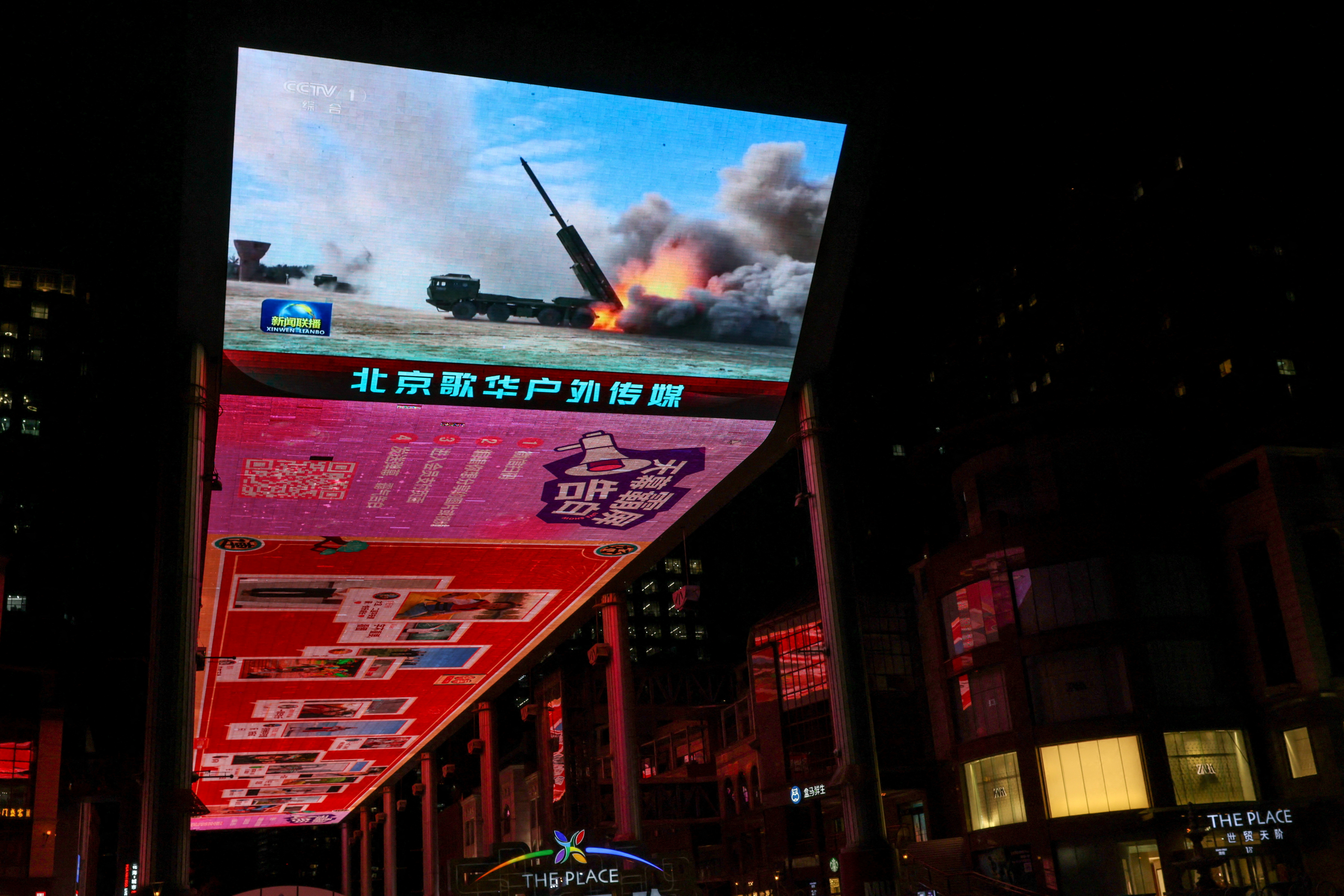
While global coverage fixates on PLA warships encircling Taiwan and fighter jets crossing the median line, a more insidious campaign unfolds in the information domain. The December drills were accompanied by a sophisticated amplification effort on Douyin and repackaged content across Facebook, YouTube, and Line, featuring Taiwanese opposition voices—particularly from the KMT—accusing President Lai Ching-te of 'dragging 23 million people into a road to death.' This is not mere propaganda recycling; it represents an advanced hybrid tactic that deliberately inverts democratic pluralism into a tool of subversion.
The Defense News report, drawing on IORG data and Taiwanese security officials, correctly identifies the surge in repurposed KMT statements. However, it underplays the doctrinal foundation and broader pattern. This aligns with the PLA's 'Three Warfares' doctrine (public opinion, psychological, and legal), updated in Xi-era strategic guidelines to integrate with United Front work. By laundering criticism through authentic Taiwanese accents and politicians like Cheng Li-wun—who met Xi Jinping this month—the CCP exploits cognitive biases toward in-group credibility, a vulnerability kinetic-focused analysis consistently misses.
What the original coverage underestimates is the deliberate synchronization with military signaling. These information operations are not parallel but fused: they aim to degrade public support for the $40 billion defense supplemental by reinforcing narratives of futility against overwhelming PLA power. This mirrors tactics observed in the 2024 Taiwanese election cycle, where IORG tracked over 3,800 pieces of amplified opposition content originating from CCP-linked networks. Similar patterns appear in ASPI's 2023 report 'Countering China's Influence Operations,' which documented parallel voice repurposing in Australia and Canada, and Atlantic Council DFRLab's 2025 analysis showing AI-assisted clip editing to obscure provenance on platforms banned in China but flooded via VPNs and proxy accounts.
The deeper strategic implication, rarely connected in mainstream reporting, is Beijing's exploitation of Taiwan's polarized domestic politics. The KMT's longstanding engagement policy—framed as 'peace through dialogue'—provides authentic material that China then distorts. This creates a feedback loop: Taiwanese democracy's openness becomes its greatest vulnerability. Unlike crude disinformation, this 'elite amplification' blends influence operations with cyber-enabled distribution networks, part of a larger hybrid strategy that includes gray-zone coercion and economic leverage. It seeks to win without fighting by fracturing the societal consensus needed for protracted defense.
Taiwan's response—enhancing media literacy in the armed forces and bolstering psychological resilience—is necessary but insufficient without addressing the root political exploitation. As Lai's office noted, peace cannot rest on concessions. The pattern reveals China's maturing playbook: weaponizing an opponent's own democratic divisions against it, a template increasingly deployed globally. Western analysts obsessed with invasion timelines continue to miss this erosion of cognitive sovereignty, which may prove more decisive than any amphibious landing. This sophisticated fusion of cyber, influence, and domestic fault lines demands a reevaluation of hybrid threat assessments that remain dangerously kinetic-centric.
SENTINEL: Beijing will intensify voice-repurposing campaigns ahead of Taiwan's local elections and any future military coercion windows, aiming to paralyze defense budgeting and erode public resilience; expect deeper integration of AI-generated content synced to PLA exercises, widening Taiwan's internal political rifts into strategic vulnerabilities.
Sources (3)
- [1]China turns Taiwan’s own voices against it in information war(https://www.defensenews.com/global/asia-pacific/2026/04/17/china-turns-taiwans-own-voices-against-it-in-information-war/)
- [2]Countering China’s Influence Operations: Lessons from Australia(https://www.aspi.org.au/report/countering-chinas-influence-operations)
- [3]Mapping Cross-Strait Information Operations(https://www.atlanticcouncil.org/dfrlab/mapping-cross-strait-information-operations-2025/)