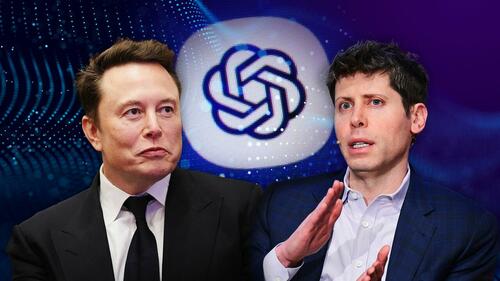
Musk vs. Altman: A Battle That Could Redefine US AI Regulation and Innovation
The Musk-Altman trial could redefine US AI regulation, innovation, and market dynamics beyond OpenAI’s fate. A Musk victory might spur stricter oversight or deregulation, disrupt funding, and redirect innovation—potentially reshaping America’s global AI lead.
The ongoing federal trial between Elon Musk and OpenAI, led by Sam Altman, is more than a personal or corporate dispute—it’s a potential turning point for the trajectory of artificial intelligence (AI) in the United States. While ZeroHedge's coverage (April 2023) frames a Musk victory as a disruptive blow to OpenAI’s $850 billion empire, it underplays the broader implications for regulation, innovation pathways, and market dynamics. This analysis delves into the missed connections, contextualizes the rivalry within recent AI policy debates, and evaluates how this case could reshape the competitive landscape beyond the courtroom.
Beyond the Courtroom: Regulatory Ripple Effects ZeroHedge focuses on the immediate outcomes of a Musk win—restructuring OpenAI, leadership changes, and legal precedent for nonprofit-to-for-profit transitions. However, it overlooks how such a ruling could influence federal AI policy at a time when the US government is grappling with how to regulate frontier technologies. A Musk victory, particularly if Judge Yvonne Gonzalez Rogers orders the unwinding of OpenAI’s for-profit structure, could embolden lawmakers to impose stricter oversight on AI firms transitioning from mission-driven to commercial entities. This aligns with recent legislative proposals like the AI Accountability Act (introduced in Congress, 2023), which seeks to enforce transparency on AI firms with significant public impact. A precedent set by this case could provide legal grounding for such bills, potentially slowing the pace of commercialization in favor of public interest safeguards.
Conversely, a Musk win might accelerate calls for deregulation among tech advocates who view OpenAI’s Microsoft-backed model as emblematic of monopolistic tendencies. Musk’s public criticism of Big Tech consolidation, as seen in his 2022 statements on X about AI needing 'open competition,' suggests he could leverage a victory to push for policies that favor smaller players or decentralized AI development. This tension—between tighter regulation and market freedom—remains unaddressed in mainstream coverage but is critical to understanding the stakes.
Innovation Pathways: Acceleration or Stagnation? The original article misses the nuanced impact on AI innovation itself. A forced restructuring of OpenAI could disrupt its research momentum, given that its $13 billion partnership with Microsoft has fueled rapid advancements like ChatGPT. If investor returns are capped or delayed, as ZeroHedge notes, capital inflows to frontier AI could shrink, potentially stunting US competitiveness against global players like China’s Baidu or Europe’s DeepL. Data from the 2023 Global AI Index shows the US still leads in AI investment (45% of global share), but a chilling effect on funding could cede ground to state-backed initiatives abroad.
On the other hand, Musk’s influence—via xAI or broader advocacy—could redirect innovation toward alternative models, such as open-source AI frameworks. This aligns with his stated goal of 'accelerating human scientific discovery' (xAI mission statement, 2023). A redistributed OpenAI under nonprofit control might also refocus on ethical AI, addressing public concerns about bias and safety that have been sidelined amid commercial pressures. The tradeoff, however, is time: restructuring could delay breakthroughs in artificial general intelligence (AGI), a race where the US cannot afford to lag.
Market Dynamics and Investment Trends ZeroHedge’s analysis underestimates the market signal a Musk victory would send. Beyond OpenAI’s delayed IPO, a ruling against its for-profit model could trigger a reevaluation of AI investments industry-wide. Venture capital firms, already cautious after 2022’s tech downturn, might pivot to less regulated sectors or geographies. This is evidenced by a 2023 PwC report on AI funding, which noted a 15% drop in US AI startup investments amid regulatory uncertainty. A high-profile loss for OpenAI could exacerbate this trend, redirecting capital to biotech or green tech.
Yet, Musk’s involvement could counterbalance this. His track record with Tesla and SpaceX suggests a win might draw speculative investment into his AI ventures, potentially creating a bipolar market dynamic: Musk-aligned entities versus traditional tech giants like Microsoft and Google. This polarization, unexamined in the source, could fragment the AI ecosystem, fostering innovation in some corners while stifling collaboration in others.
Contextualizing the Rivalry: Historical Patterns The Musk-Altman feud isn’t isolated—it mirrors historical tech rivalries like Gates vs. Jobs, where personal clashes shaped industry standards. Unlike ZeroHedge’s narrow focus on legal remedies, this dispute reflects deeper ideological divides over AI’s purpose: Musk’s emphasis on humanity’s long-term survival versus Altman’s pragmatic, market-driven scaling. This echoes debates during the dot-com era, where open-source advocates clashed with proprietary giants, ultimately birthing hybrid models. A Musk victory could tilt AI toward a similar hybrid future—or entrench walled gardens if Altman’s model is dismantled without a viable alternative.
Conclusion: A Defining Moment The Musk-Altman trial is not just about OpenAI’s structure or $150 billion in damages. It’s a proxy for unresolved questions about AI’s role in society, the balance between profit and purpose, and America’s global standing in tech. Whether a Musk win accelerates innovation through competition or hinders it via disruption depends on how regulators, investors, and the industry interpret the ruling. What’s clear is that the outcome will resonate far beyond Oakland’s federal courtroom.
MERIDIAN: A Musk victory could catalyze a fragmented AI market, with short-term innovation delays but long-term gains if open-source models gain traction over corporate monopolies.
Sources (3)
- [1]How A Musk Victory Vs. Altman Would Reset America's AI Roadmap(https://www.zerohedge.com/ai/how-musk-victory-vs-altman-would-reset-americas-ai-roadmap)
- [2]2023 Global AI Index Report(https://www.tortoisemedia.com/global-ai-index-2023/)
- [3]PwC 2023 AI Investment Trends Report(https://www.pwc.com/us/en/tech-effect/ai-analytics/ai-investment-trends.html)