Appalachian Lithium Discovery: A Game-Changer for U.S. Energy Security and Global Supply Chains
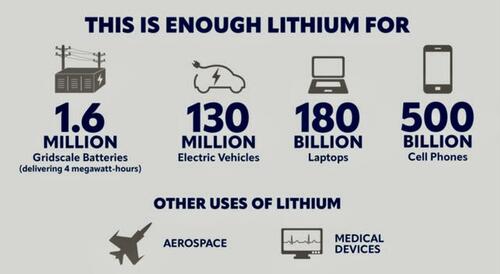
The discovery of 2.3 million metric tons of lithium in Appalachia could power 130 million EVs, bolstering U.S. mineral security. Beyond the numbers, challenges in extraction, refining, environmental impact, and geopolitical competition reveal a complex path to energy independence.
The recent discovery of a massive lithium deposit in Appalachia, estimated at 2.3 million metric tons by the U.S. Geological Survey (USGS), could power up to 130 million electric vehicles (EVs) and marks a pivotal moment for U.S. mineral independence. This find, spread across the Carolinas, Maine, New Hampshire, and Vermont, represents 328 years’ worth of last year’s lithium imports, potentially reshaping the U.S. position in the global clean energy race. However, beyond the headline numbers, this discovery raises critical questions about economic viability, environmental trade-offs, and geopolitical implications that initial coverage has largely overlooked.
First, the USGS report emphasizes the scale of the deposit but lacks specificity on extraction costs and timelines. Historical data from the USGS suggests that only a fraction of 'economically recoverable' resources are ultimately mined due to technological and market constraints. For context, the Albemarle Silver Peak Mine in Nevada, the only active lithium mine in the U.S., produces just 5,000 metric tons annually, a sliver compared to global leaders like Australia (86,000 metric tons in 2022 per USGS data). Scaling up operations in Appalachia will require significant infrastructure investment and regulatory navigation, especially given the region’s complex land ownership and environmental sensitivities. Initial reporting missed this operational bottleneck, focusing instead on raw numbers without addressing feasibility.
Second, the geopolitical angle is underexplored. The U.S. currently relies on imports from Australia and Chile for lithium, while China dominates 60% of global refining capacity. This discovery could reduce dependency, aligning with the Biden Administration’s 2022 National Defense Strategy, which prioritizes critical mineral security. Yet, China’s grip on processing technology means that raw lithium alone won’t suffice—domestic refining capacity must expand, a point absent from the ZeroHedge piece. Moreover, competition with allies like Canada, which is aggressively developing its own lithium resources under the 2021 U.S.-Canada Critical Minerals Action Plan, could strain bilateral ties if U.S. policy pivots toward self-reliance.
Third, environmental and social dimensions are critical but underreported. The opposition to exploratory drilling in Oregon by groups like 'Great Old Broads for Wilderness,' as noted in the original source, hints at broader resistance likely to emerge in Appalachia. The region’s history of coal mining leaves a legacy of community distrust toward extractive industries, compounded by potential impacts on water resources and biodiversity. The USGS notes the lithium-rich pegmatites formed over 250 million years ago, but modern extraction methods could disrupt ecosystems in ways not yet studied for this specific deposit. This tension between green energy goals and local environmental costs mirrors debates over rare earth mining in Greenland, where global demand clashes with indigenous and ecological priorities.
Finally, market dynamics add another layer. Lithium prices have fluctuated wildly, dropping 80% from late 2022 peaks due to oversupply fears (per Bloomberg data), yet long-term demand is projected to surge with EV adoption. Appalachian lithium could stabilize U.S. supply chains, but only if paired with policies like the Inflation Reduction Act’s incentives for domestic sourcing. The original coverage overlooks how this discovery might influence global pricing or incentivize overproduction, potentially destabilizing smaller producers in South America’s 'Lithium Triangle.'
In sum, while the Appalachian lithium lode is a strategic asset, its transformative potential hinges on overcoming extraction challenges, building refining capacity, navigating environmental opposition, and aligning with broader geopolitical and market trends. This is not just a story of 'white gold' but a test of whether the U.S. can balance energy ambitions with practical and ethical constraints.
MERIDIAN: The Appalachian lithium discovery could shift U.S. energy strategy, but expect delays—extraction and refining hurdles may push full impact beyond a decade, even as geopolitical tensions over critical minerals intensify.
Sources (3)
- [1]USGS Report on Appalachian Lithium Resources(https://www.usgs.gov/news/national-news-release/new-usgs-research-shows-appalachians-could-help-meet-nations-growing)
- [2]2022 National Defense Strategy on Critical Minerals(https://media.defense.gov/2022/Oct/27/2003103845/-1/-1/1/2022-NATIONAL-DEFENSE-STRATEGY-NPR-MDR.PDF)
- [3]U.S.-Canada Critical Minerals Action Plan(https://www.state.gov/joint-statement-on-the-u-s-canada-critical-minerals-collaboration/)