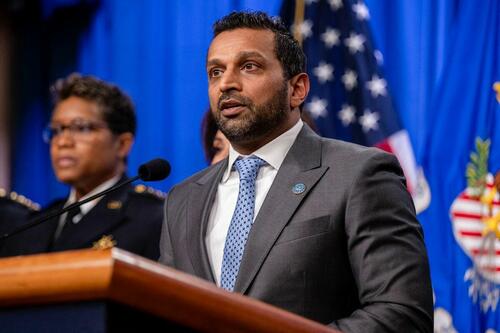
Kash Patel's $250M Defamation Suit: Weaponizing Courts Against Legacy Media's Anonymous-Source Warfare
FBI Director Kash Patel's $250M suit against The Atlantic over an anonymously-sourced hit piece on his alleged drinking and absences exposes the intersection of lawfare, media narrative control, and institutional pushback against Trump-era reforms at the FBI. Corroborated across major outlets, the case highlights patterns of partisan leaks and tests the boundaries of defamation law in political warfare.
FBI Director Kash Patel's filing of a $250 million defamation lawsuit against The Atlantic and reporter Sarah Fitzpatrick marks more than a personal rebuttal to allegations of erratic behavior, excessive drinking, and unexplained absences. It represents a high-stakes escalation in the ongoing power struggle between the Trump-aligned administration and legacy media institutions long accused of narrative control and selective sourcing to undermine political opponents. The Atlantic's April 17, 2026, article, 'The FBI Director Is MIA,' relied on over two dozen anonymous sources—including current and former FBI officials, congressional members, and hospitality workers—to paint Patel's leadership as a 'management failure' posing national security risks. Patel's legal team, led by Jesse R. Binnall, had sent a detailed pre-publication letter explicitly disputing the claims as 'categorically false,' yet the outlet proceeded, prompting the suit filed in U.S. District Court for the District of Columbia.[1][2]
Court documents and Patel's public statements frame the piece as published with 'actual malice,' citing ignored public contradictions, flawed sourcing, and warnings provided hours before release. Patel responded on Fox News, labeling it 'fake news' and declaring, 'We HAVE to fight back against the fake news.' This mirrors broader patterns where Trump-era figures face coordinated media campaigns often built on unattributed leaks from within the intelligence community—echoing Russiagate-era tactics and subsequent Durham report findings on institutional bias. Mainstream coverage frequently reduces such suits to personal vendettas or 'assaults on the press,' downplaying questions of journalistic rigor when targeting heterodox appointees.[1][3]
Deeper connections emerge when viewing this through the lens of institutional resistance. Patel, a vocal critic of the FBI's past politicization, was confirmed as Director amid promises to reform an agency accused of lawfare against conservatives. The Atlantic story's reliance on partisan anonymous sources—many described in the complaint as bearing 'an ax to grind'—fits a documented pattern of legacy outlets amplifying deep-state adjacent narratives to destabilize challenging leadership. This isn't isolated: it parallels Trump’s own multi-billion dollar threats against media, ongoing defamation battles involving figures like Peter Navarro, and scrutiny of how hospitality and DC insider leaks serve as vectors for opposition research. The $250M figure is deliberately punitive, aimed at imposing real financial accountability in an era where retractions rarely match the damage of initial smears.[4][5]
The Atlantic has called the suit 'meritless' and stands by its reporting, but the pre-filing notice and public posting of the demand letter by Binnall on X place the burden on evidentiary standards under New York Times v. Sullivan. If successful, this could deter the 'narrative control' apparatus that frames accountability as authoritarianism while shielding itself through opaque sourcing. For an administration elected on draining the swamp, Patel's suit signals that lawfare cuts both ways—challenging not just individual smears but the systemic mechanisms sustaining them. Observers note this clash may force recalibration in national-security journalism, where 'sources say' has too often substituted for verifiable fact when the target threatens entrenched interests.
Narrative Analyst: This suit may accelerate a chilling effect on anonymous sourcing against administration officials, emboldening further legal challenges that erode legacy media's unchecked narrative dominance while exposing FBI internal resistance.
Sources (5)
- [1]FBI Director Kash Patel sues The Atlantic for $250 million over story on alleged drinking, absences(https://www.cbsnews.com/news/kash-patel-lawsuit-the-atlantic-250-million/)
- [2]FBI director Kash Patel files $250 million defamation lawsuit against The Atlantic(https://www.cnn.com/2026/04/20/media/kash-patel-fbi-atlantic-lawsuit-sarah-fitzpatrick)
- [3]FBI Director Kash Patel Sues the Atlantic for Defamation(https://www.wsj.com/business/media/fbi-director-kash-patel-sues-the-atlantic-for-defamation-d0c255fa)
- [4]FBI director Kash Patel sues the Atlantic, court records show(https://www.reuters.com/world/fbi-director-kash-patel-sues-atlantic-court-records-show-2026-04-20/)
- [5]FBI Director Kash Patel Sues The Atlantic Over Story About "Erratic" Tenure(https://deadline.com/2026/04/kash-patel-the-atlantic-defamation-fbi-1236865725/)