US F-15E Downed Over Iran: Escalation Risks, Market Impacts, and Conflicting Narratives in Ongoing Conflict
A US F-15E was shot down over Iran with one crew rescued and the other missing, amid mutual strikes. Analysis connects the event to historical patterns, Hormuz shipping risks, and oil market volatility while presenting US, Iranian, and Israeli perspectives from primary statements without endorsing any.
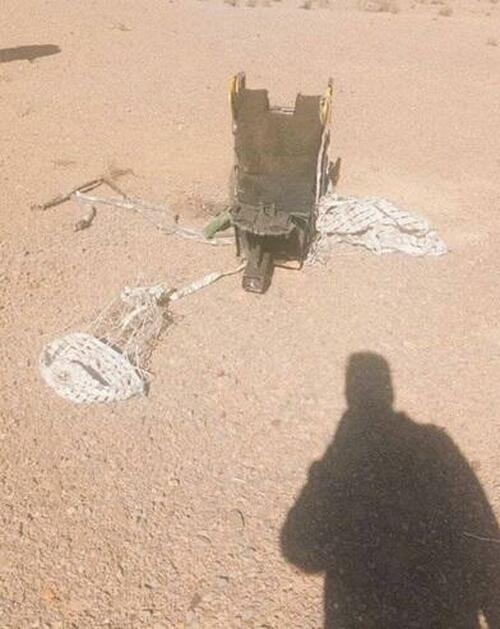
Reports from ZeroHedge, corroborated by the New York Times citing anonymous US and Israeli officials, confirm that an F-15E Strike Eagle was shot down over southern Iran on April 3, 2026, during a period of mutual strikes between US and Iranian forces on military and civilian infrastructure. One crew member has been rescued by US special forces while the second remains unaccounted for amid an active search-and-rescue operation involving low-flying HC-130J Combat King II aircraft and helicopters. Iranian state media, including IRGC-affiliated Tasnim, released images of wreckage and an ACES II ejection seat, claiming successful air defense action while parliament speaker Mohammad Bagher Ghalibaf publicly mocked US efforts.
This coverage focuses on tactical details and unconfirmed claims of a downed US helicopter or bounties for pilots, yet misses broader patterns and economic linkages. Primary documents from the US Energy Information Administration (EIA) show that roughly 21 percent of global petroleum liquids transit the Strait of Hormuz. Past incidents, such as the 2019 Iranian shoot-down of a US RQ-4 Global Hawk and tanker attacks that year, demonstrate how such events can rapidly elevate insurance premiums for shipping and trigger oil price spikes of 10-30 percent within days. Current futures market data already reflect heightened risk premia, a dimension largely absent from initial reporting.
US officials frame the incident as evidence of Iranian aggression amid operations that Pentagon statements previously described as targeting degraded air defenses. Iranian primary statements, including those from the Islamic Revolutionary Guard Corps, characterize it as legitimate sovereign defense against repeated aerial violations. Israeli officials, speaking anonymously to the New York Times, emphasize the challenge this poses for regional security architecture, consistent with long-standing concerns expressed in Knesset briefings about escalation ladders involving Tehran.
Synthesizing ZeroHedge's aggregation, the New York Times dispatch, and Tasnim's direct releases reveals discrepancies: Western sources stress the F-15E's agility and question Iranian claims of an F-35 kill, while Iranian outlets highlight citizen searches and low-altitude US flights as provocations. Historical context from declassified 1988 Vincennes incident records and 2020 Soleimani strike aftermath shows recurring cycles where pilot rescue operations risk further engagements, potentially drawing in Gulf shipping states.
The editorial lens highlights immediate potential for oil volatility, Hormuz disruption, and altered market risk calculations. From an economic perspective, sustained closure threats could compound existing supply chain pressures documented in IMF working papers on energy security. Diplomatically, President Trump's recent statements referenced in reporting add pressure for de-escalation pathways or further retaliation, viewed differently by each capital: Washington sees operational necessity, Tehran sees existential threat, and Gulf states see commercial risk. No single narrative dominates; primary sources from all sides must be weighed to map the rapidly evolving situation.
MERIDIAN: Rescue of the second crew member within hours will likely determine whether this remains a contained incident or triggers wider US strikes, with immediate ripple effects on oil benchmarks and Hormuz maritime insurance rates.
Sources (3)
- [1]US Fighter Jet Shot Down In Iran, One Crew Member Reported Rescued(https://www.zerohedge.com/geopolitical/us-fighter-jet-downed-iran-large-aerial-search-underway-crew)
- [2]NY Times Report Citing US and Israeli Officials(https://www.nytimes.com/2026/04/03/world/middleeast/us-jet-iran.html)
- [3]EIA - World Oil Transit Chokepoints(https://www.eia.gov/international/analysis/special-topics/World_Oil_Transit_Chokepoints)