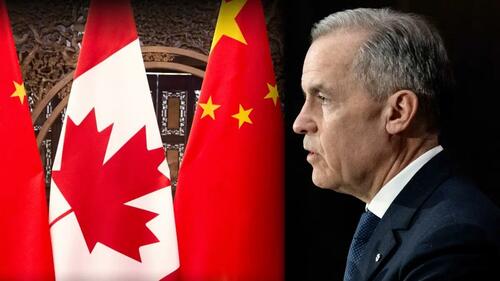
Geopolitical Strings Attached: China's Taiwan Demands Reveal the True Cost of Ottawa's 'Strategic Partnership'
Following Mark Carney's January 2026 strategic trade partnership with China aimed at diversifying from U.S. tariffs, Beijing is rapidly leveraging the deal to demand Canadian concessions on Taiwan, including halting MP visits and warship transits. This reveals overlooked patterns of authoritarian economic coercion that prioritize political submission over mutual benefit, pressuring Canada's values-based foreign policy amid domestic economic vulnerabilities.
The January 2026 announcement of a 'new strategic partnership' between Canada and China, led by Prime Minister Mark Carney, was presented in official channels and mainstream coverage as a pragmatic recalibration. Focused on energy exports, agri-food agreements, currency swaps, reduced tariffs on Canadian canola and Chinese EVs, and broader trade diversification amid U.S. tensions, the deal was hailed by Carney as unlocking billions in export opportunities and offering more predictability than relations with Washington. The Prime Minister's Office and joint statements with President Xi emphasized cooperation in economic and people-to-people ties while sidestepping sensitive areas like defense and AI.
Yet within months, the subtle geopolitical strings have become visible. In early May 2026, Chinese Ambassador to Canada Wang Di explicitly warned that the partnership could be damaged if Canadian parliamentarians continue official visits to Taiwan or if Canadian warships transit the Taiwan Strait. Wang reiterated the 'One China' principle, declaring Taiwan an 'inalienable part of China's territory' and a 'core interest' that forms the political foundation of bilateral ties. He described parliamentary engagements with Taiwanese officials as 'hurtful' and labeled naval transits as provocations violating China's territorial integrity. This ultimatum has sparked defiance among some Canadian lawmakers but also highlights a quiet de-confliction already occurring in high-profile Taiwan visits.
Mainstream outlets like The Guardian and BBC have largely framed the reset as bilateral pragmatism driven by Trump's tariffs and Canada's need to diversify from over-reliance on the U.S. market (which accounts for the vast majority of Canadian exports). Carney himself positioned closer China ties as a hedge against an 'unreliable' Washington. However, this bilateral lens obscures a larger, repeating pattern of authoritarian influence: Beijing consistently uses economic leverage to extract political concessions on its core interests, particularly Taiwan. Similar dynamics played out with Australia's barley and coal sanctions following calls for a COVID origins probe, Lithuania's diplomatic and trade repercussions after permitting a Taiwanese representative office, and pressure campaigns across Europe regarding Huawei and human rights critiques.
Canada's current economic headwinds — escalating housing costs, factory closures, job losses, and inflation — combined with Carney's ideological positioning against nationalist U.S. policies, have left Ottawa negotiating from weakness. Taiwan's envoy to Canada has already flagged the risks of 'trade weaponization.' By prioritizing an ideologically driven pivot over straightforward geographic and economic logic favoring a U.S. deal, Canada risks demonstrating to Beijing that 'strategic partnerships' are vehicles for gradual submission. This aligns with the CCP's broader strategy of 'comprehensive national power,' where trade interdependence serves as a non-kinetic tool to fracture Western alliances, isolate Taiwan, and normalize its claims without firing a shot.
The episode underscores what heterodox analysis has long observed: agreements with the CCP rarely remain confined to economics. They carry implicit (and increasingly explicit) demands for alignment on 'red lines.' As Canadian MPs push back and public scrutiny grows, the test will be whether Ottawa treats these warnings as isolated diplomacy or recognizes the larger architecture of influence operations targeting middle powers caught between superpowers.
Liminal Analyst: Canada's post-deal concessions on Taiwan will likely embolden Beijing to apply similar leverage across the G7, accelerating fragmentation of democratic alliances as economic pressures from U.S. policy pushes nations toward authoritarian 'partnerships' with hidden sovereignty costs.
Sources (6)
- [1]Prime Minister Carney forges new strategic partnership with the People’s Republic of China(https://www.pm.gc.ca/en/news/news-releases/2026/01/16/prime-minister-carney-forges-new-strategic-partnership-peoples)
- [2]Chinese envoy warns Canada against sending MPs to Taiwan or warships through Taiwan Strait(https://www.theglobeandmail.com/politics/article-chinese-envoy-warns-canada-mps-taiwan-warships/)
- [3]Canada PM hails strategic partnership with China to adapt to ‘new global realities’(https://www.theguardian.com/world/2026/jan/16/china-canada-partnership-new-global-realities-carney-xi-jinping)
- [4]Canada’s deal with China signals it is serious about shift from US(https://www.bbc.com/news/articles/cm24k6kk1rko)
- [5]Canadian MPs defiant over Chinese envoy's 'warning' on Taiwan(https://focustaiwan.tw/politics/202605020016)
- [6]Canada, China slash EV, canola tariffs in reset of ties(https://www.reuters.com/world/china/canada-china-set-make-historic-gains-new-partnership-says-carney-2026-01-16/)