NASA Johnson Space Center Marks 65 Years as Hub for Human Spaceflight Programs
Johnson Space Center's 65-year record shows continuous adaptation from Apollo quarantine labs to commercial LEO and lunar programs. The anniversary underscores sustained federal investment in human spaceflight infrastructure and the shift toward public-private partnerships. Primary limitation remains dependence on annual appropriations without multi-year authorization.
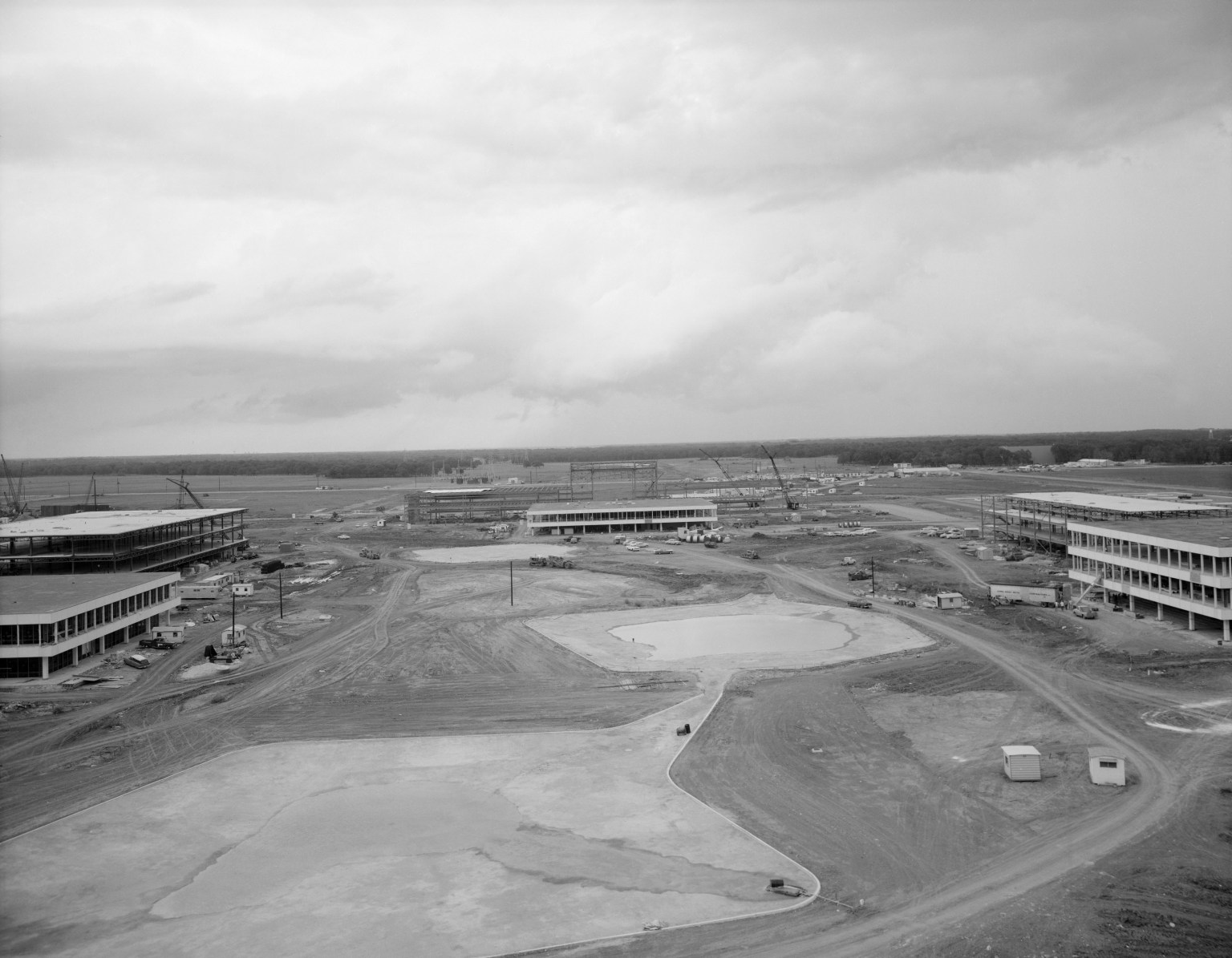
The center's founding followed Kennedy's May 1961 lunar goal and the Space Task Group's need for expanded facilities beyond Langley. Construction of the first buildings finished in 18 months, with staff occupying the site by late 1963. Key infrastructure included the Lunar Receiving Laboratory for Apollo quarantine protocols and successive neutral buoyancy facilities that evolved from Gemini-era water tanks to the 1997 Neutral Buoyancy Laboratory supporting ISS and future suit testing.
Johnson's role expanded from Apollo flight control to Shuttle operations and now encompasses ISS commercial partnerships, Orion spacecraft management, and the Human Research Program. These programs address physiological risks of deep-space travel documented in peer-reviewed studies on bone loss and cardiovascular changes. The center's workforce size and contractor integration have grown steadily since 1973 when it was renamed for President Johnson.
Looking ahead, Johnson will coordinate the transition from government-led ISS operations to multiple commercial low-Earth-orbit platforms by the late 2020s while preparing lunar surface infrastructure under the Moon Base Program. Sustained congressional funding and successful commercial crew rotation cadence remain critical variables.
Future evidence strength would improve with published longitudinal data on crew health outcomes from Artemis I and II flights, allowing direct comparison to Apollo and Shuttle baselines.
NASA: By December 2028 at least three commercial LEO destinations under Johnson oversight will achieve initial operational capability with crewed visits.
Sources (2)
- [1]Primary Source(https://www.nasa.gov/centers-and-facilities/johnson/happy-65-years-nasas-johnson-space-center-then-and-now/)
- [2]Supporting Source(https://www.nasa.gov/feature/2023/nasa-s-johnson-space-center-continues-to-lead-human-spaceflight)