South Africa's Fragile Breadbasket: Land Policy Failures, Geopolitical Shocks, and the Looming Risk of Continental Food Collapse
South Africa’s role as Southern Africa’s primary food exporter is under severe strain from documented land reform productivity failures, the uncertainty of the 2024 Expropriation Act, rural insecurity, self-funded infrastructure burdens, and fertilizer/oil disruptions tied to Iran-related conflicts in the Strait of Hormuz. While 2025 saw solid harvests, structural weaknesses risk major shortages by 2027, with inflation, rationing, and cross-border ripple effects across the continent that could reshape regional dependencies and stability.
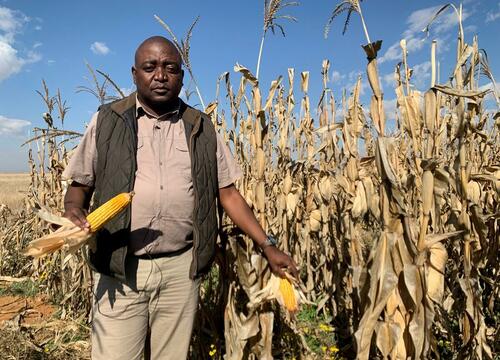
South Africa has long functioned as the agricultural engine for much of Southern Africa, exporting maize, wheat, and other staples across the SADC region. Multiple analyses confirm its role as the region's breadbasket, with commercial farms—predominantly operated by experienced Afrikaner and Boer producers—accounting for the bulk of surplus production that buffers neighboring states during droughts and lean seasons.[1][2] Yet this foundation is eroding under the combined weight of ideological land redistribution, chronic infrastructure decay, rural insecurity, and external supply shocks.
Credible assessments of South Africa's post-apartheid land reform program reveal persistent productivity collapses on many redistributed farms. A detailed review in The Conversation documented how the program frequently overlooks the social and economic realities of rural life, resulting in underutilized land, sharp drops in output (one provincial survey cited an average 79% decline in crop production), and beneficiaries often reverting to subsistence or seeking wage labor on remaining commercial operations. Government audits and academic studies echo this: land reform farms frequently suffer from inadequate post-settlement support, capital shortages, and skills gaps, leading to stalled commercial viability rather than the intended broad-based agrarian transformation.[3][4] Official strategic plans from the Department of Agriculture acknowledge these productivity gaps between emerging and commercial farmers while stressing the need for resilience measures.
The 2024 Expropriation Act, which permits seizure of land without compensation in specified public-interest cases, has intensified uncertainty. While framed as redress and not blanket confiscation, commercial farming organizations warn it undermines investment confidence, property rights, and long-term planning. This compounds documented rural security challenges, including farm attacks that deter operators and raise operational costs. Farmers increasingly self-fund road maintenance, electricity backups, and security—functions the state has failed to sustain—further straining margins.[5][6]
These domestic vulnerabilities intersect with global disruptions in ways few mainstream outlets fully connect. Ongoing conflict involving Iran has constricted tanker traffic through the Strait of Hormuz, a chokepoint for roughly 25-30% of South Africa's oil imports and a major conduit for fertilizer precursors. South Africa imports the vast majority of its fertilizers; analyses from IFPRI and the Middle East Institute show Gulf urea and ammonia exports disrupted, driving price spikes and availability crises precisely as planting decisions for future seasons loom. African import-dependent nations are especially exposed, with projections of significant maize and staple yield reductions if application rates fall.[7][8]
2025 delivered a relatively solid harvest, providing temporary respite. However, the structural fragility is clear: once planting seasons are missed due to input costs or policy-induced exits of skilled producers, losses cannot be recovered quickly. Foreign food imports offer a costly backstop, likely fueling inflation, rationing, and urban hunger across Southern Africa. WFP reporting highlights millions already at risk in the region from compounded climate, economic, and conflict pressures, with depleted stocks and high prices tightening access into 2026 and beyond.[9]
The deeper, undercovered connection is geopolitical and institutional. South Africa's alignment within BRICS has not insulated it from supply shocks originating in Middle East tensions—ironically pressuring economies that rhetorically challenge Western dominance while depending on those same global energy and chemical flows. Decades of race-based policies aimed at rapid demographic rebalancing of commercial agriculture have mirrored elements of Zimbabwe's earlier transformation, which converted a regional exporter into a net importer. Institutional knowledge, irrigation expertise, market networks, and risk management cultivated over generations are not easily transplanted. When commercial output falters, the ripple effects cascade: higher regional prices, increased migration pressures, potential political instability in food-insecure neighbors, and a slow erosion of South Africa's soft power as the continent's agricultural anchor.
Predictions for 2027 remain precarious. Without rapid course correction—targeted skills transfer that preserves productivity, infrastructure investment, secure rural environments, and pragmatic input support—the house of cards described in heterodox analyses could indeed tumble. The blame will likely fall on distant Hormuz closures or climate events, yet the foundational policy choices created the brittle system now facing its stress test. Africa's food security architecture may soon be forced to reconfigure, with uncertain and potentially destabilizing consequences.
Liminal Analyst: Decades of prioritizing rapid demographic redistribution of commercial farmland over sustained output and skills continuity have rendered South Africa’s agricultural base brittle; superimposed geopolitical fertilizer and fuel shocks risk triggering not only regional shortages but cascading migration, price spikes, and realignments of African food dependencies that could destabilize SADC states through 2030.
Sources (5)
- [1]Land reform in South Africa is failing. Ignoring the realities of rural life plays a part(https://theconversation.com/land-reform-in-south-africa-is-failing-ignoring-the-realities-of-rural-life-plays-a-part-190452)
- [2]The Iran War’s Impacts on Global Fertilizer Markets and Food Production(https://www.ifpri.org/blog/the-iran-wars-impacts-on-global-fertilizer-markets-and-food-production/)
- [3]What South Africa’s Expropriation Act does and doesn’t allow(https://africacheck.org/fact-checks/blog/explainer-what-south-africas-expropriation-act-does-and-doesnt-allow)
- [4]Millions of people risk going hungry as Southern Africa enters lean season(https://www.wfp.org/news/millions-people-risk-going-hungry-southern-africa-enters-lean-season)
- [5]What to Make of 2025 in South Africa’s Agriculture, and Southern Africa(https://wandile.substack.com/p/what-to-make-of-2025-in-south-africas)