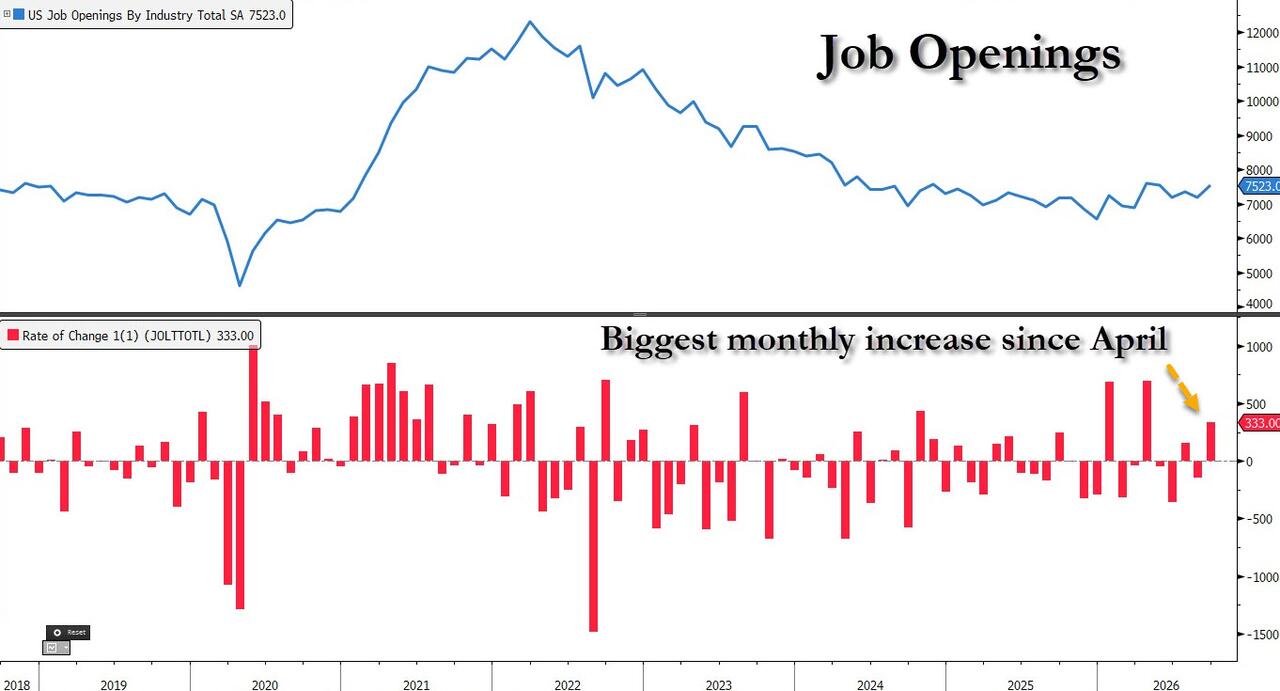
September JOLTS Data Shows Unexpected Labor Market Tightening Amid Weak Payrolls
Corroborated BLS JOLTS data reveals a tighter-than-expected labor market in September 2026, with surging openings and quits potentially signaling upward pressure on wages and inflation despite soft payrolls.
The U.S. Bureau of Labor Statistics (BLS) reported that job openings rose sharply by 333,000 to 7.523 million in September 2026, exceeding consensus estimates of around 7.1-7.16 million and marking the first significant upside surprise since May. This followed an upward revision to August's figure from 7.079 million to 7.190 million. Hires increased to 5.402 million, while quits surged 10.5% to 3.365 million—the highest level in over a year—signaling renewed worker confidence in alternative opportunities.
Official BLS data confirms job openings were little changed at a 4.5% rate overall, with notable gains in state and local government (excluding education, +104,000), professional and business services, manufacturing, construction, and trade/transportation. Layoffs and discharges fell to 1.641 million, their lowest since March 2025. These figures align with contemporaneous reporting from Reuters and Trading Economics, which highlighted the data's implications for firmer labor demand despite tepid nonfarm payroll growth of just 29,000 jobs in September.
The surge in openings and quits contrasts with the weak September employment report (unemployment ticking up to 4.2%), raising questions about potential upward revisions to payrolls data, as JOLTS hires and separations metrics often feed into subsequent employment estimates. Economists note this points to a resilient but uneven labor market: worker mobility is increasing even as headline hiring slows, potentially supporting wage pressures in a tight environment. FRED data from the St. Louis Fed corroborates the 7.523 million openings level, the highest since May.
Broader context includes ongoing debates around inflation dynamics; elevated quits and openings could sustain wage growth, complicating Federal Reserve policy amid recent rate adjustments. Regional breakdowns show gains concentrated in the West and Midwest, with declines in the South. This JOLTS print, released November 3, 2026, suggests the labor market's mid-2026 softening may be reversing, though low survey response rates remain a noted caveat in BLS methodology.
BLS: Stronger underlying labor demand may lead to upward revisions in October payrolls and sustained wage pressures, keeping inflation risks elevated into 2027.
Sources (5)
- [1]Job Openings and Labor Turnover Summary - September 2026(https://www.bls.gov/news.release/jolts.htm)
- [2]Job Openings: Total Nonfarm | FRED(https://fred.stlouisfed.org/graph/?g=1Q9fR)
- [3]US: JOLTS - CME Group(https://www.cmegroup.com/education/events/econoday/691583)
- [4]US job openings increase sharply in September | Reuters(https://www.reuters.com/business/us-job-openings-increase-sharply-september-2026-11-03/)
- [5]United States Job Openings - Trading Economics(https://tradingeconomics.com/united-states/job-offers)