Bain Exposes AI's Productivity Paradox: Cost Savings Collapse as Companies Double Down on Unrealized Projections
Bain's 2026 survey of 951 enterprises shows AI cost savings severely underperforming (40% at ≤10% reduction vs. higher targets), with 44% funding new initiatives on unrealized prior savings. Combined with MIT data on 95% pilot failure rates, this reveals a persistent hype-reality gap rooted in data/integration failures and insufficient workflow redesign—echoing historical productivity paradoxes while mainstream coverage focuses on potential over outcomes. Bain warns of circular risk and an $800B AI revenue shortfall by 2030.
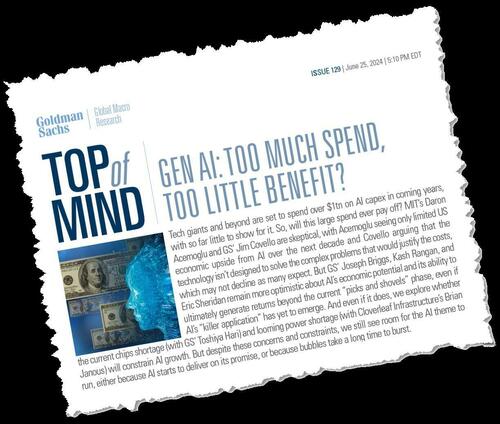
A major Bain & Company survey of 951 large enterprises reveals a stark disconnect at the heart of the AI boom: while the technology functions as intended, the anticipated value—particularly in cost savings—has largely failed to materialize. According to the firm's 2026 Automation and AI Pathfinder Survey, nearly 40% of companies measuring outcomes achieved cost reductions of 10% or less, despite targeting 11-20%. Only 4% exceeded 30% savings. Even more concerning, 44% of firms are funding the next wave of generative AI and agentic systems based on savings from prior automation rounds that never fully arrived. "The technology worked. The value didn’t arrive," Bain concludes. This creates what the firm terms a "circular bet"—a self-reinforcing loop of projections over actuals that compounds risk rather than managing it. The report, detailed in exclusive Bloomberg coverage, warns that these shortfalls "should be making executives uncomfortable," especially as 90% of surveyed companies plan to increase AI budgets anyway. Data access and integration remain the top barrier, cited by 41% of respondents and even more frequently by underperformers—despite hundreds of billions spent globally on data modernization over the past decade. This pattern exposes a core dynamic mainstream tech coverage consistently downplays: overhyped productivity claims clash with real enterprise outcomes. It echoes the Solow Productivity Paradox, where transformative technology appears "everywhere but in the productivity statistics." A related 2025 MIT report found that 95% of corporate GenAI pilots fail to deliver measurable P&L impact, attributing the "GenAI Divide" primarily to tools that fail to integrate with workflows, learn organizational context, or drive genuine process redesign. Leaders who outperform, per Bain, treat data governance as a CEO-level priority, redesign workflows before layering on AI, validate investments against actual prior returns rather than forecasts, and use AI itself to tackle data structuring incrementally rather than waiting for perfect datasets. They also recognize that most "autonomous" agents (only 7% fully independent in the survey) still require human oversight, limiting realized savings. These findings connect to broader warnings in Bain’s Global Technology Report, which projected AI infrastructure would require $2 trillion in new annual revenue by 2030, yet faces an $800 billion shortfall even after accounting for expected efficiencies. The implication is sobering: the AI spending spree—already exceeding $1 trillion in cumulative capital—risks becoming an expensive infrastructure overhang built on optimistic assumptions about enterprise adoption and monetization. This isn’t mere pilot purgatory; it reflects a recurring cycle seen in RPA, early machine learning, cloud migrations, and ERP implementations, where complementary organizational changes lag years behind the technology. Mainstream narratives celebrate capabilities and market sizes while enterprise surveys like Bain’s and MIT’s reveal the uncomfortable truth: without radical shifts in data culture, process ownership, and measurement discipline, AI’s productivity promise remains largely performative. Companies ignoring this gap aren’t investing in the future—they’re funding a structural leak.
LIMINAL: Enterprises doubling down on AI via circular bets on phantom savings are amplifying systemic risk; when data and workflow realities finally constrain the hype, expect a sharp de-rating of AI infrastructure plays and renewed scrutiny of productivity claims by 2027-2028.
Sources (4)
- [1]Your AI Budget Is Growing. Your Returns Aren’t. Here’s Why.(https://www.bain.com/insights/your-ai-budget-is-growing-your-returns-arent-heres-why/)
- [2]Bain Finds Corporate AI Investments Based on 'Returns That Haven't Arrived'(https://www.bloomberg.com/news/articles/2026-06-01/bain-finds-corporate-ai-investments-based-on-returns-that-haven-t-arrived)
- [3]MIT report: 95% of generative AI pilots at companies are failing(https://fortune.com/2025/08/18/mit-report-95-percent-generative-ai-pilots-at-companies-failing-cfo/)
- [4]$2 trillion in new revenue needed to fund AI’s scaling trend(https://www.bain.com/about/media-center/press-releases/20252/$2-trillion-in-new-revenue-needed-to-fund-ais-scaling-trend---bain--companys-6th-annual-global-technology-report/)