NNSA Uranium Repatriations from Japan and Venezuela: Nonproliferation Wins Masking Strategic Fuel Stockpiling and Geopolitical Cleanup
NNSA's May 2026 removal of 1.7 tons HALEU from Japan and all enriched uranium from Venezuela bolsters U.S. advanced reactor fuel supplies and claims nonproliferation victories, yet underscores enduring gaps in global controls, timed operations amid regional tensions, and intertwined energy-security strategies often downplayed in standard reporting.
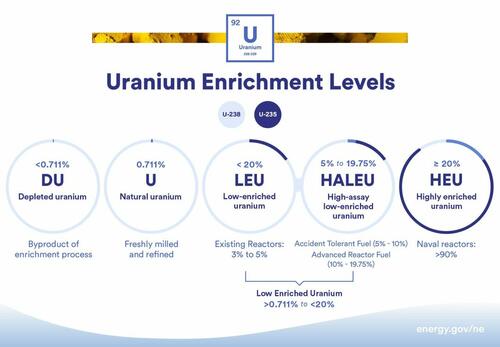
In early May 2026, the Department of Energy's National Nuclear Security Administration (NNSA) announced two significant operations: the acquisition of 1.7 metric tons of high-assay low-enriched uranium (HALEU) from Japan—the largest such international shipment in NNSA history—and the complete removal of all remaining enriched uranium (approximately 13.5 kg) from Venezuela's long-shutdown RV-1 research reactor. While mainstream coverage frames these as straightforward nonproliferation successes and steps toward U.S. energy dominance under President Trump, a closer examination reveals persistent gaps in the global nuclear security architecture and hints at deeper operational coordination across alliances. The Japanese material, derived from the shutdown Fast Critical Assembly, will directly support DOE's advanced reactor programs and HALEU fuel needs, addressing domestic supply shortfalls where U.S. production at facilities like Centrus Piketon remains limited. This aligns explicitly with efforts to power next-generation reactors while mitigating proliferation risks from excess civil stocks. In Venezuela, the material—leftover from a reactor inactive since 1991—was rapidly extracted between April 18-29, transported overland, and shipped via UK vessels to Savannah River Site for processing into HALEU. This occurred against a backdrop of heightened regional tensions, including a reported U.S. military strike near the site in January that reportedly elevated risks, prompting accelerated action in coordination with the IAEA. Official statements emphasize reduced threats to South America and the U.S. homeland, yet the timing and involvement of multiple partners (including a UK maritime role) suggest these operations serve dual purposes: securing material that could theoretically be vulnerable in politically unstable environments and bolstering America's strategic nuclear fuel reserves. These events expose ongoing vulnerabilities in the nonproliferation regime—decades after the Nuclear Non-Proliferation Treaty, legacy HEU and HALEU stocks persist in research programs worldwide, requiring repeated U.S.-led interventions. Longstanding U.S.-Japan cooperation on downblending and removal contrasts with the more delicate Venezuela engagement, highlighting how nonproliferation increasingly intersects with energy policy, great-power competition, and post-crisis stabilization. Rather than isolated technical exercises, these repatriations may signal broader efforts to consolidate control over nuclear fuel cycles amid shifting international alliances, with material ultimately feeding U.S. innovation programs. As global tensions rise, such 'routine' removals could obscure the extent to which proliferation risks remain tied to political instability and covert security priorities that receive limited scrutiny.
LIMINAL: These synchronized NNSA actions will accelerate U.S. domestic HALEU availability for advanced reactors while quietly neutralizing proliferation liabilities in volatile regions, revealing how nonproliferation increasingly functions as an extension of American energy dominance and alliance management.
Sources (4)
- [1]U.S. Secures Largest-Ever HALEU Shipment to Power American Nuclear Industry(https://www.energy.gov/nnsa/articles/us-secures-largest-ever-haleu-shipment-power-american-nuclear-industry)
- [2]NNSA Removes Highly Enriched Uranium from Venezuela, Reducing Risk to South America and the U.S. Homeland(https://www.energy.gov/nnsa/articles/nnsa-removes-highly-enriched-uranium-venezuela-reducing-risk-south-america-and-us)
- [3]Venezuela removes nuclear material with IAEA support(https://english.news.cn/20260508/c7ef2a28200b452f9337cd4b4422ab18/c.html)
- [4]Venezuela Says It Removed Nuclear Material After U.S. Strike Near Former Reactor(https://www.latintimes.com/venezuela-says-it-removed-nuclear-material-after-us-strike-near-former-reactor-597209)