Microsoft's Cheyenne Bet Exposes AI Infrastructure Paradox: Hype Meets Execution Risks
Microsoft's tripling of its Cheyenne data center footprint contrasts sharply with industry-wide delays affecting nearly half of planned U.S. capacity by 2026, exposing systemic execution risks around energy, supply chains, and grid infrastructure that transcend AI investment hype.
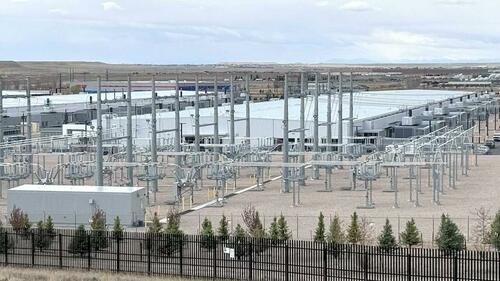
Microsoft's announcement to acquire approximately 3,200 acres in Cheyenne, Wyoming—encompassing a 200-acre parcel in Bison Business Park and an adjacent 3,000-acre tract—represents a significant escalation in its data center strategy. With 11 facilities already operational and three under construction across four campuses in the state, the company describes this as a 'commitment to continued growth,' citing skilled labor, infrastructure, and Wyoming's robust energy sector. However, this expansion occurs against a backdrop of widespread project attrition that the original ZeroHedge coverage only partially captures.
Sightline Climate's Q3 2024 U.S. Data Center Outlook, which tracks groundbreakings and permitting activity, reveals that of the roughly 16 GW of capacity slated for 2026 delivery, only about 5 GW has broken ground. Nearly half faces delays or cancellation due to transformer shortages, grid interconnection backlogs, and power procurement challenges. Primary documents from the PJM Interconnection queue reports corroborate this, showing data center-driven load growth requests exceeding 30 GW in certain regions, overwhelming transmission planning timelines that can stretch 5-7 years.
What much of the initial reporting misses is the bifurcation within the sector: speculative colocation developers and smaller hyperscalers are most vulnerable to cancellation, while integrated players like Microsoft, with pre-committed cloud revenue from Azure and deep balance sheets, continue aggressive capex. Microsoft's FY2025 capital expenditure guidance, detailed in its October 2024 earnings transcript, projects $80 billion or more annually, the majority allocated to AI infrastructure. This continues a pattern seen since 2023, when the company began signing long-term power purchase agreements for nuclear restarts (Three Mile Island) and renewable projects to de-risk energy supply.
Connections to related events sharpen the picture. OpenAI's pause of the Stargate project in the UK—reported in Financial Times coverage citing internal documents projecting annual power demand equivalent to hundreds of thousands of homes—highlights how even flagship initiatives falter on energy economics and regulatory approval. Similar dynamics appear in Virginia's 'Data Center Alley,' where Dominion Energy's integrated resource plans filed with the State Corporation Commission warn of potential rate increases of 20-30% over the decade to accommodate new load. Wyoming Senator Cale Case's caution about downstream ratepayer impacts and grid congestion echoes testimony in multiple state utility commission dockets.
From a policy perspective, the Inflation Reduction Act's energy incentives and various state tax abatements have accelerated announcements, yet they have not resolved physical constraints around high-voltage equipment lead times (currently 3-4 years for large transformers per Edison Electric Institute surveys) or community opposition. Historical parallels exist in the early 2000s fiber-optic overbuild, where optimistic demand projections led to massive stranded assets when productivity gains lagged.
Multiple perspectives emerge in industry analyses. Optimistic forecasts from McKinsey Global Institute reports on AI productivity suggest that generative AI could deliver trillions in economic value, justifying current infrastructure outlays. Skeptical voices, including analyses from the Lawrence Berkeley National Laboratory on data center electricity demand (projecting U.S. data centers consuming up to 9% of national generation by 2030 under high-growth scenarios), point to potential mismatches if AI adoption plateaus or if efficiency gains from next-generation chips reduce per-query energy needs. Geopolitically, U.S. congressional hearings on AI compute sovereignty, such as those before the House Select Committee on the Strategic Competition Between the United States and the Chinese Communist Party, frame these investments as essential national infrastructure to maintain technological edge.
Microsoft's Wyoming move leverages the state's coal, natural gas, and wind resources, potentially insulating it from the curtailment risks faced in California or ERCOT-constrained Texas markets. Yet the broader pattern suggests many AI-related press releases will remain conceptual. The gap between hyperscaler rhetoric and real-world delivery risks—land acquisition versus actual megawatts online—will likely define which regions capture economic benefits and which bear infrastructure costs. As utility filings and independent grid assessments show, resolution will require not just capital but accelerated permitting reform, supply chain investment, and transparent load forecasting that current regulatory frameworks struggle to provide.
MERIDIAN: Microsoft's continued data center expansion despite widespread cancellations illustrates how capital concentration among a few hyperscalers may widen the divide between AI vision and deliverable infrastructure, with energy policy and grid modernization becoming decisive factors in regional and corporate competitiveness.
Sources (3)
- [1]Microsoft Triples-Down On Data Centers, As Half Of Planned Projects Face Cancelations, Delays(https://www.zerohedge.com/markets/it-looks-good-paper-microsoft-tripling-down-data-centers-half-planned-projects-face-axe)
- [2]U.S. Data Center Outlook Q3 2024(https://sightlineclimate.com/reports/us-data-center-outlook-q3-2024)
- [3]Microsoft FY2025 Q1 Earnings Call Transcript(https://microsoft.gcs-web.com/static-files/0e4e2c8e-2c5e-4e5d-9c5a-d4a5e5b5e5b5)